Airbus is one of the most sophisticated aircraft manufacturers on earth. It builds jets to exacting tolerances across a global supply chain. This summer, the company confirmed what it described to Bloomberg as “an isolated quality issue on an A330 horizontal tail plane.” A tool had turned up inside the structure during a pre-delivery inspection.
Reuters reported that the finding slowed A330neo deliveries. Airbus has since asked operators of roughly 160 in-service A330 aircraft to inspect for stray tools as a precaution.
That is not a story about Airbus falling short. It is proof that foreign object debris (FOD) is a threat no production line outgrows, no matter how advanced. If a tool can slip past the world’s second-largest planemaker, it can slip past any facility without a disciplined system. That is exactly what 5S FOD prevention is built to catch.
Why a single forgotten tool matters
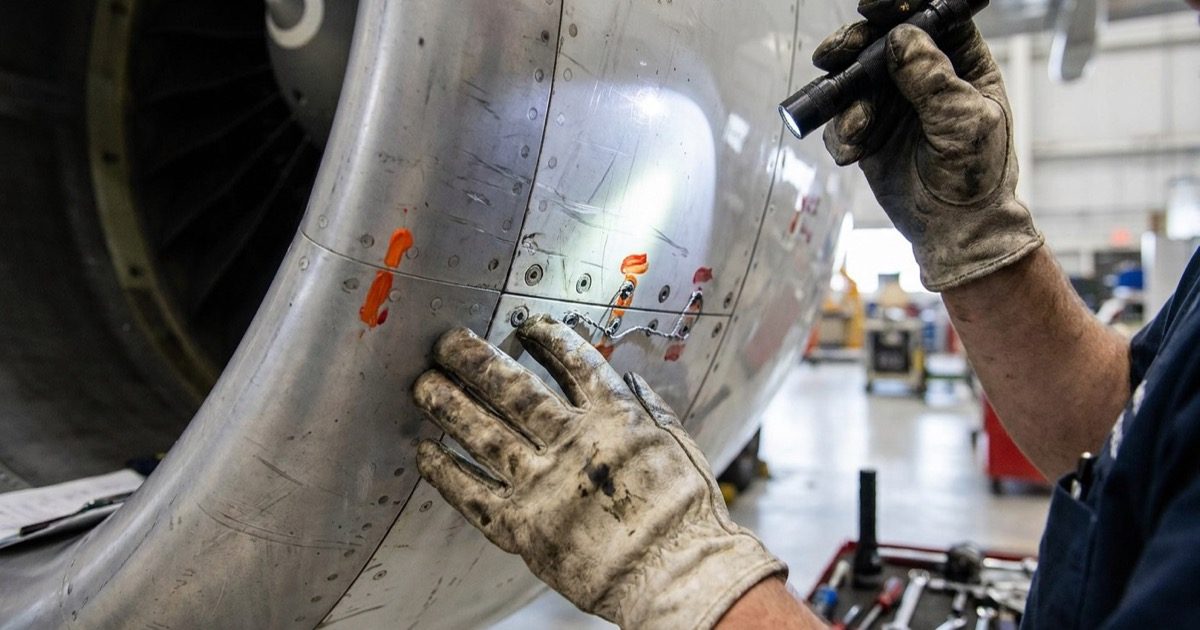
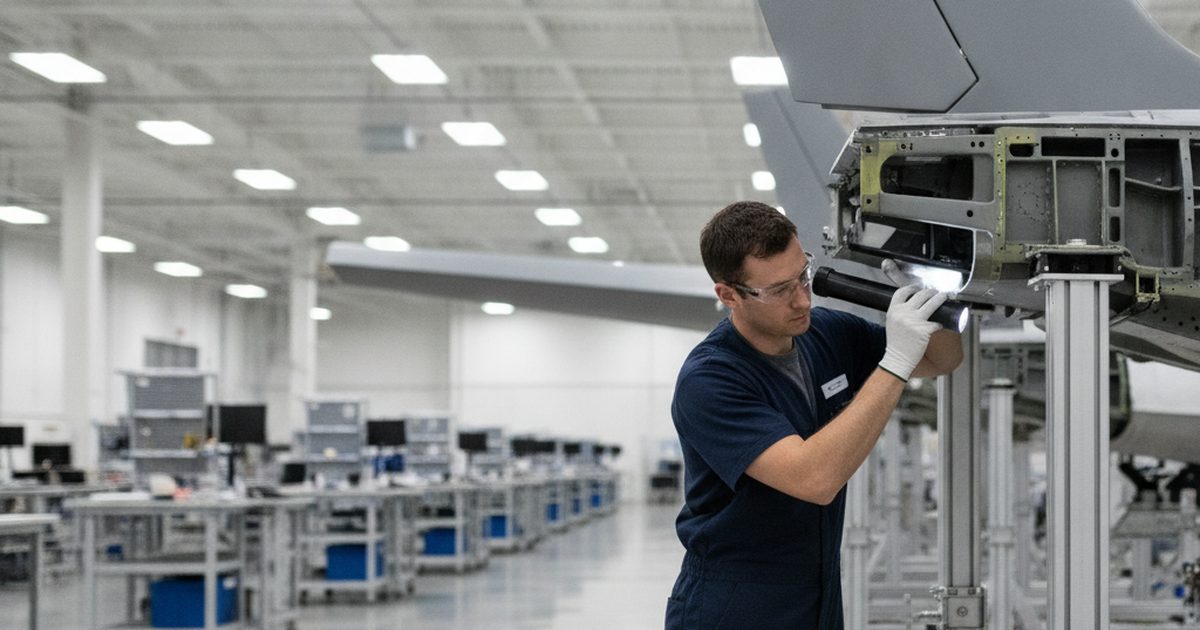
Airbus told Bloomberg that inspectors found the tool inside an A330 horizontal tail plane, the surface that controls the aircraft’s pitch, during a routine pre-delivery check. Airbus called the finding isolated and said it had already identified the root cause. The European Union Aviation Safety Agency told Bloomberg there was no immediate safety concern.
Still, the ripple effects were real. According to Reuters, Airbus delivered no A330neo aircraft in June or July 2026 while it inspected in-production jets. Deliveries resumed in August, when Airbus handed a single A330neo to STARLUX Airlines. In October, Airbus went further: it asked operators of roughly 160 A330 aircraft — delivered between January 2021 and July 2026, including 15 military tanker and transport variants — to check their own fleets during scheduled maintenance, Reuters reported. For a closer look at how the issue unfolded, see our coverage of the A330neo stray-tool finding.
Beyond this specific case, FOD carries a steep price tag industry-wide. Boeing estimates direct FOD costs at roughly $4 billion a year across the aviation industry. Broader cost-benefit studies, cited in FAA guidance on airport FOD management, put total annual costs — including delays and indirect losses — as high as $22.7 billion. A missing tool is never just a missing tool. It is inspection time, schedule risk, and in the worst case, a flight-safety hazard.
What each S is designed to catch
5S FOD prevention works because it attacks the problem from five angles at once, rather than relying on any single inspection to catch everything.
Sort: Keeps only the tools and materials needed for the job physically present in the work area. Fewer loose items means fewer things that can be left behind inside a cavity, panel, or structure.
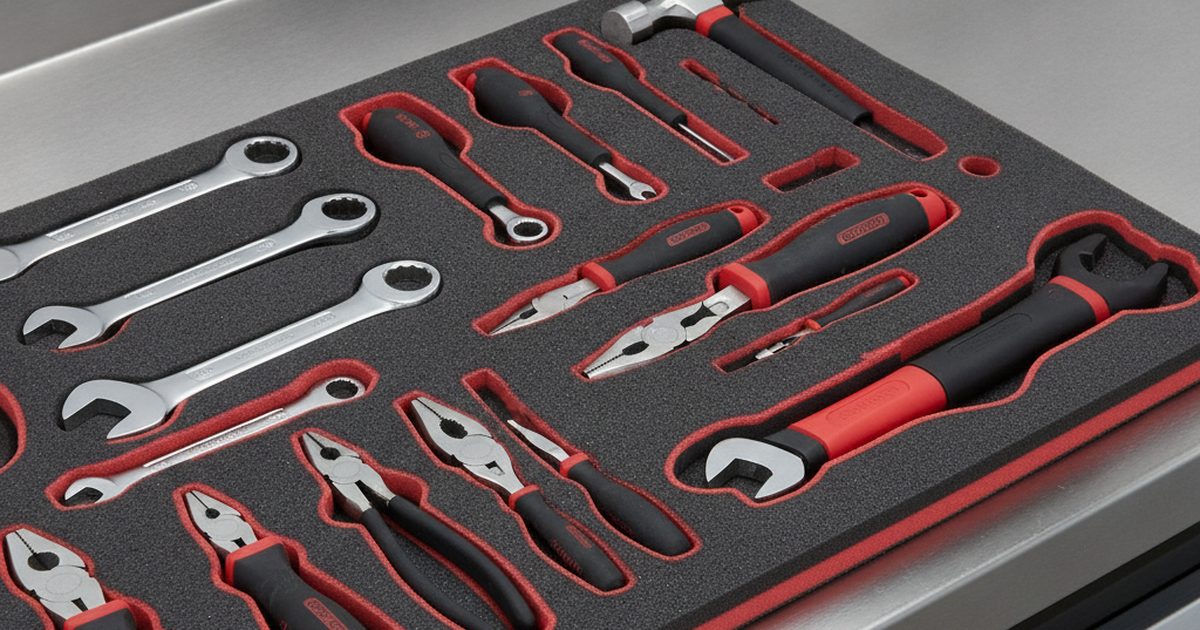
Set in Order: Gives every tool a dedicated spot, typically on a shadow board, so a missing tool is visible at a glance rather than discovered during a count at the end of a long shift. Consequently, a gap on the board becomes an immediate signal rather than a silent gap in inventory.
Shine: Keeps work areas clean enough that anything out of place stands out. A tidy bench or hangar floor makes a stray fastener or tool obvious instead of camouflaged in clutter.
Standardize: Turns tool check-out and check-in into a routine step at shift change and before any panel or cavity is closed. Accountability therefore does not depend on memory; it depends on a repeatable procedure everyone follows the same way.
Sustain: The habit layer — scheduled audits, refresher training, and leadership walk-throughs that keep the first four S’s from fading once the rollout excitement wears off.
Tool control standards that back up 5S
5S provides the daily discipline, but formal standards give FOD programs their structure and auditability. SAE AS9146, first published in 2017 as the industry’s first requirements standard for FOD prevention, defines a risk-based FOD Prevention Program for aviation, space, and defense organizations and their suppliers.
NAS 412, a companion national aerospace standard referenced throughout the industry, spells out the mechanics: tool tethering in FOD-critical zones, chit or tracking systems for any tool not returned to storage, and “clean-as-you-go” housekeeping at the end of every operation and every shift. Many facilities now pair these practices with RFID tagging or barcoded tool inventories, giving a count that can be verified electronically rather than by eye alone.
None of these standards replace 5S; they formalize it. A shadow board is a Set in Order tool. A chit system is a Standardize control. The standard tells an auditor the program exists; 5S FOD prevention is what makes it work on the floor every day.
The ownership gap — 5S is a framework, not a guarantee
Even a well-designed 5S program can fail if no one owns it. A framework only works when a specific person is accountable for confirming the team followed it, not just that someone documented it.
That means a closing-inspection sign-off before any panel, cavity, or access point is sealed. It means a named individual, not a generic department, answers when a tool count does not reconcile at shift’s end. And it means audits check behavior on the floor, not just whether a binder of procedures sits on a shelf somewhere.
This is also why pre-delivery inspection matters so much. It is the last structured opportunity to catch something before a product leaves the building. It works best as a backstop to a strong 5S program, not a substitute for one.
Building accountability into every shift
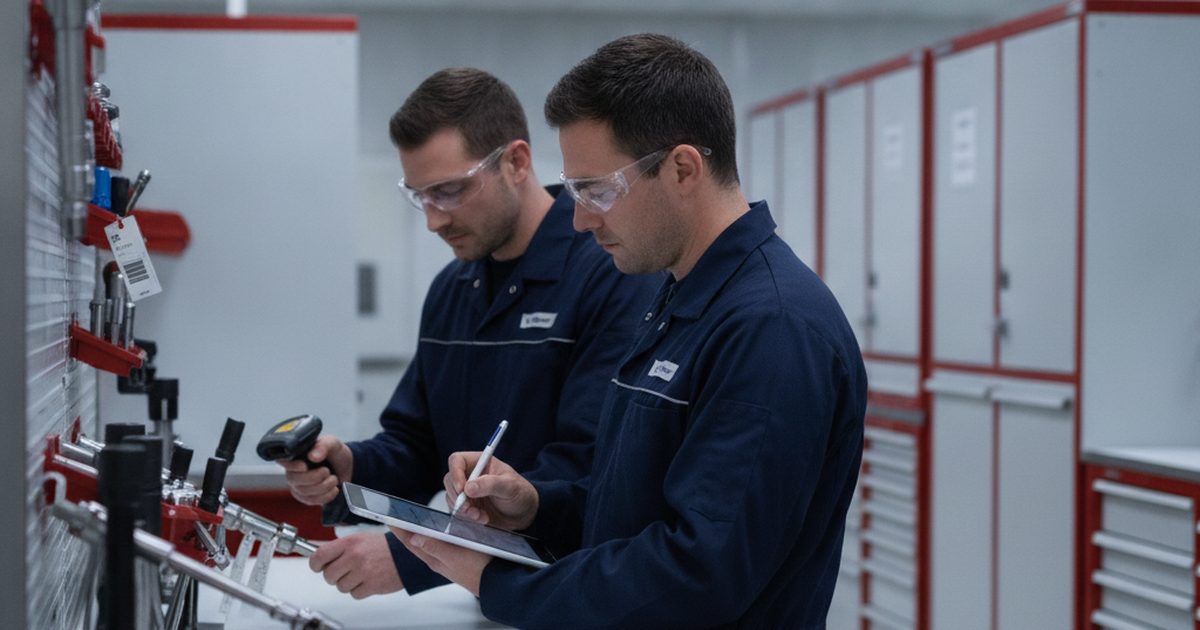
Accountability has to be built into the rhythm of a shift, not bolted on afterward. A shadow board check at shift start and shift end, a logged tool count before any enclosure is closed, and a brief FOD walk-down before the area goes quiet all take minutes but close the gaps that matter.
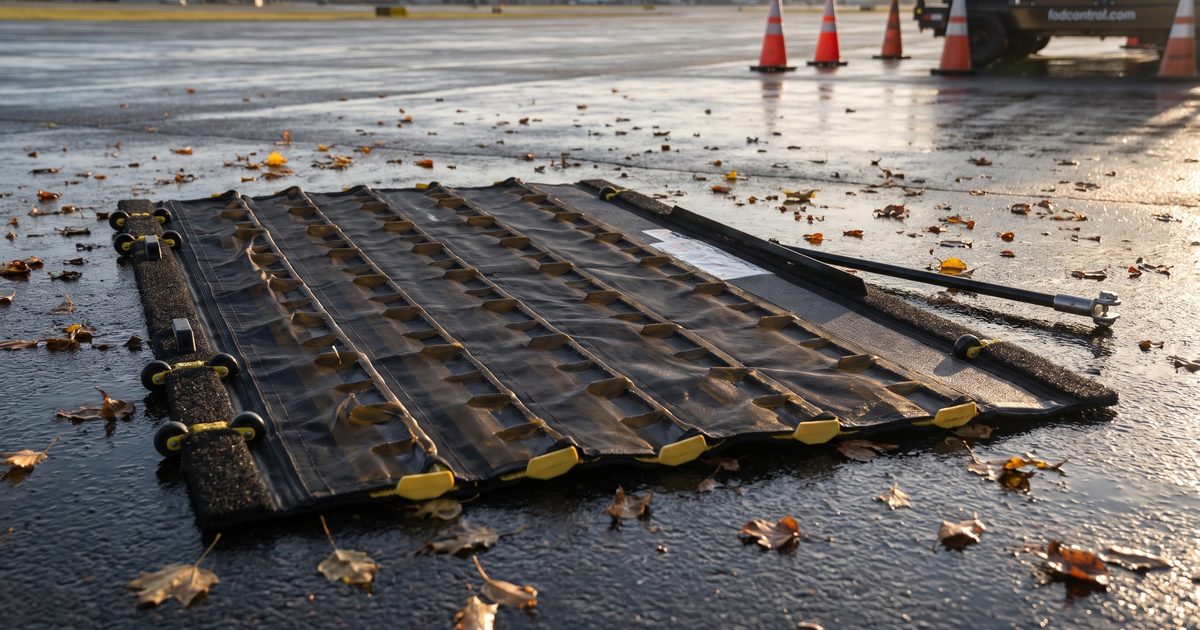
At facility scale, the same logic extends to housekeeping across the plant floor, apron, and delivery ramp. Equipment like the FOD-Razor® sweeper handles the large-area version of the Shine step, clearing loose debris from surfaces too big to check by eye alone. For a deeper look at applying these principles across a facility, see our guide to controlling FOD in a manufacturing facility.
Finally, every program needs a path to formal structure. Our walkthrough on setting up a company FOD program covers how to turn these daily habits into a documented, auditable system.
Key Takeaways
- Even Airbus, one of the world’s most advanced manufacturers, confirmed an isolated stray-tool finding in an A330 tail plane — proof that FOD requires a system, not just skilled workers.
- 5S FOD prevention works because Sort, Set in Order, Shine, Standardize, and Sustain each catch different failure points, from clutter to fading habits.
- Standards like SAE AS9146 and NAS 412 formalize tool tethering, shadow boards, and chit systems that make 5S auditable.
- A framework alone is not enough — someone must own closing-inspection sign-offs and answer when a tool goes missing.
- Facility-scale tools like the FOD-Razor® extend the Shine principle to plant floors, aprons, and delivery ramps.
Want to close the ownership gap in your own facility? Contact our team to talk through your FOD program, or download our free FOD prevention booklet for a practical starting point.