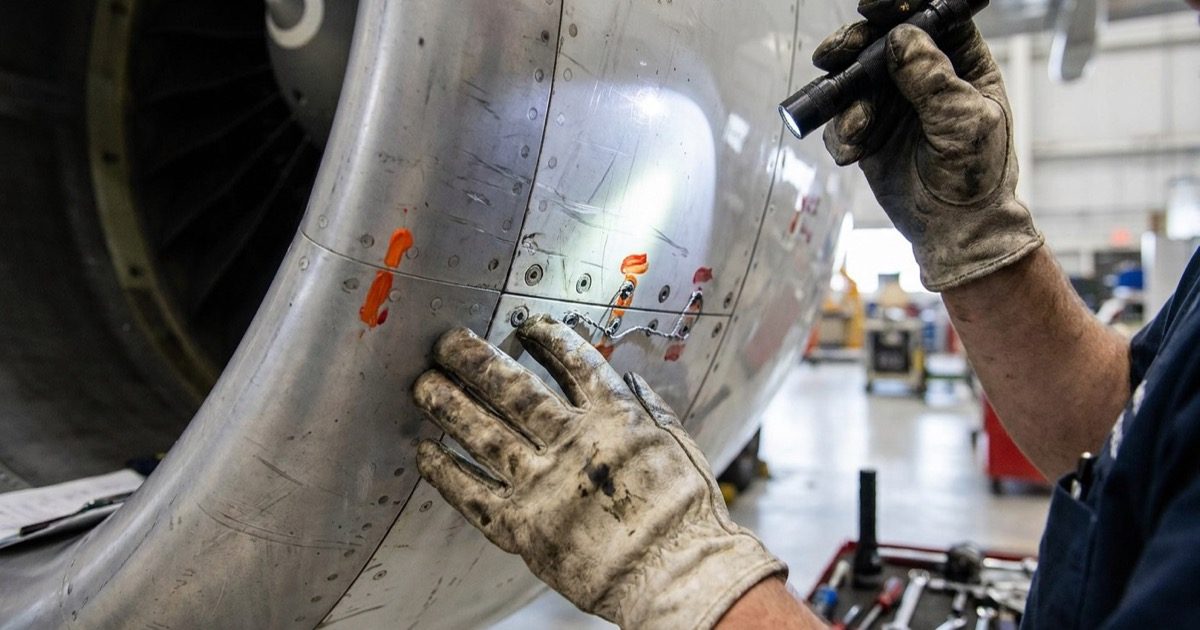
Why Autumn Is a High-Risk FOD Period
Most operators think of winter as the hard season. However, the autumn FOD season can be just as demanding, because two problems arrive at once. Trees drop their leaves, storms push litter and branches across open pavement, and wet organic matter piles up in corners and drains. At the same time, the first freezing nights start working on pavement that’s spent all summer carrying loads.
The result is more foreign object debris (FOD) from above and more from below. Airports, military flightlines, ports, industrial yards, construction sites and fleet depots all feel it. If you run machinery over paved surfaces, autumn deserves its own plan.
Fall Debris: What Blows In and Piles Up
Fall debris is mostly lightweight, and that’s what makes it tricky. It moves with every gust and tends to collect where you aren’t looking.
Leaves and Wet Organic Matter
Dry leaves scatter easily and can be pulled into intakes or fans. Once they get wet, they mat down into slick layers that hide small hard objects like bolts, safety wire and pavement chips. Wet organic matter also clogs drains. That matters more than it seems, as you’ll see in the pavement section below.
Wind-Blown Litter and Storm Debris
Autumn storms bring stronger winds and heavier rain. As a result, fence lines, perimeter roads and grass edges release plastic, cardboard, twigs and loose hardware onto operating surfaces. After a big storm, debris can show up in areas that were clean the day before.
The FAA recognizes this. Its Part 139 CertAlert 24-03 points out that §139.327 requires daily airfield inspections and special inspections “after unusual conditions, such as construction, accidents, and meteorological events.” Even if you’re not a certificated airport, that’s a sensible rule for any site after a storm.
Freeze-Thaw Onset: When Pavement Starts Making Its Own FOD
Debris you can sweep up is one problem. Debris your pavement produces is harder, because it keeps coming back until the surface is repaired.
According to FAA AC 150/5380-6C, pavements begin gradual deterioration from weather and loading right after construction. The circular states that timely maintenance and repair is essential for safe operations and for “minimizing the potential for foreign object debris (FOD).” In other words, pavement condition is part of FOD control.
Water Is the Starting Point
The same FAA circular says of drainage: “No other factor plays a more important role in the ability of a pavement to withstand the effects of weather and traffic.” In frost areas, it notes that subsurface water contributes to frost damage by heaving during freezing and loss of subgrade support during thawing. Likewise, free water trapped under concrete can pump and erode subsurface material, creating voids.
This is where those leaf-clogged drains come back in. Blocked drainage keeps water in the pavement structure right as freezing temperatures arrive.
Cracking, Spalling and Loose Aggregate
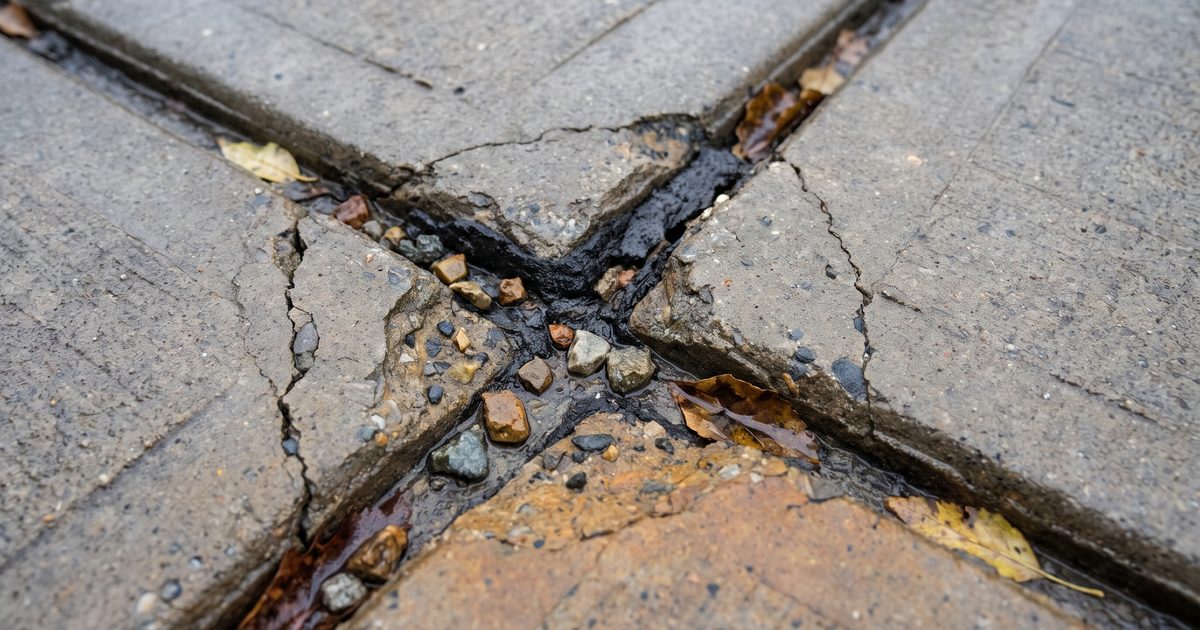
The FHWA’s guidance on materials-related distress describes how freeze-thaw damages concrete. Paste deterioration shows up as scaling, map cracking, and severe cracking or spalling. It often starts at joints and free edges, where more moisture is available.
FHWA also describes D-cracking, which happens when susceptible coarse aggregate fractures or dilates as it freezes. It often begins as fine cracks parallel to joints, with dark staining, and can progress to spalling. Notably, FHWA says air entrainment helps paste durability but doesn’t prevent D-cracking from susceptible aggregate. For you, every spall and failed joint seal means more loose fragments on the surface.
Pavement Problems Can Escalate Fast
Here’s a recent reminder of how quickly pavement can become an operational issue. On October 15, 2026, the San Bernardino County Department of Airports identified significant pavement cracking on Runway 11/29 at Needles Airport and described it as a safety concern. Emergency repairs were completed October 30, about two weeks later. The county didn’t attribute the damage to freeze-thaw. Still, it shows why early detection matters.
A Shoulder-Season FOD Checklist
FAA AC 150/5210-24A organizes FOD management into four areas: prevention, detection, removal and evaluation. That framework works well for autumn. Here’s a checklist you can adapt to your site.
- Clear leaves and organic matter from drains, inlets and trench drains before the first hard freeze.
- Walk joints and slab edges looking for failed seals, fine cracks and early spalling.
- Schedule a special inspection after every significant windstorm or heavy rain.
- Trim trees and brush near operating surfaces where practical.
- Secure dumpsters, covers and loose materials along fence lines and staging areas.
- Increase sweeping frequency during peak leaf drop, focusing on corners and edges where debris collects.
- Log what you find and where. Patterns tell you which areas need repair rather than more sweeping.
- Brief crews on seasonal hazards so everyone knows what to look for during walks.
- Report pavement defects to maintenance promptly instead of waiting for spring.
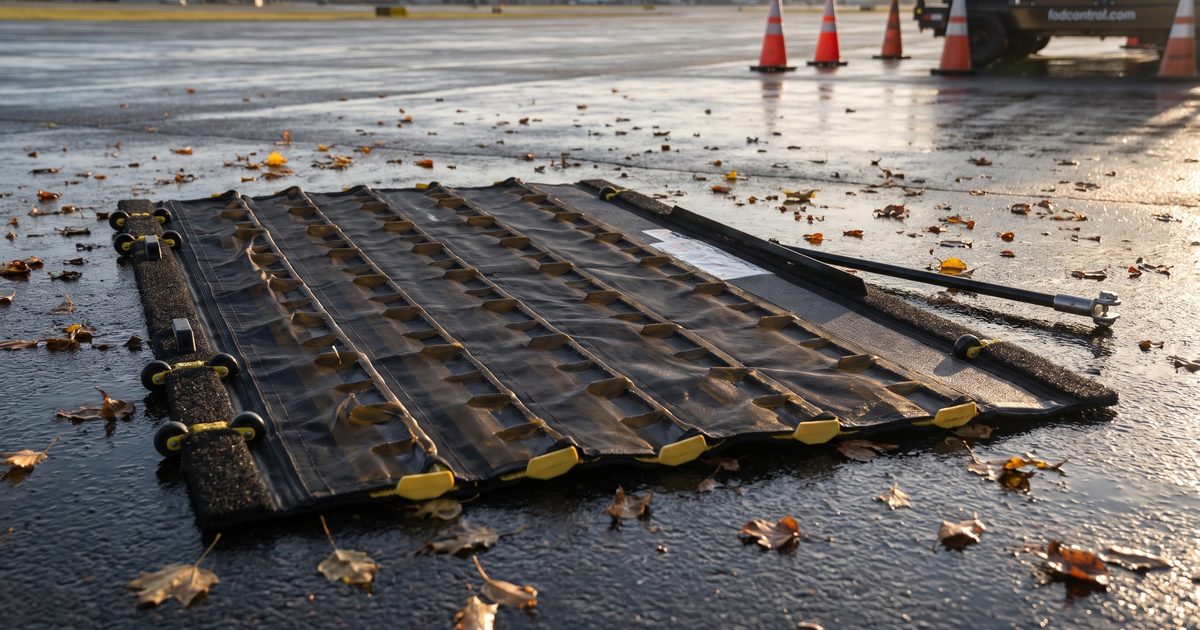
For removal, mechanical sweeping covers ground far faster than hand pickup. A tow-behind unit like the FOD-Razor® airport sweeper handles both lightweight leaf litter and small hard debris without a dedicated powered vehicle. If you’re building these habits from scratch, our guide to setting up a company FOD program walks through the structure.
Get Ahead of the Autumn FOD Season
Autumn rewards operators who act early. Clear drains, inspect joints, and sweep more often while the leaves are down. Then the first freeze-thaw cycles find less water and fewer weak spots to work on.
Want help building a seasonal plan for your site? Contact our team to talk through your operation. You can also download our free FOD prevention booklet to share with your crews.