On Monday, Oct. 19, 2026, staff doing a morning security check at a preschool in Barrington Hills, Illinois, found a piece of metal debris roughly 3 feet by 4 feet on the church grounds. The Barrington Hills Police Department says the object was possibly from an aircraft. The FAA took custody of the debris and is investigating. No one has confirmed it came from a plane, and no one has said what aircraft it might belong to.
Whatever that piece turns out to be, the question behind it reaches well beyond aviation. Somewhere, on some machine, a part that was supposed to stay attached came loose. It could be a wheel on a semi, a guard on a conveyor, a fastener on a race car, or a panel on an airplane. Every machine with moving parts is held together by hundreds or thousands of individual fasteners, and every one of them is a candidate to work its way free. Anyone running a FOD prevention program will recognize this pattern, and it belongs in a company FOD program no matter which industry that program covers.
Why things come loose anywhere
Fasteners don’t fail for mysterious reasons. The same handful of causes show up whether you’re torquing a bolt on a wing or a lug nut on a trailer.
Vibration is the biggest one. Engines, motors, compressors and moving machinery shake constantly, and that shaking works against anything holding two parts together. A bolt torqued correctly at installation can walk itself loose over hundreds of hours of operation if nothing stops it from turning.
Heat cycling adds to the problem. Metal expands when it heats up and contracts when it cools, and repeated cycles change the clamping force on a joint over time. An engine, a brake assembly, and an industrial oven all put fasteners through this same stress.
Wear plays its part too. Threads round off, washers compress, gaskets settle, and hardware that was snug a year ago can be measurably looser today without anyone noticing, because the change happens slowly.
Improper torque is the cause that’s easiest to prevent and the one crews see most often. Hand-tight isn’t secure, and an impact gun run too long or too short leaves a joint either overstressed or undertightened. Either way, the fastener is already compromised before the machine even starts up.
Interrupted work rounds out the list. A technician pulled away mid-task, a phone call during a tire change, a shift change in the middle of a procedure. These are the moments when a step gets skipped and nobody catches it until something falls off later.
Where it happens across industries
Trucking sees this constantly. Wheel separations, where a wheel or wheel assembly departs a moving truck or trailer, are serious enough that the National Transportation Safety Board has issued safety recommendations specifically about medium and heavy truck wheel separations, pointing to inadequate torque and inspection practices as root causes. A wheel that comes off a truck at highway speed doesn’t stay on the shoulder. It becomes a hazard for every vehicle around it.
Motorsport has its own version. Pit crews change wheels in seconds under enormous time pressure, and a wheel nut that isn’t fully seated can let a wheel leave the car at speed. Even in a crash, the hardware meant to keep a wheel attached is supposed to hold. A wheel that came loose during the 2023 Indy 500 after a crash, cleared the catch fence and landed outside the track, and the series said it would investigate why the wheel tether didn’t keep it with the car. Different sport, same question: why didn’t it stay attached?
Manufacturing plants deal with a quieter version of the same risk. A loose guard, a dropped washer, or a bolt that backs out of a conveyor bracket can fall into a production line and damage product, jam equipment, or injure someone reaching in to clear it. That’s why FOD prevention built for manufacturing facilities treats loose hardware the same way an airport treats a dropped wrench. It’s debris the moment it separates from where it belongs.
Aviation is where this gets studied most closely, because the cost of a missed fastener is so high. The FAA’s own definition backs this up. Under AC 150/5210-24A, Airport Foreign Object Debris (FOD) Management, typical FOD includes “aircraft and engine fasteners (nuts, bolts, washers, safety wire, etc.)” and “aircraft parts (fuel caps, landing gear fragments, oil sticks, metal sheets, trapdoors, and tire fragments).” An NTSB safety alert goes further, warning mechanics to verify B-nuts are properly secured, since an improperly torqued fitting can lead to leaks or fire. We wrote about this from the other direction in our piece on Airbus and stray tools, where a tool left behind became a lesson in accountability. Keeping fasteners secure is the same lesson, aimed the other way.
The habits that keep things attached
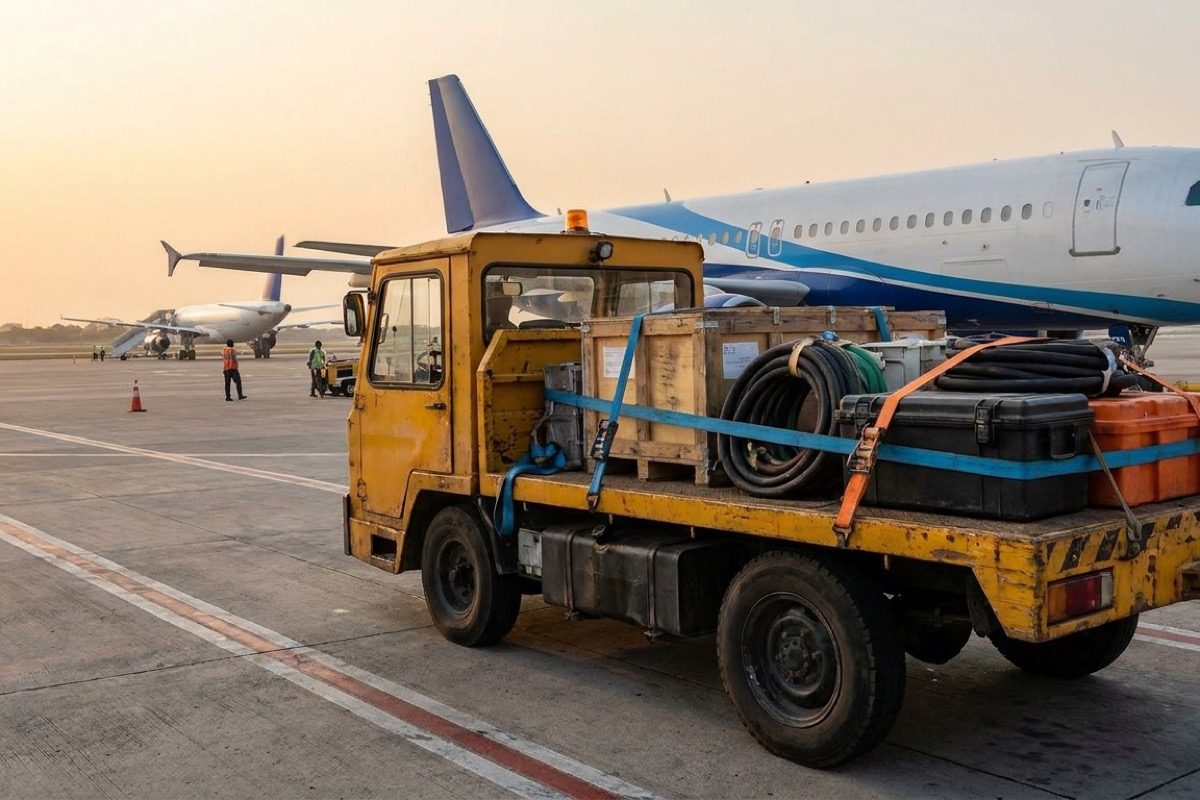
Every operation that takes secure fasteners seriously ends up with some version of the same toolkit, whether the crew calls it by its aviation name or not.
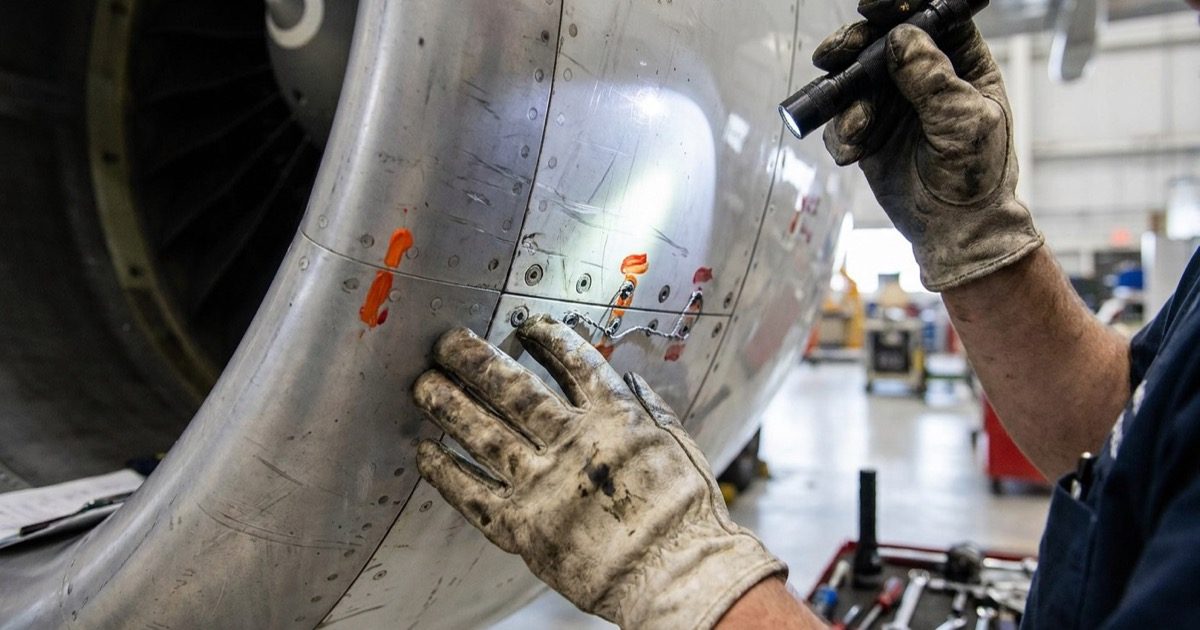
Torque striping, sometimes called witness-mark paint, is a simple idea that works well. A line of paint across a fastener and the surface next to it shows at a glance whether the fastener has turned since the last check. If the line is broken, something moved. Plenty of fleets and plants now use the same trick on wheel lugs and machine guards, even if nobody there ever heard the term from an aviation mechanic.
Safety wire and cotter pins add a mechanical backup where vibration is relentless. Two fasteners wired together so one can’t loosen without fighting the wire is standard practice on aircraft engines, and the FAA’s own guidance on safety wiring explains why it works. Lock nuts and thread-locking compound do a similar job on equipment where running wire isn’t practical.
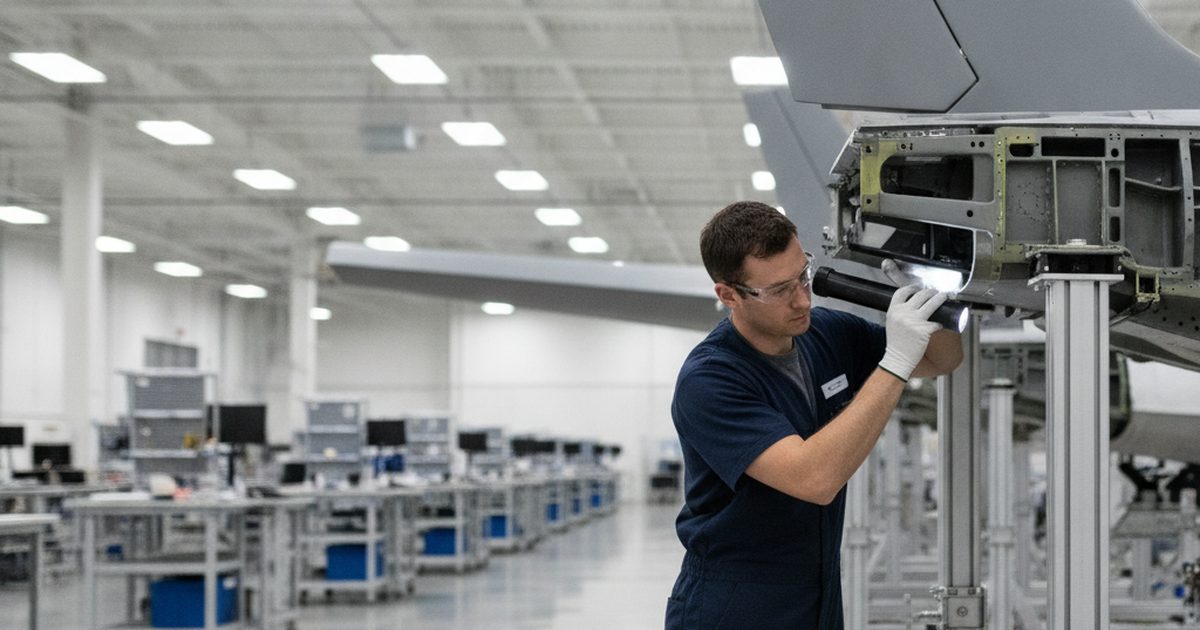
Second-person checks catch what a tired or familiar set of eyes misses. Having someone other than the person who did the work verify a critical fastener before equipment goes back into service is standard in aviation maintenance, and it translates directly to any shop floor or fleet garage.
Closeout checks, sometimes called buttoning up, happen at the end of a job, before a panel, guard, or cover goes back on for good. It’s the last chance to confirm every fastener underneath is torqued and accounted for. Pre-use walk-arounds matter in a plant or on a truck lot the same way they matter on a ramp. A quick look at wheels, guards, and panels before a shift starts can catch a popped fastener before the equipment ever moves. Tethering tools so they stay connected to a person or a cart, and securing loads so nothing shifts in transit, round out the list. None of these habits are complicated. They work because they’re specific and repeatable, and a crew can do them every single time.
Check it’s attached, not just that it’s there
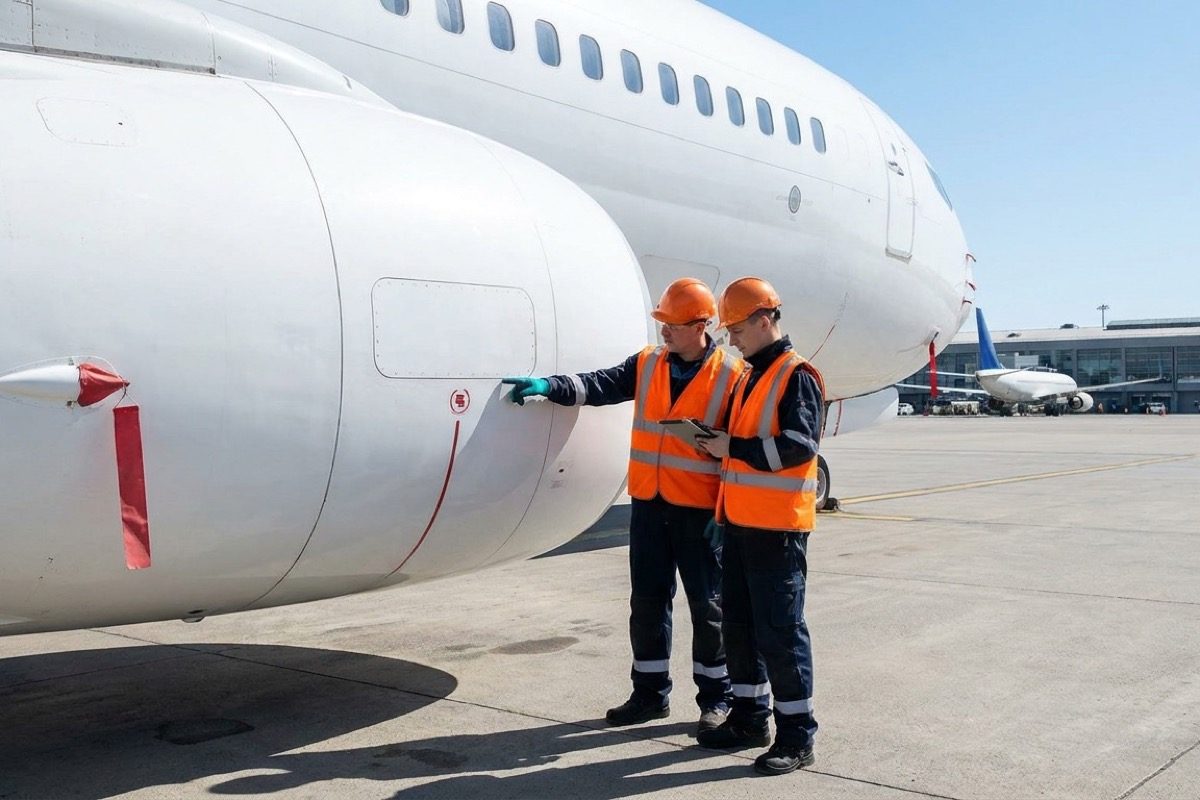
Every pilot knows “remove before flight,” the phrase on the red streamers tied to pitot covers and gear pins before departure. It’s a good reminder, but it only covers half the job. The habit that actually prevents most of what we’ve described here is simpler and applies to any operation: check that it’s attached, not just that it’s there.
A bolt sitting in its hole looks fine from three feet away. Whether it’s torqued to spec, whether the stripe lines up, whether the cotter pin is through the hole, none of that shows up on a casual glance. The same goes for a wheel, a guard, or a cap. Looking secure and being secure are two different things, and the gap between them is where loose parts come from.
When something does come loose
No program catches everything, so the response matters as much as the prevention. Reporting a loose or missing part right away, instead of waiting to see if it turns up, gives a maintenance or safety team the best chance to trace it before it causes damage somewhere else.
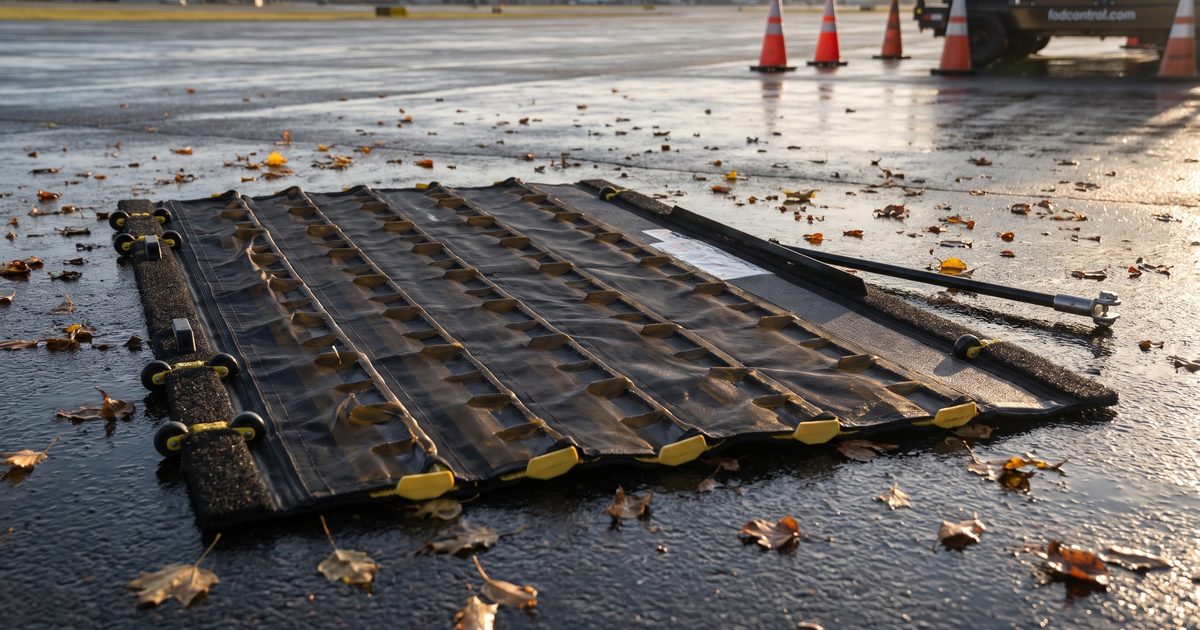
Once a report comes in, a sweep of the area is the practical next step. On an airport ramp, equipment like our FOD-Razor sweeper plays that role, catching debris that got past secured fasteners and good habits. A plant floor, a pit lane, or a loading dock needs the same mindset, even though the equipment looks different: find it before it finds a tire, an engine, or a person.
Tracing a part back to its source closes the job. It’s how a team confirms what came loose, why, and whether the same failure could happen again somewhere else in the fleet or the facility. That’s also why the Barrington Hills case matters, even unresolved. The FAA’s investigation into whether that debris came from an aircraft follows a familiar process, and it plays out on a smaller scale every time a crew anywhere finds an unexplained part on the ground: identify it, trace it, fix whatever let it go.
Key Takeaways
- Any machine with moving parts relies on thousands of fasteners, and vibration, heat cycling, wear, improper torque, and interrupted work can loosen any of them.
- Wheel separations on trucks, pit-lane incidents in motorsport, and loose hardware on manufacturing lines all trace back to the same root cause as aviation FOD: a part that didn’t stay secured.
- Torque striping, safety wire, lock nuts, second-person checks, and closeout inspections are proven tools for keeping hardware attached, not just in place.
- Checking that a fastener is attached, not just that it’s present, is the habit that catches most problems before they become debris.
- Fast reporting and a thorough sweep keep a loose part from becoming someone else’s problem, whether that’s a runway, a racetrack, or a factory floor.
Want to build a secure fasteners check into your facility’s FOD prevention program, in aviation or beyond? Contact our team or download our free FOD prevention booklet to get started.