
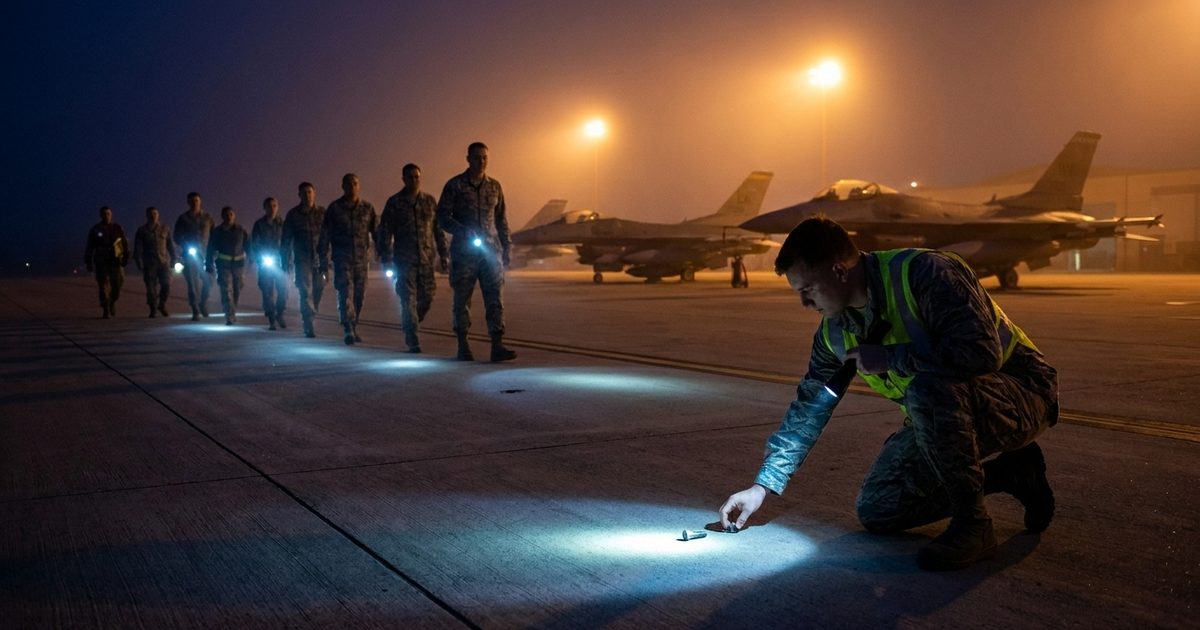
MIL-STD and service-level FOD program requirements force a base to document who owns tool control, who walks the ramp, and how often crews sweep for debris. On paper, that structure looks solid — a military FOD compliance audit can confirm the paperwork checks out. Then an engine ingests a safety wire, or a socket goes missing at shift change, and the incident report tells a different story than the audit binder did. Most preventable FOD damage lives in that gap between what the checklist certifies and what happens on the flightline.
The Military FOD Compliance Audit vs. the Actual Flightline
Audits sample a program; they don’t observe every shift. An inspector reviews binders, checks that training records are current, and verifies tool inventories reconcile. Formal FOD prevention doctrine traces back decades: MIL-STD-980 first codified aerospace FOD prevention guidance in 1982, then was withdrawn in 1995 without a direct replacement. Today’s requirements flow through service-level instructions instead. Air Force units follow DAFI 21-101; Navy and Marine Corps aviation follow the Naval Aviation Maintenance Program. Standards like AS9146 and NAS412 add another layer. See our essential guide to military FOD prevention for how these fit together.
None of those documents can inspect wind, fatigue, or a compressed maintenance schedule. A unit can be fully compliant with every referenced standard and still lose a jet engine to a dropped fastener nobody logged.
Shift Change — The Gap Every Auditor Walks Past
Shift change is the single most predictable failure point in any FOD program. It’s also the hardest thing for an audit to see. Sweeps get deferred to “the next crew.” Tool inventories get eyeballed instead of counted. A supervisor signs a handoff sheet that nobody actually walked.
Auditors arrive during a scheduled window, not at 0500 during a crew swap. So the riskiest thirty minutes of the day is usually the one an inspection never sees. A specific handoff checklist for shift change closes more real risk than almost any other single change a FOD manager can make.
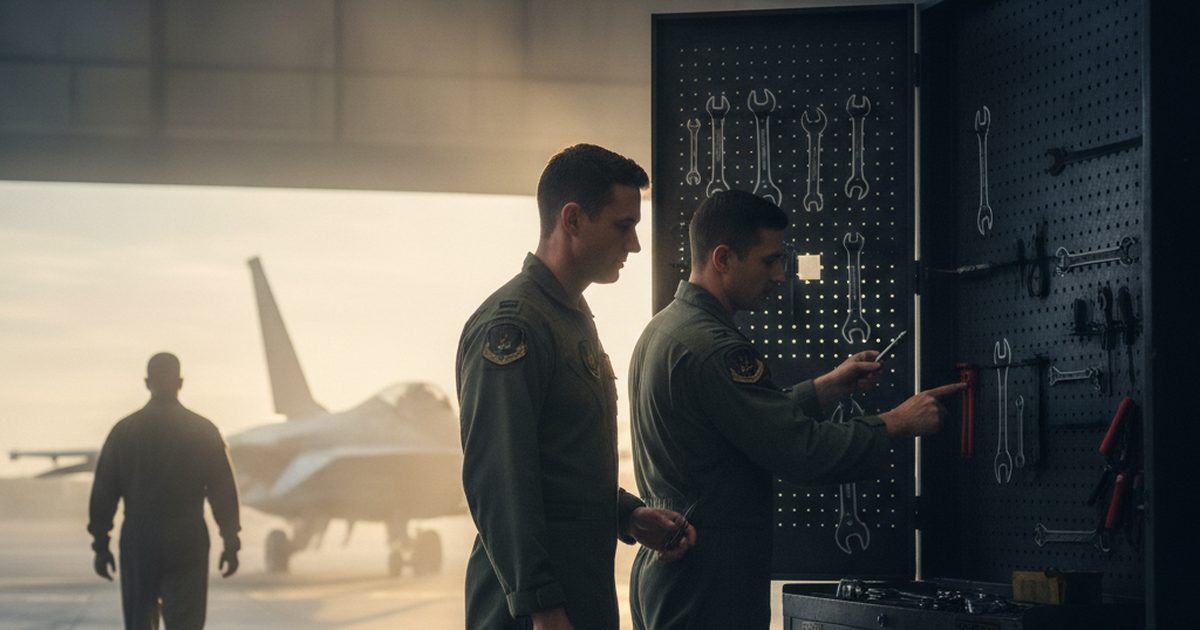
Tool Control on Paper vs. Tool Control in Practice
Tool control programs read cleanly in an instruction: shadow boards, foreign object checks, sign-out logs. In practice, a missing tool often gets “found” the next morning rather than reported that night, because reporting triggers a search that delays the schedule.
That instinct is understandable, but it hides the exact failure a real audit needs to catch before an inspector does. A program that never generates a missing-tool report isn’t necessarily clean — it may be one where reporting has quietly stopped. Comparing tool-control logs against actual incident history finds that gap faster than simply confirming the log exists.
What a Real Pre-Audit Self-Assessment Looks Like
A useful self-assessment doesn’t start with the binder. It starts with the incident and near-miss log from the past twelve months. Pull every FOD event, every dropped-object report, and every unresolved tool discrepancy. Then walk the ramp during an actual shift change to see whether the written procedure matches what crews do under time pressure.
Next, compare sweep frequency on paper against sweep frequency in the maintenance log, and check whether debris collected correlates with incident locations. A base running manual sweeps or inconsistent coverage will show gaps a FOD-Razor® magnetic sweeper program typically closes, since mechanical sweep coverage doesn’t depend on which shift remembers to do it.
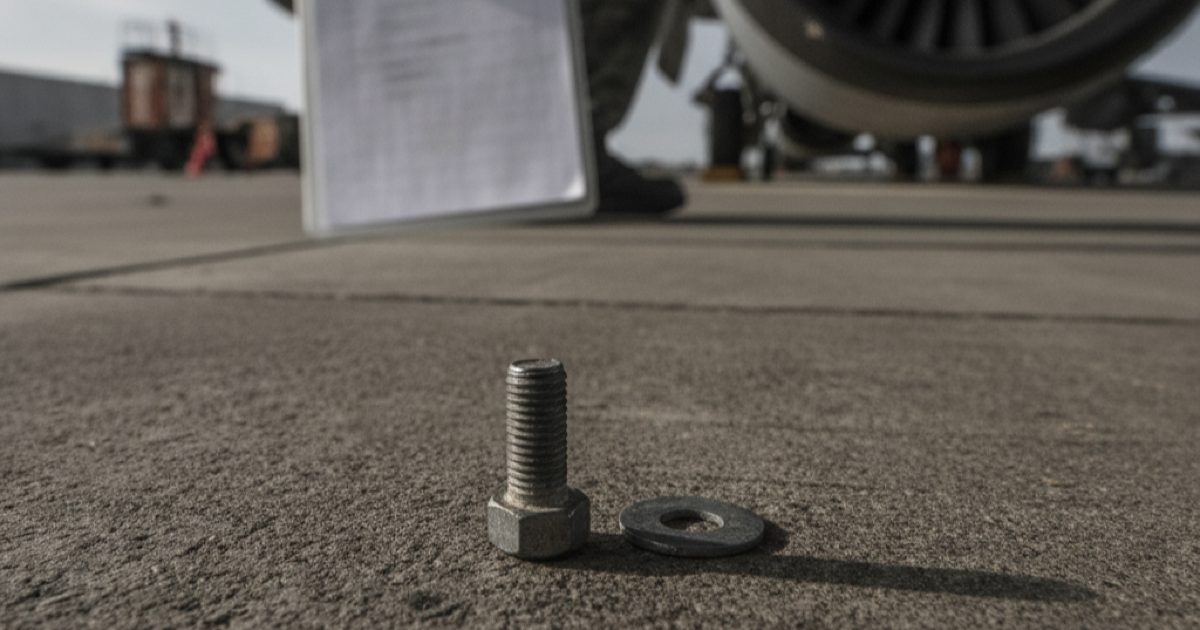
Closing the Gap Before FY27
The FY26-to-FY27 turnover is a natural forcing function for this review. Budgets reset and inspection cycles roll over, and Q1 of FY27 is when most bases plan the year’s training, equipment, and audit prep. That makes it the right moment to compare paper compliance against actual incident and damage data from the year that just closed, rather than simply refreshing the binder.
Gaps that stay paper-only don’t disappear. They resurface as repair costs, schedule slips, and inspection findings — usually at a worse time than a planned Q1 review. If FY26 funds are earmarked for equipment upgrades, closing sweeper-coverage gaps now beats carrying them into FY27. Even under a continuing resolution holding funding flat, a FOD program runs mostly on process and discipline — the parts that can still improve without new money.
The goal isn’t a program that merely survives a military FOD compliance audit — it’s one where the flightline already runs that way every shift. Start with the incident data, walk an actual shift change, and fix what the numbers show. See our guide on setting up a FOD program, or our primer on what FOD is and why it matters, ahead of FY27 inspections.
Key Takeaways
- Passing a military FOD compliance audit confirms a program exists on paper; it doesn’t confirm crews follow it under real operational pressure.
- Shift change is the highest-risk, least-audited window in most FOD programs — build a specific handoff checklist for it.
- Compare tool-control logs and sweep records against actual incident history, not just against the instruction that requires them.
- The FY26-to-FY27 turnover is a natural moment to run a real program review before the next inspection cycle.
- Consistent mechanical sweep coverage, such as a FOD-Razor® program, closes gaps that depend on shift memory or manual follow-through.
Ready to close the gap between your paperwork and your flightline before the next inspection? Contact FOD Control to talk through your program, or download our free FOD prevention booklet for a practical starting checklist.