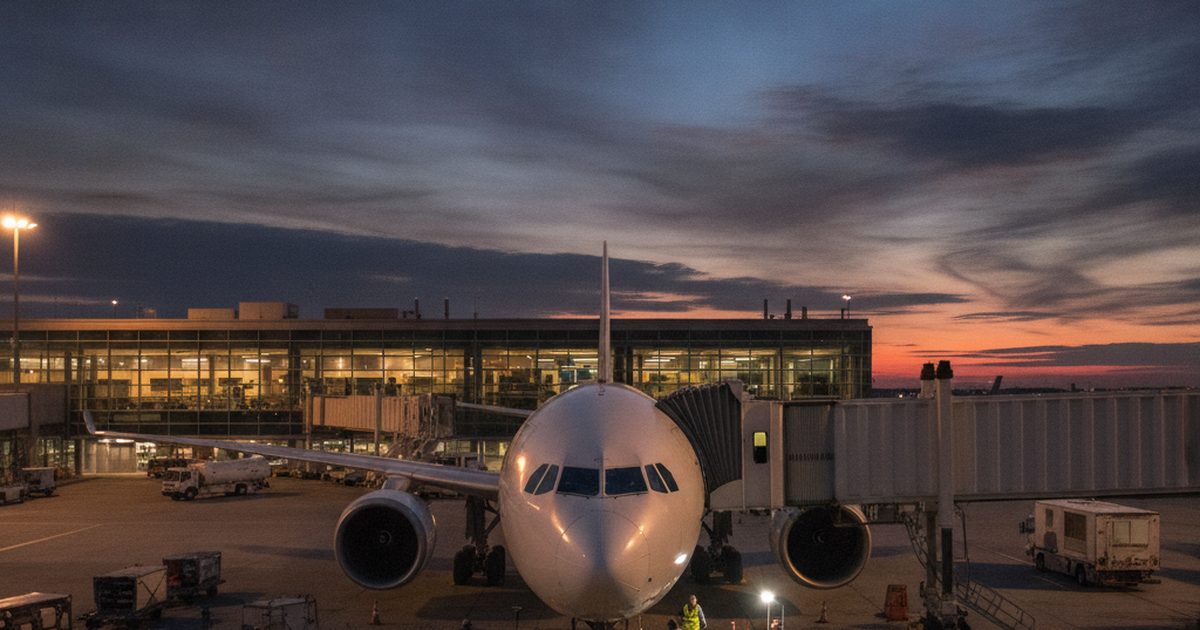
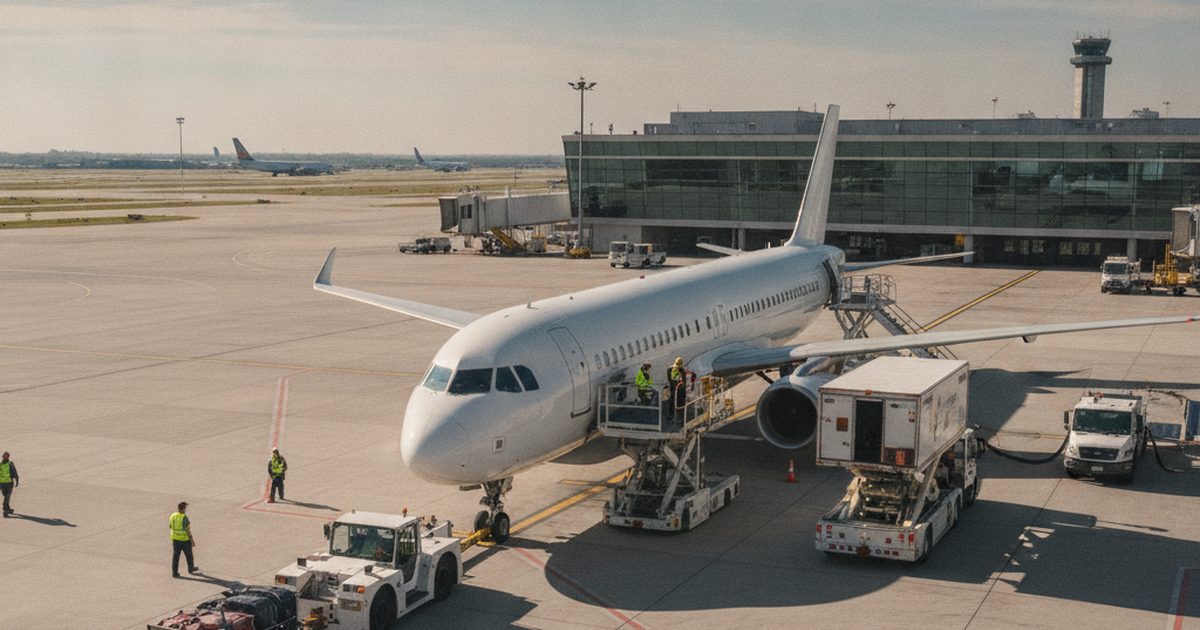
On July 14, 2026, a ground service vehicle took an Air Peace Airbus A320 out of service at Lagos’s Murtala Muhammed International Airport. Not a runway. Not the open airfield. A NAHCO baggage conveyor truck struck the aircraft’s engine nacelle during a routine turnaround, and the nacelle tore badly enough to ground the jet on the spot. Headlines called it a ground-damage incident. In reality, it’s also a textbook example of a truth the industry too often overlooks: the ramp, not the runway, is where most foreign object debris (FOD) is actually born. Therefore, this piece makes the case for treating ground handling ramp FOD prevention as the highest-leverage safety investment an airport can make.
FOD Is Manufactured, Not Just Found
The FAA’s own guidance backs this up. In fact, Advisory Circular 150/5210-24A on airport FOD management states plainly that “air carriers and airport tenants generate much of the FOD found in the airport apron, service roads, baggage makeup areas, and areas near flight kitchens.” In other words, refueling, catering, cabin cleaning, and baggage handling all produce broken materials during a normal turnaround.
Luggage wheels, zippers, and buckles snap off during loading and end up on the tarmac. Similarly, torn shrink-wrap and packaging blow loose from catering carts. Dropped hardware, tie-down hooks, and stray tools round out the list. None of it arrives on the wind. Instead, the service process itself generates every piece, which is exactly why ground handling ramp FOD prevention has to start at the gate, not the perimeter fence.
The Ramp Inventory: Where Turnaround Debris Actually Comes From
IATA’s Ground Damage Report puts a price on the chaos. Ground damage now costs the industry more than $4.5 billion a year, and that figure could nearly double within 15 years if nothing changes. Most of that damage happens after an aircraft is already parked. Motorized ground support equipment (GSE) causes it by striking the fuselage during servicing.
Belt-loaders, cargo-loaders, passenger stairs, and boarding bridges alone account for 40% of total ground damage incidents, according to the same report. Meanwhile, Flight Safety Foundation research shows ground-damage events occur roughly once every 1,000 flights. The average grounded aircraft stays out of service for 3.5 days, at a cost near $225,000. Every one of those collisions leaves debris behind — sheared metal, broken fairings, shattered lens covers — right where the next aircraft will taxi in.
The Regulators Are Watching the Ramp
Ramp safety recently earned formal federal attention. Under Section 353 of the FAA Reauthorization Act of 2024, the FAA ran a national Ramp Worker Safety Questionnaire. It explicitly covered ingestion-zone and jet-blast hazards — FOD’s two most dangerous delivery mechanisms.
IATA’s own ISAGO audit program backs up the concern with hard numbers. Specifically, “Prior to aircraft arrival, ramp is clear and free of FOD” remains one of the most frequently cited findings across ground handling stations worldwide. That single recurring finding is the clearest evidence yet that ground handling ramp FOD prevention cannot be a one-time inspection. Instead, it has to be a standing discipline, shift after shift.
Building a Ground Handling Ramp FOD Prevention Program: Culture, Cadence, Removal
A strong ramp program rests on three pillars. First, culture: every technician, baggage handler, and caterer treats FOD removal as part of the job, not an extra task assigned to someone else. The FAA calls this “clean-as-you-go” — pick up broken hardware and packaging the moment you see it, during your normal shift, instead of waiting for a scheduled sweep.
Next comes cadence. Define exactly who inspects the gate before each arrival, how often GSE staging areas get swept, and who owns the follow-up when an item turns up. Finally, removal closes the loop: a dependable sweeping routine, like a tow-behind FOD-Razor® friction sweeper run across ramp and gate areas between turns, catches what culture and cadence miss.
None of this works in isolation, though. A structured company FOD program ties culture, cadence, and removal together with clear ownership and measurable audits. Our FOD prevention in aviation guide walks through that same structure step by step. As a result, airports that build this discipline into the turnaround, rather than bolting it onto the runway inspection, shut off FOD’s biggest source instead of chasing it after the fact. Learn more about the FOD-Razor® airport sweeper and how it fits into a ramp-side removal cadence.
Key Takeaways
- Most airport FOD isn’t blown in from elsewhere. The FAA’s own guidance confirms it’s generated on the apron by refueling, catering, baggage, and cabin-cleaning activity during turnarounds.
- Ground damage from GSE alone costs the industry more than $4.5 billion a year, according to IATA, with belt-loaders, cargo-loaders, stairs, and boarding bridges causing 40% of incidents.
- ISAGO ramp audits still flag “ramp clear of FOD” as a recurring failure. Meanwhile, the FAA’s 2026 ramp worker safety survey put jet-blast and ingestion hazards under formal federal review.
- A real ramp-side program needs three layers working together: a clean-as-you-go culture, a defined inspection cadence, and a dependable removal routine.
- The highest-leverage FOD investment isn’t another runway inspection. Instead, it’s a disciplined ramp program that catches debris where it’s actually created.
Ready to build that discipline into your turnaround? Contact FOD Control to talk through a ramp-side program built around your operation, or download our free FOD Prevention booklet for a practical starting checklist.