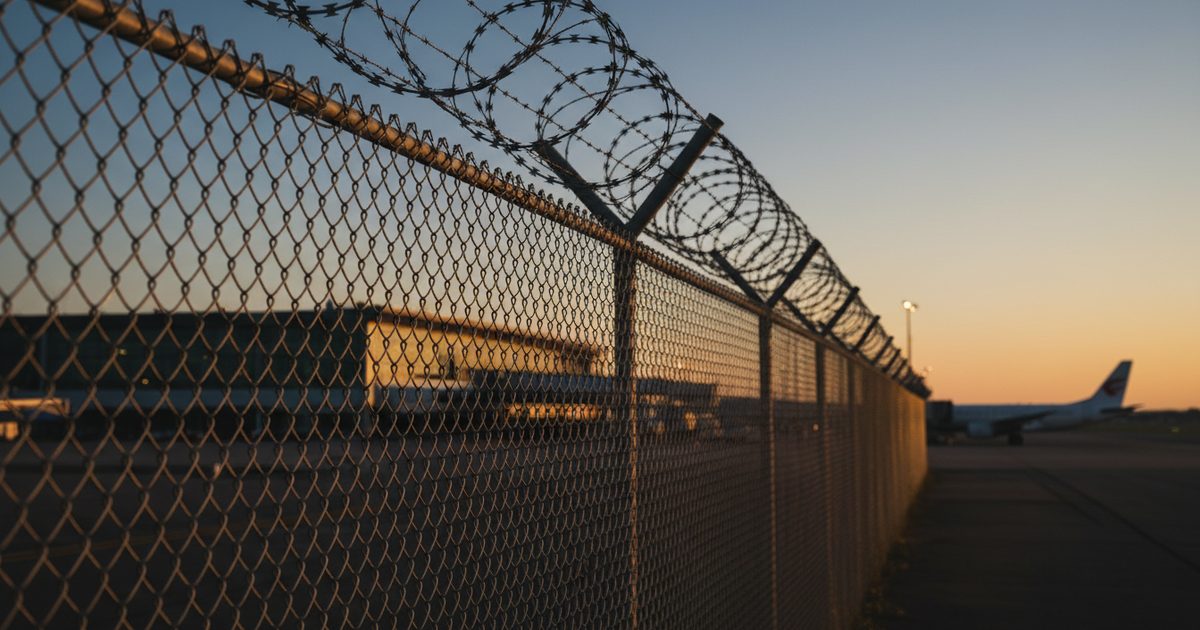
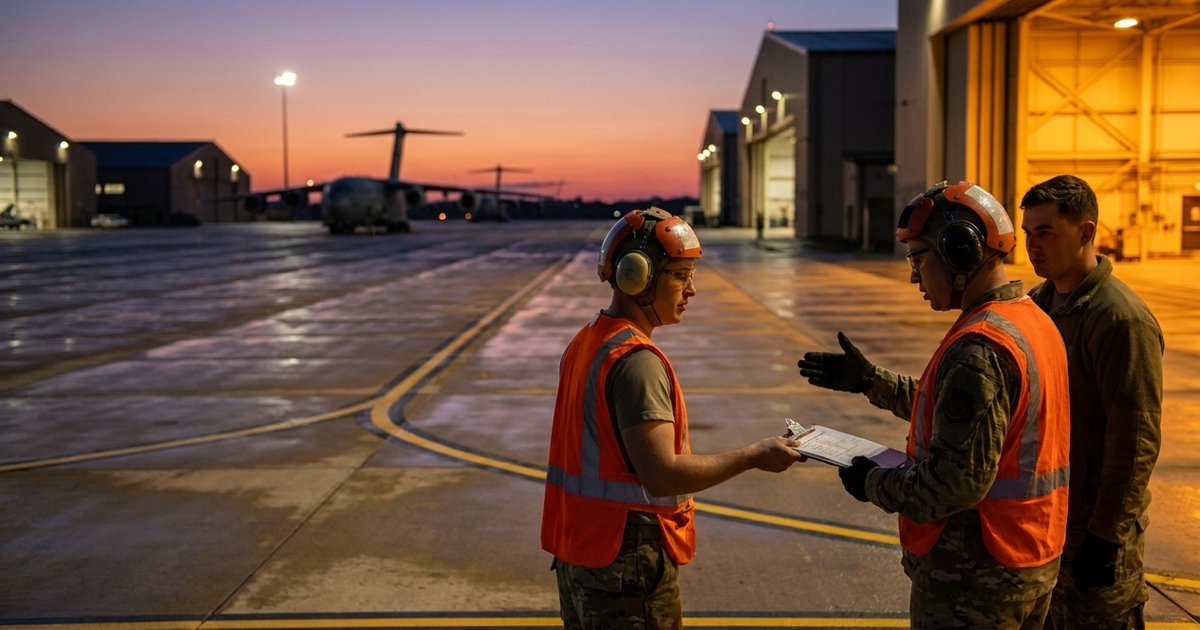
The aircraft is buttoned up. The outgoing crew is signing off. The incoming shift is still getting oriented. For a window that lasts maybe 20 minutes, the shift change on a military flightline carries a disproportionate share of foreign object debris risk. Tools get miscounted. Ownership gets blurry. Situational awareness hits its daily low — and debris on the ramp doesn’t wait for anyone to catch up.
Ultimately, this isn’t a personnel problem. It’s a systems problem. A well-designed military airfield FOD program has to account for it explicitly — or the gap will keep producing incidents.
Why Shift Change Is the Highest-Risk Window
Most FOD walks happen at the beginning of a shift. However, most tool inventories happen at the end. That means the handover itself — the seam between those two controls — is precisely when neither fully applies. The outgoing crew is winding down. The incoming crew is ramping up and hasn’t yet assumed full ownership of the work area.
In that window, three conditions converge that are individually manageable but collectively dangerous: split accountability, compressed timelines, and reduced situational awareness. An open maintenance task might be known to the outgoing crew chief and no one else. A tool “set aside” for a reason made sense to the person who left it. To the incoming crew, it’s just a FOD hazard with no context.
The personnel rotating through often haven’t built the day’s situational picture. Similarly, TDY augmenters and crew chiefs working unfamiliar configurations enter the flightline without the context their predecessors carried. What isn’t written down doesn’t transfer. What isn’t transferred doesn’t get caught.
What DAFMAN 91-203 Actually Requires
The Department of the Air Force’s primary occupational safety manual, DAFMAN 91-203, establishes the baseline for any military airfield FOD program. Its vehicle entry requirements are explicit: all vehicles, including towed AGE equipment, must stop for a FOD check before entering the flightline. Emergency and alert vehicles responding to active incidents are the only exception.
On shift changes specifically, DAFMAN 91-203 takes a different approach. Rather than mandating one Air Force-wide procedure, DAFMAN 91-203 directs units to develop local procedures for shift changes. These must address maintenance activities involving aircraft hazards and flight control systems. The intent is sound. The execution, however, is inconsistent.
That inconsistency is the compliance exposure. When a wing supplement exists and is enforced, the system works. When it doesn’t — or hasn’t kept pace with operational tempo — the DAFMAN requirement becomes a paper commitment with no teeth. Consequently, an inspector asking for documented shift-change FOD procedures will find either a current, enforced local instruction or a gap that becomes a finding.
For example, Joint Base San Antonio’s FOD program offers a useful operational model. JBSA describes flightline FOD prevention as a continuous effort, not a scheduled event. When any item goes missing, the unit immediately reports to the Maintenance Operations Control Center and opens a Lost Tool or FO Report. The discrepancy stays open — carried through shift turnover — until it’s resolved. The FOD event doesn’t end when the shift ends.

Where Military FOD Programs Break Down at Handover
In practice, three failure patterns emerge when FOD incidents trace back to shift transitions.
Tool accountability gaps. End-of-shift tool counts, when rushed, produce inaccurate baselines for the incoming crew. A tool signed off because the count balanced — but never physically verified — passes the error forward. The incoming crew inherits a false baseline. If that tool later goes missing, the trail starts cold.
Undefined work area ownership. When multiple aircraft are in various maintenance states, transitioning from one crew to another requires explicit handover of every open task. Without a structured protocol, items “being monitored” by the outgoing crew simply stop being monitored. There’s no mechanism to transfer that awareness.
Flightline entry checks degrading to ritual. DAFMAN 91-203’s vehicle entry requirement is clear. But when the same vehicles cross the same entry point multiple times per day, the check becomes performative. A slow roll instead of a genuine tire and vehicle inspection. The Army’s Aviation Safety program emphasizes that FOD controls only work when executed with discipline, not just frequency. Real execution, not checkbox compliance.
A Prevention Framework for Shift-Change FOD Risk
Closing the shift-change gap doesn’t require new regulation. It requires applying existing requirements with more structure at the point where the system is weakest. A practical framework for airfield managers and safety NCOs includes three elements.
Structured handover checklists. Every shift change should involve a formal, documented handover. Specifically, it should cover open maintenance tasks by aircraft and tool accountability with physical verification (not just count). It should also note any open FOD or Lost Tool reports and known FOD-prone areas on the current ramp. Each item needs an owner before the handover closes. This isn’t bureaucracy — it’s the minimum required for DAFMAN 91-203’s shift-change requirement to have any operational meaning.
Mandatory flightline entry FOD checks. Vehicle FOD checks at flightline entry points must be treated as a non-negotiable step, not a suggested pause. The FOD check sign at the entry point is a compliance marker. The actual inspection — tires, undercarriage, cargo area — is what protects the aircraft. Ramp sweeping equipment like the FOD-Razor® can reduce the ambient debris load between parking areas and the flightline entry point. The vehicle check, however, remains the last line of defense before the ramp.
Clear shift ownership protocols. At any point during a shift, every open maintenance task and every work area on the flightline should have a named responsible individual. When a shift ends, those responsibilities must transfer explicitly — not implicitly. If the outgoing supervisor can’t identify who on the incoming shift owns each open task, the handover isn’t complete.
Building this framework into local wing instructions converts DAFMAN 91-203’s intent into consistent execution. Units with strong programs — and clean audit records — share one trait: local supplements that are specific, current, and enforced. Understanding how to structure a FOD program from the ground up is the starting point for any installation ready to close this gap.
Key Takeaways
- Shift change is the highest-risk window in any military airfield FOD program — accountability splits, tool counts rush, and situational awareness hits its daily low.
- DAFMAN 91-203 mandates local shift-change procedures but doesn’t prescribe them — that gap is both a compliance exposure and an operational vulnerability.
- The JBSA model treats FOD as a continuous effort: open discrepancies carry through shift turnover until resolved.
- Three failure patterns dominate: tool accountability gaps, undefined work area ownership, and flightline entry checks that degrade into ritual.
- The fix is structural — documented handover checklists, enforced vehicle entry checks, and explicit ownership protocols — not individual discipline.
If your installation is working to build or strengthen its FOD program, contact our team for a consultation — or download the free FOD Prevention Booklet for a practical framework you can put to work immediately.