The most instructive operational FOD case studies share an unexpected feature. The hazard wasn’t dropped debris or a failure mid-operation. It was purpose-built equipment that left its assigned position and entered an active operating zone during the staging transition — the minutes when equipment is on the surface but operations haven’t yet started, or have just ended. Four named incidents across three industries point to the same gap.
Dover 2026: When the Pit Box Became the Hazard
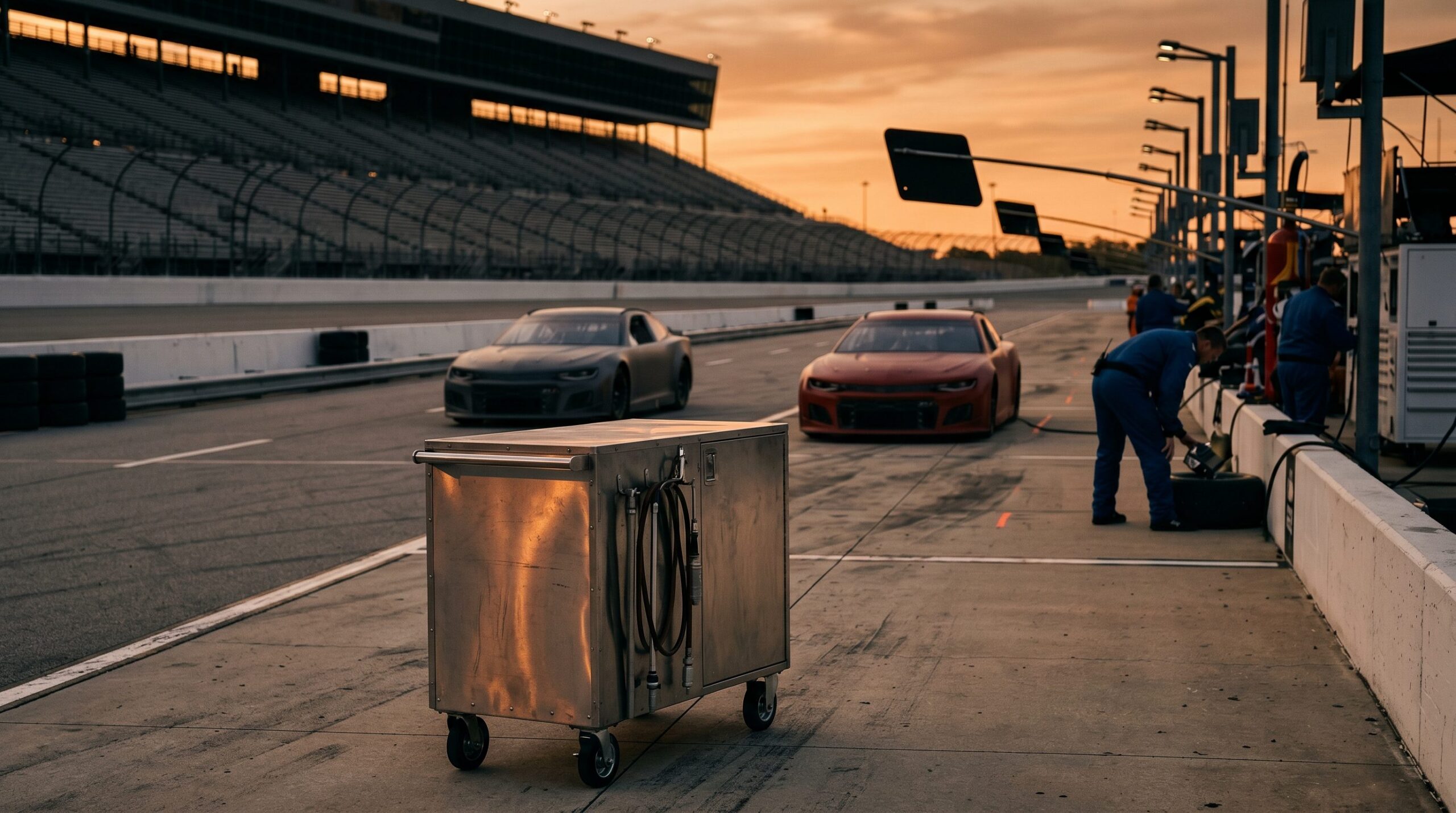
At Dover Motor Speedway in May, a Spire Motorsports pit box rolled free during pre-race setup for the NASCAR Craftsman Truck Series. FOX Sports reporter Amanda Busick was directly in its path. Trackhouse Racing tire carrier Donovan Williams stepped in front of the rolling box and absorbed the impact. He left the hospital that night with minor injuries.
The cause wasn’t debris or a mechanical failure. A piece of purpose-built equipment — chocked, parked, accounted for — escaped containment and rolled across an active surface during the pre-race staging window.
Dover 2026 sharpens a question that every motorsport FOD prevention program must answer: when is a piece of equipment most dangerous? Across industries, the answer is almost never during active use.
Orlando 2026: The Tug That Hit the Jet Bridge
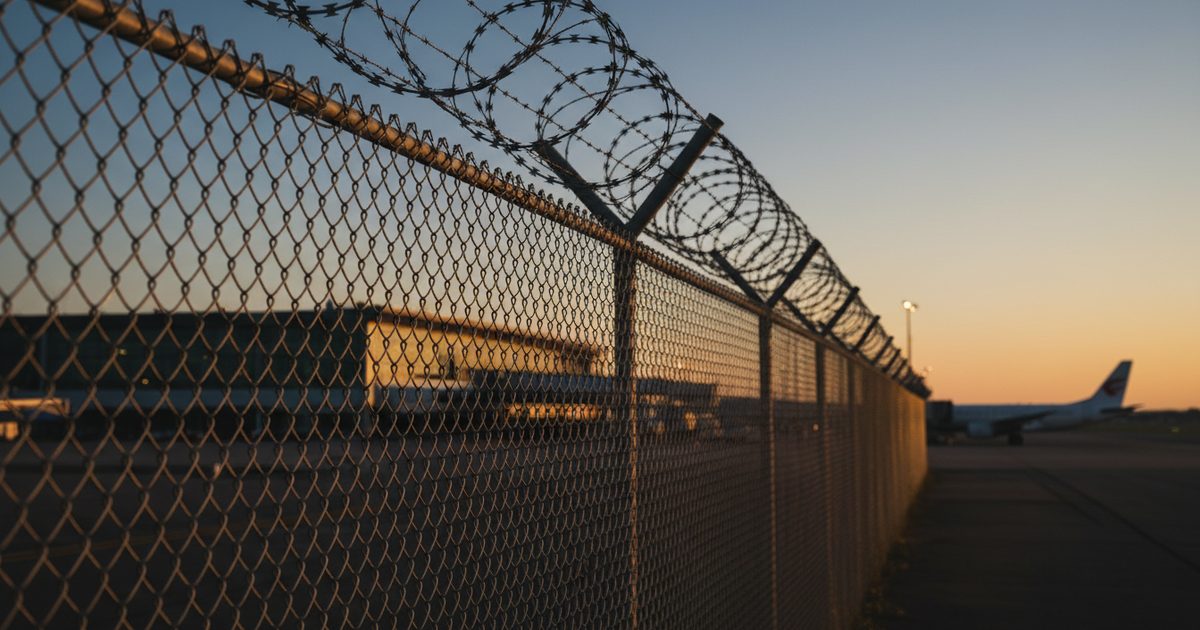
Just before 11 PM on May 7, 2026, an airport tug at Orlando International Airport struck a jet bridge attached to a Delta Air Lines Airbus A321 parked at the gate. Passengers had already boarded for flight DL2593 to Minneapolis. A 49-year-old Delta ground worker was killed in the collision; the cause of death was recorded as multiple blunt impact injuries.
The aircraft was stationary. The jet bridge was docked. The tug was moving across the apron — equipment in transition between assignments, on an operating surface, before active pushback operations had begun. Delta suspended operations at MCO; the FAA opened an investigation.
Orlando sits in the same category as Dover: equipment in motion across an active surface during the transition window, contacting people and infrastructure that should have been outside its path. Every serious aviation FOD prevention program now treats GSE-in-transit as a primary staging-window risk.
Military Flightlines: The Recurring Class of Equipment-on-Aircraft Contact
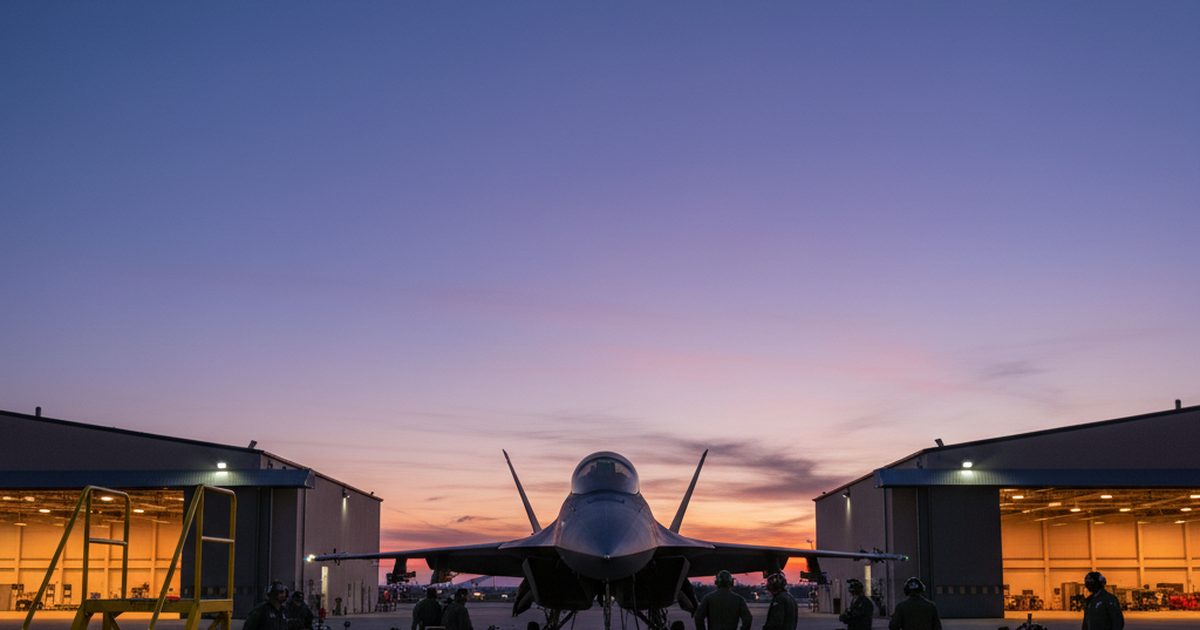
U.S. military FOD programs are comprehensive by design: tow procedures with named driver, marshaller, and wing walkers; mandatory FOD walks before every sortie; chock-and-cone policies around every parked aircraft. Yet equipment-on-aircraft contact remains one of the most consistently reported ground mishap categories in DoD aviation.
The pattern is documented across published FOD program literature: tow tractors striking aircraft during repositioning; maintenance stands rolling into wings during platform staging; ground power units contacting fuselages while being moved into place. The broken hardware that results — light lenses, fasteners, paint chips — becomes secondary foreign object debris that can be ingested by another engine or blown across the flightline by jet blast.
Investigation findings cluster around the same factors: inadequate spotter use, communication breakdowns between driver and marshaller, rushed staging under schedule pressure. The contact almost never happens during the active maintenance task. It happens in the transition — moving the tractor into position, walking the stand to the aircraft, repositioning the GPU. That is what military FOD prevention doctrine targets. Nevertheless, the staging window remains the highest-risk interval even in the most rigorous programs.
Singapore 2008: When Ferrari Released the Car With the Fuel Rig Still Attached
During Felipe Massa’s pit stop under the safety car at the 2008 Singapore Grand Prix, Ferrari’s lead mechanic activated the green release light before the fuel hose had been disconnected. Massa accelerated out of the box dragging the fuel rig with him. The hose ripped free at the pit exit; mechanics were knocked over in the scramble. His race was over.
The rig hadn’t failed. It was performing exactly the role it was designed for — and then it was released into the active racing surface because the staging-to-active handoff was rushed. The signal that told the driver “go” arrived before the signal that should have said “equipment clear.”
F1 banned in-race refueling after 2009, partly because of incidents like this. The staging window then shifted — to wheel guns, hose management, and the choreography of jacks and personnel positioning. The category remains.
The $5 Billion Pattern: Ground Damage Across the Commercial Ramp
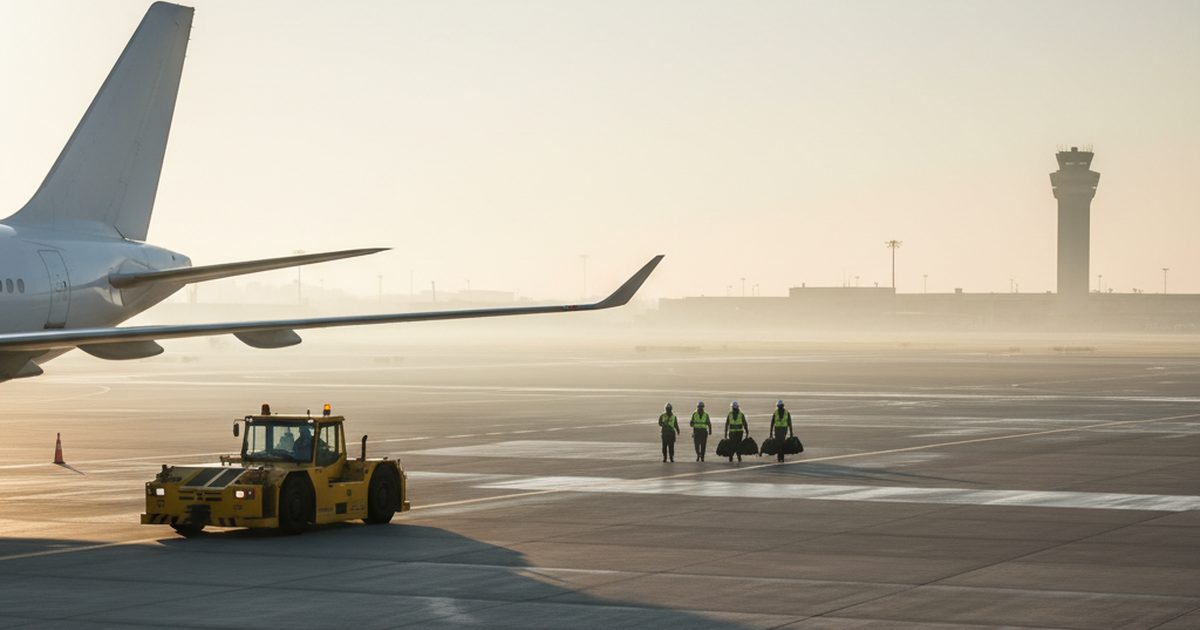
The Flight Safety Foundation estimates apron and ramp damage to commercial carriers exceeds five billion dollars annually when direct and indirect costs are counted — a figure echoed by IATA and broader industry research. The most consistent aviation FOD case studies in that data are ground service equipment events: catering trucks contacting fuselages, baggage tugs striking gear doors, jet bridges making contact during docking.
The pattern is consistent across published FAA FOD program guidance and FSF ramp safety literature: most ground equipment incidents don’t occur during active operations. They occur during the staging transition — a vehicle moving toward the aircraft from its parked position, or being repositioned after use. The equipment is adjacent to the operating surface, but full crew attention hasn’t engaged.
That is the staging window — not a gap in the equipment, but a gap in the protocol.
Aviation FOD Case Studies and the Staging Window: The One Pattern That Connects Them All
Pull back from these four incidents. A single pattern emerges: the most dangerous moment in equipment management isn’t during active use — it’s the window between “staged” and “secured.”
The staging window is the interval between secured rest and active operational control. Equipment has moved to the operating surface; full crew attention has not yet engaged. It opens when equipment moves into position and closes at engine start, race start, or departure push. It also opens on the back end — after the operation completes, before equipment returns to constrained storage.
Three conditions converge. The equipment is on or adjacent to the operating surface. Full operational attention has not yet engaged. And the equipment lacks both the physical constraints of storage and the active oversight of in-operation use.
Most FOD prevention protocols target either the resting state or the active operational state. The staging window falls between both — and neither protocol class covers it fully. The cross-domain pattern points to a gap in how most company FOD programs are designed. The Singapore release illustrates it cleanly: the rig didn’t fail, and the car didn’t fail — the handoff failed in the seconds between the two.
Closing the Staging Window: Six Cross-Domain Principles for Equipment Containment Discipline
-
Define your staging window explicitly. For every equipment category near an active surface, identify when the window opens and when it closes. Assign it a named start and end point. Unnamed hazards don’t get managed — unnamed windows don’t get protocols.
-
Assign staging accountability as specifically as operational accountability. During an active pit stop, every crew member has a named role; the staging phase requires the same specificity. Someone must own each piece of equipment during the transition. Shared accountability reliably defaults to no accountability.
-
Apply physical constraints until the moment of active use. Equipment staged near an operating surface should retain chocks, tethers, or tie-downs until actively required — not merely until repositioned. Dover 2026 illustrates what happens when “positioned” is mistaken for “secured.”
-
Conduct a staging-complete check before operations begin. Military aviation runs a pre-sortie FOD walk on the movement area. The equivalent for equipment is a pre-operation staging check: every piece confirmed secured, positioned, or cleared before the window opens. This is the FOD walk for the staging zone.
-
Control the back end of the staging window. Most protocols address pre-operation staging. However, fewer address the post-operation interval — when equipment moves back off the surface after the stop, the landing, or the maintenance close-out. The back end carries equal risk and receives far less protocol attention.
-
Train specifically to the staging window, not just the operation. Expand FOD training to include the staging window: containment expectations during the transition, failure indicators to watch for, and authority to call a hold when staging is incomplete. The FOD-Razor® manages operating surfaces efficiently; closing the staging window requires the organizational layer that precedes it.
Key Takeaways
- The staging window — the transition from secured-at-rest to in-active-operation — is the highest-risk interval in equipment management across aviation, military, and motorsport.
- Dover 2026, the Orlando MCO tug fatality, the documented class of military equipment-on-aircraft contact, and Massa’s 2008 Singapore release share one root cause: equipment that left its assigned position during the staging transition.
- Most FOD programs address the resting state or active operations. The staging window falls between both and is under-addressed by each.
- Named accountability, physical constraints through the transition, and a pre-operation staging check close the window.
- The post-operation back end carries equal risk to the front end — and receives far less protocol attention.
If your FOD program needs a staging-zone accountability framework, contact us. For the complete foundation, download the FOD Prevention Handbook: program architecture, inspection protocols, and training frameworks for proactive containment discipline.