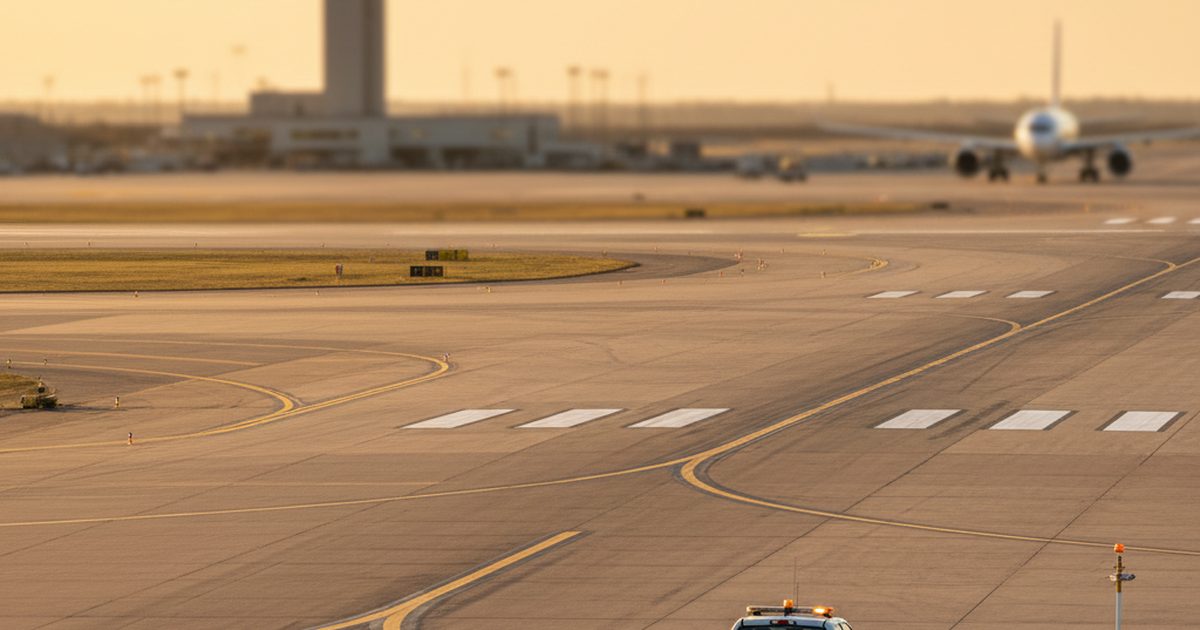
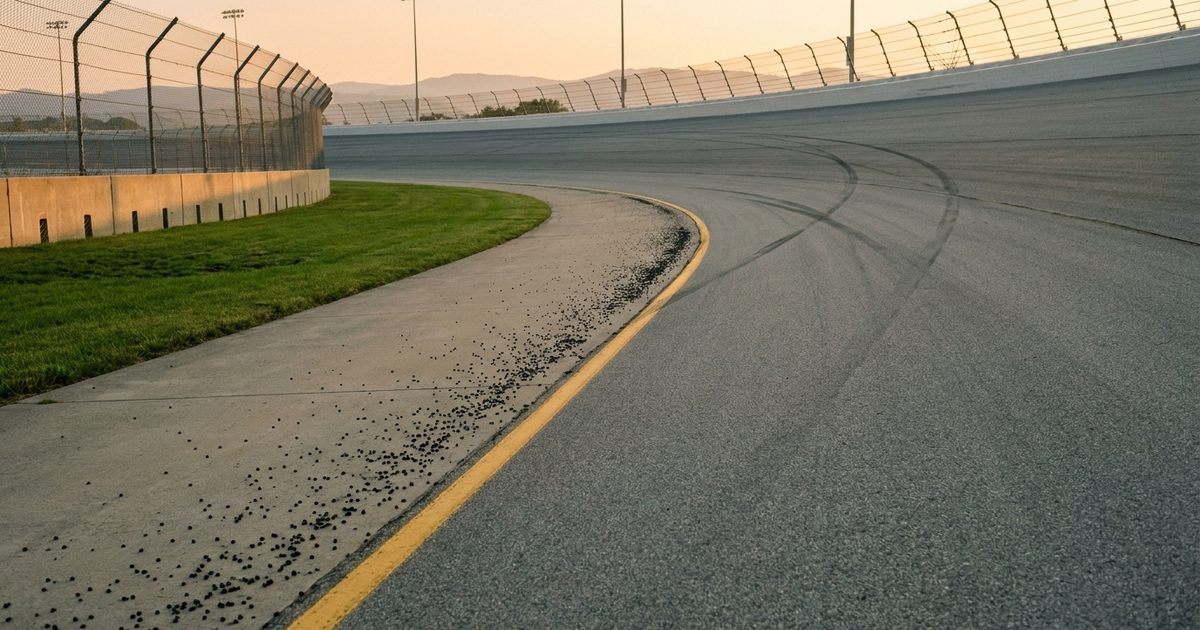
Consider Bristol Motor Speedway on a Saturday night. Cars complete a lap every 15 seconds on the 0.533-mile short track. The banking reaches 28 degrees through the turns. After 500 laps, that debris has settled in one spot: the outer edge of each banked corner. The same physics funnels it there on every single pass.
That’s what separates oval track debris management from anything a road course facility deals with. Indeed, it’s not just the volume of debris — it’s the geometry.
Banking Physics Creates Predictable Accumulation Zones
Road course managers know debris can end up anywhere — gravel traps, back straights, chicane runoff. Consequently, cleaning protocols cover the whole circuit. However, on banked ovals, physics narrows the problem to specific zones every time.
Banking angle and tire grip combine to hold a car on its circular path. That combination enables speeds impossible on flat road. At Talladega — 33-degree banking — and Daytona at 31 degrees, that principle sustains speeds above 200 mph.
Loose debris obeys different rules. Without tire grip, bodywork fragments and rubber marbles follow centrifugal inertia outward. They migrate up the slope toward the outer wall. Furthermore, at oval speeds, even a small fragment carries enormous destructive potential when a trailing car runs over it.
The result: foreign object debris on banked ovals doesn’t scatter randomly. Instead, it concentrates in the same narrow band on every lap — the high side of each corner. That’s also where drivers venture during restarts and on worn tires.
NASCAR Oval Data Tells the Story
The operational reality of oval track debris management is visible in NASCAR’s caution statistics. Before 2001, the Cup Series averaged roughly 15 debris cautions per season. After Dale Earnhardt’s fatal crash at Daytona, officials began calling debris cautions far more aggressively. As a result, ovals drew particular attention — debris at speed poses the greatest threat.
By 2005, debris cautions peaked at 85 in a single season, according to Georgetown Sports Analysis. That’s more than 2.5 per race. Intermediate ovals averaged over 2.24 debris cautions per race during 2004–2015. Texas Motor Speedway alone averaged three per race, with one event producing seven.
Road course events in the same era generated a fraction of those numbers. The difference is not coincidental. Specifically, banked corners concentrate FOD in zones that remain hazardous for the entire race.
IndyCar Superspeedways: Speed Amplifies the Problem
IndyCar’s approach to oval debris management at superspeedways shows how seriously the series treats the banking problem. Specifically, before 2020, IndyCar mandated titanium debris deflectors ahead of cockpits — for oval races only. Road courses and street circuits didn’t require them. Oval speeds at venues like Indianapolis Motor Speedway launch debris fragments as airborne projectiles. Road-course racing simply doesn’t generate that threat.
Similarly, at Indianapolis, dedicated crews sweep the 2.5-mile oval edge-to-edge in approximately eight hours before race day. During the event, safety vehicles sweep the outer zones at Turns 1 and 4. That’s exactly where centrifugal force deposits debris on every lap. This is targeted oval track debris management, not general circuit cleaning.
Short Tracks: High Banking, High Laps, High Concentration
If superspeedways produce debris accumulation through speed, short tracks produce it through repetition. Bristol runs 500 competitive laps. Martinsville runs similar counts. Therefore, 24–28 degrees of banking across hundreds of circuits in hours means outer corner zones saturate quickly. No road course layout generates that rate.
Short track contact rates are also higher. More contact means more bodywork debris entering the surface. Furthermore, relentless rubber buildup from tire wear compounds the problem. Those predictable outer zones saturate far faster than at any other track type.
Moreover, the short distances between corners leave cleaning crews almost no margin. A piece of debris shed in Turn 2 at Bristol is back in a danger zone within seconds. Effective oval track debris management at short tracks demands speed of response and precise zone knowledge.

Why Road Courses Scatter Debris Differently
Flat or minimally banked road courses present a fundamentally different debris geometry. Without consistent banking, no single force vector pushes debris to the same outer zone on every corner. Instead, debris ends up in gravel traps, tire walls, and varied runoff areas. In addition, road course facilities often deliberately preserve rubber buildup on the racing line. This is a practice well-documented in track surface research.
Road course sweeping protocols reflect this: regenerative sweepers operate at 7–8 mph to clean without stripping beneficial rubber. By contrast, oval sweepers run at up to 40 mph, targeting high-side zones before every restart.
The fundamental difference: road course FOD is distributed and unpredictable. Oval FOD is concentrated and predictable. That distinction drives every decision in a well-run sweeping program.
Targeting the Zones — What Oval Sweeping Actually Requires
Understanding the banking problem changes how track managers approach equipment and protocols. Consequently, a standard road course sweeper may not meet the demands of a banked oval. The same zones absorb punishment all race long.
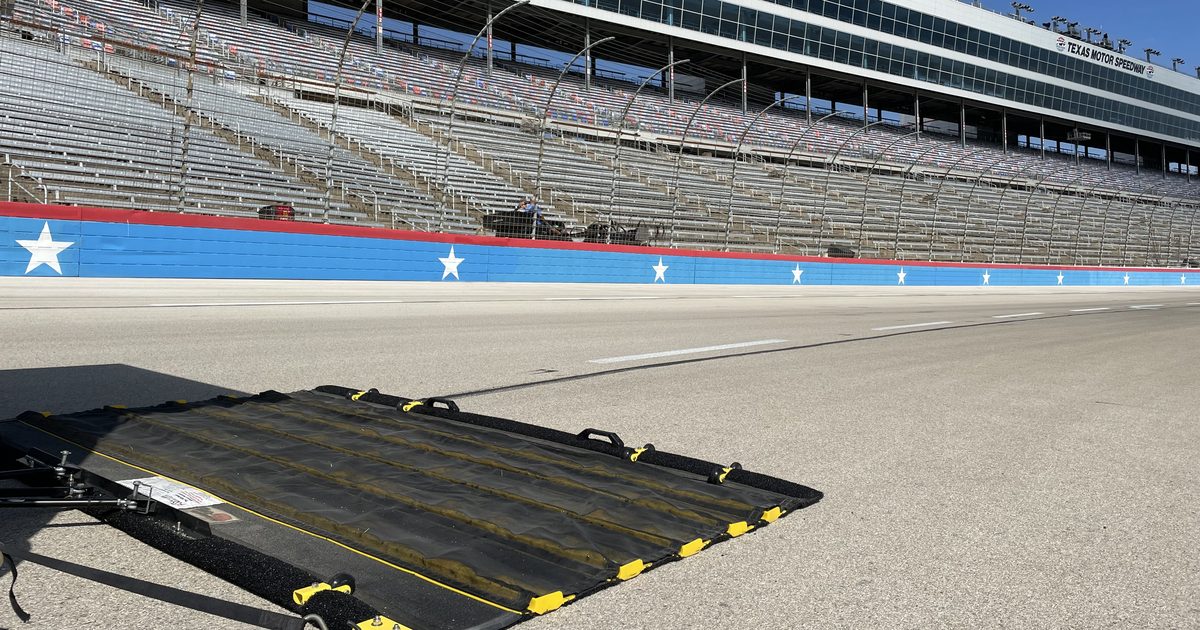
The FOD-Razor® friction sweeper is built for exactly this kind of targeted, repeated deployment. Its flat mat design allows rapid passes through high-side accumulation zones under yellow-flag windows. Whether the facility hosts NASCAR on a short track or IndyCar on a superspeedway, the goal is identical. Clear the outer corners before a restart puts drivers in those zones.
For a comprehensive approach, the principles in Setting Up a Company FOD Program apply directly. Specifically, identify your highest-risk zones, establish sweeping windows, and match equipment to your track’s physics. On a banked oval, the physics tells you exactly where to focus.
Key Takeaways
- Banking angles of 24–33 degrees funnel loose debris to the high side of every corner through centrifugal inertia — creating the same accumulation zone on every lap.
- NASCAR ovals averaged nearly 2 debris cautions per race from 2004–2015, far exceeding road course events and reflecting a structural FOD problem.
- IndyCar mandated oval-specific cockpit protection for superspeedways, where banking-driven debris at 200+ mph creates risks road-course racing doesn’t generate.
- Short tracks compound the problem: 500 laps across 24–28 degree banking saturates outer zones faster than any other format.
- Effective oval track debris management targets outer corner zones specifically, using high-speed tow-behind sweepers deployed rapidly during caution windows.
Ready to upgrade your sweeping program for banked ovals? Contact our team for a facilities assessment, or download the free FOD Prevention Booklet to get started.