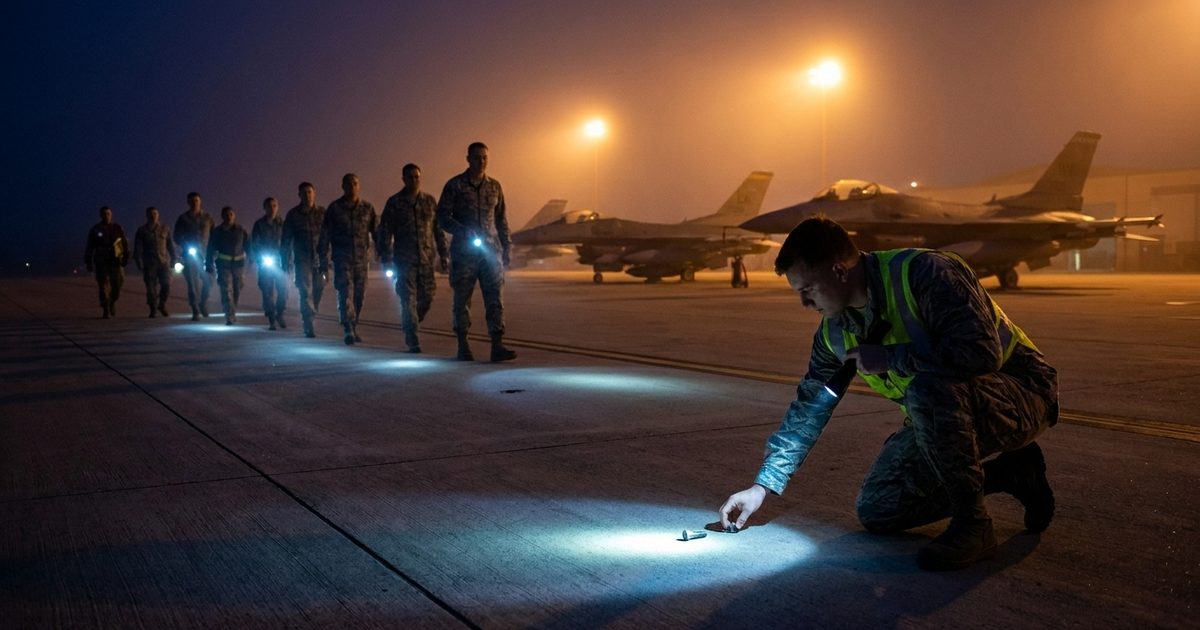
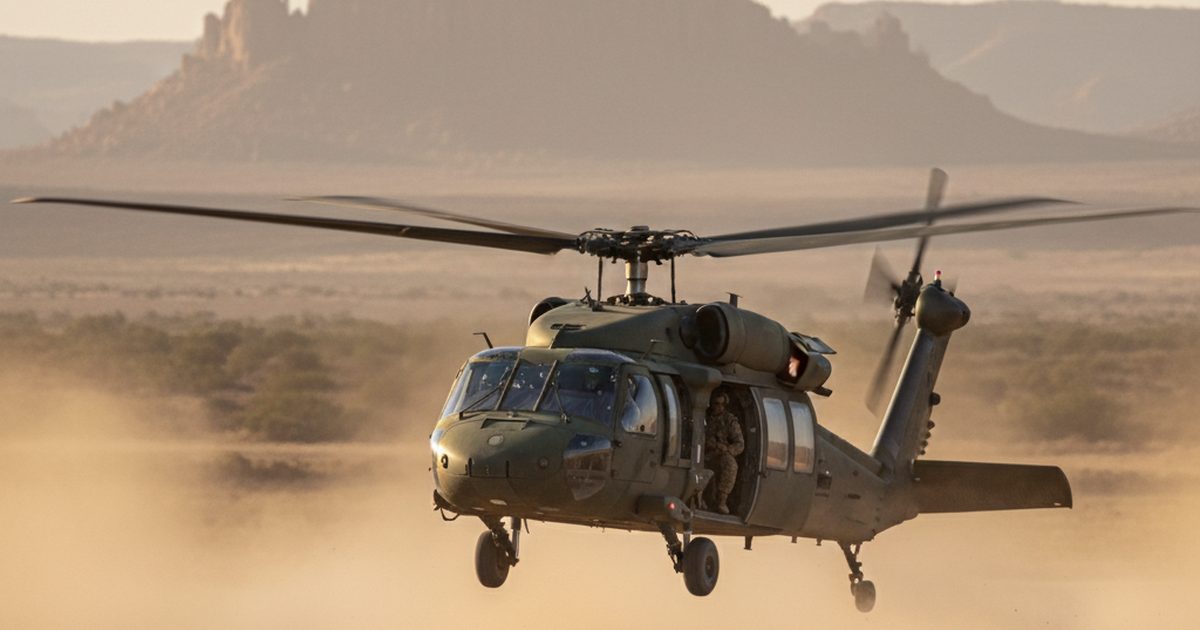
Every military FOD prevention manual assumes the same thing: a paved runway, a permanent flight line, and a base with infrastructure already in place. But forward operating bases don’t work that way. FOBs run on Pierced Steel Planking and compacted gravel. Many sit on bare dirt. The aircraft operating from them are almost entirely rotary-wing. The FOD risk profile is completely different. So is the solution.
Forward operating base FOD prevention requires a different mindset than what doctrine typically teaches. This article breaks down three things. First, why the standard playbook falls short in expeditionary environments. Second, what actually generates FOD at a FOB. Finally, what field units can realistically do about it.
The Permanent-Base Assumption
Both DAFI 21-101 (Air Force Aircraft Maintenance Management) and TC 3-04.7 (Army Aviation Maintenance) provide strong FOD prevention frameworks. Furthermore, they require FOD walks, pre-engine-run inspections, tool accountability, and dedicated FOD zones on the flight line. This guidance is sound — for a base with a paved apron, functioning hangars, and a FOD monitor program.
A forward operating base typically has none of that. However, the regulations still apply. DAFI 21-101 mandates FOD prevention programs across all duty locations, including expeditionary. Therefore, the challenge is adapting permanent-base doctrine to a field environment. In that environment, the surface itself is a debris source. That gap is rarely addressed in training.
PSP and AM-2 Matting: What the Surface Solves (and Doesn’t)
Pierced Steel Planking and its successor, AM-2 aluminum matting, are standard expedient airfield surfaces. They transform soft soil into a load-bearing platform. Moreover, they significantly reduce the brownout dust clouds that plague rotary-wing operations on bare ground. For FOD prevention, matting is a meaningful upgrade over bare dirt. However, it introduces its own hazards.
Panel seams, edge gaps, and locking pin clips are constant debris sources. Panels flex under repeated aircraft loads. As a result, small pockets open and close, collecting gravel, dirt, and hardware. Pin clips work loose over time. Additionally, gravel fill packed around panel edges to prevent subsidence migrates onto the mat surface with every aircraft movement.
Furthermore, matting doesn’t eliminate brownout. It only reduces it. Consider a UH-60 Black Hawk operating over AM-2 matting. Its rotor wash will still kick up gravel and fines from the perimeter and from any gaps in coverage. The result is a surface better than dirt — but one that still actively produces debris during every operation.
Rotor Wash, Brownout, and the Helicopter FOD Problem
Fixed-wing FOD doctrine focuses on debris ingested during the takeoff roll. That’s a linear, predictable event. Helicopter FOD, however, is three-dimensional. It happens in every direction simultaneously. Rotor downwash on a UH-60 extends outward approximately three times the rotor diameter radially. Velocities exceed 45 knots in the primary hazard zone. On a Black Hawk with a 53-foot rotor, that translates to a debris ejection radius of roughly 160 feet. In all directions. Every time the aircraft lands or departs.
Loose gravel, PSP hardware, sand, and any unsecured equipment within that radius become projectiles. Inlet particle separators on engines like the GE T700 are effective. For example, one T700 successfully processed 35 kilograms of sand over 58 test hours. However, they’re not invincible. When debris concentration overwhelms the separator — or when objects are large enough to bypass it — the results are expensive. Turboshaft engine overhauls from FOD damage routinely run into the hundreds of thousands of dollars per incident. Consequently, forward operating base airfield FOD prevention isn’t a paperwork exercise. It’s a readiness issue with direct cost implications.
Brownout compounds the risk. Dense dust clouds from rotor wash cause spatial disorientation during landing. Indeed, that’s one of the leading causes of helicopter accidents in deployed operations. Preventing brownout means managing the surface around the landing zone — not just the aircraft itself.
Field-Expedient Sweep Practices
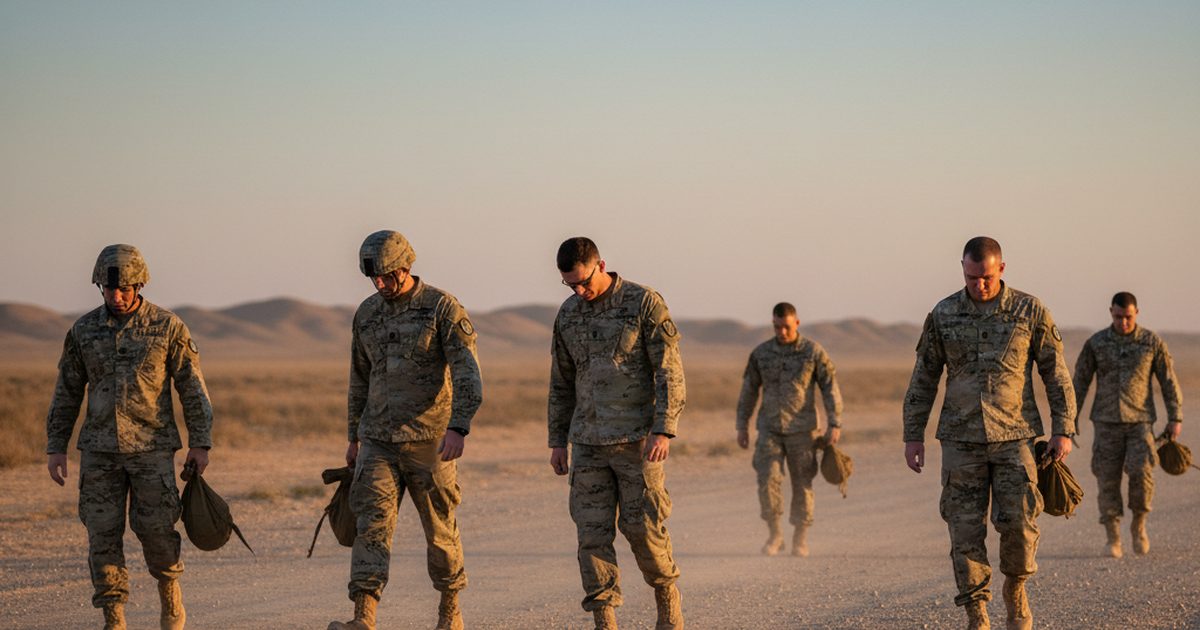
Without paved surfaces or heavy sweeping equipment, forward operating base FOD prevention falls back on organized human effort. Strict protocols matter just as much. The Army Safety Center’s FOD guidance, aligned with TC 3-04.7, outlines several practices that translate directly to expeditionary conditions:
- FOD walks: Run organized line sweeps before and after every aircraft operation. In a FOB context, that means the matted surface, the surrounding gravel approaches, and the 160-foot radius around each landing pad.
- Quartering parties: Send advance teams to inspect and clear landing areas before aircraft arrival. This matters most when rotor wash from a previous landing may have scattered debris.
- Inlet and exhaust covers: Make these mandatory when aircraft are parked unattended. Covers prevent debris accumulation in engine inlets between missions.
- Tool and hardware accountability: Sign every item out and back in. A missing bolt on a PSP panel is a FOD event waiting to happen.
- Perimeter management: Keep loose gravel, fill material, and aggregate away from the edges of the matted surface. Rotor wash will pull it in regardless of how carefully it’s placed.
Speed limits on the flight line also matter. Vehicles moving across gravel approaches scatter debris onto the matted surface. Similarly, any unsecured equipment within the rotor wash radius — tent stakes, tool pouches, fuel caps — is a potential engine strike.

When the FOB Becomes Permanent
Forward operating bases evolve. What starts as a dirt strip with AM-2 matting sometimes grows into a semi-permanent installation. Concrete ramps, paved taxiways, and formal maintenance areas follow. In the U.S. military’s experience in Afghanistan and Iraq, some FOBs operated for years before receiving proper paving. Moreover, that transition point is exactly when equipment-based forward operating base FOD prevention becomes viable.
The FOD-Razor® military friction sweeper is designed for paved flight lines, concrete ramps, and asphalt taxiways. It doesn’t belong on PSP matting or gravel. The mat surface would damage the sweeping mats, and the debris type requires a different approach. However, once a base makes the jump to paved surfaces, manual FOD walks become insufficient. The scale of area that needs coverage is simply too large. That’s where a tow-behind sweeper earns its keep — systematic, documentable coverage at a fraction of the labor cost.
Key Takeaways
- Standard FOD doctrine (DAFI 21-101, TC 3-04.7) applies to expeditionary bases but was written for permanent infrastructure — FOBs require active adaptation.
- PSP and AM-2 matting reduce brownout and debris liftoff. However, they remain ongoing FOD sources because of seams, pin clips, and perimeter gravel migration.
- Helicopter rotor wash creates a 160-foot-plus FOD hazard radius around each landing point. Therefore, FOD prevention at a FOB must treat every landing as a debris event.
- Field-expedient practices — FOD walks, quartering parties, inlet covers, tool accountability, and perimeter control — are the primary tools at the dirt-strip phase.
- Equipment-based sweeping like the FOD-Razor® becomes viable once the base transitions to paved surfaces, replacing labor-intensive manual methods at scale.
FOD management in an expeditionary environment is harder, not easier, than at a permanent base. The terrain fights back. Understanding the limits of standard doctrine — and the specific hazards of rotary-wing operations on unpaved surfaces — is the first step. From there, units can build a program that actually protects aircraft and crews.
Ready to upgrade your FOD prevention program? Contact The FOD Control Corporation to discuss options for your facility. Whether you’re managing a permanent flight line or planning for future infrastructure, we can help. You can also download our free FOD Prevention Booklet for field-ready guidance on building a program from the ground up.
For a deeper look at the essential principles of military FOD prevention, our comprehensive guide covers the full spectrum. It runs from basic program setup to compliance requirements. Additionally, if you’re new to FOD concepts entirely, start with our overview of what FOD is and why it matters across every operational environment.