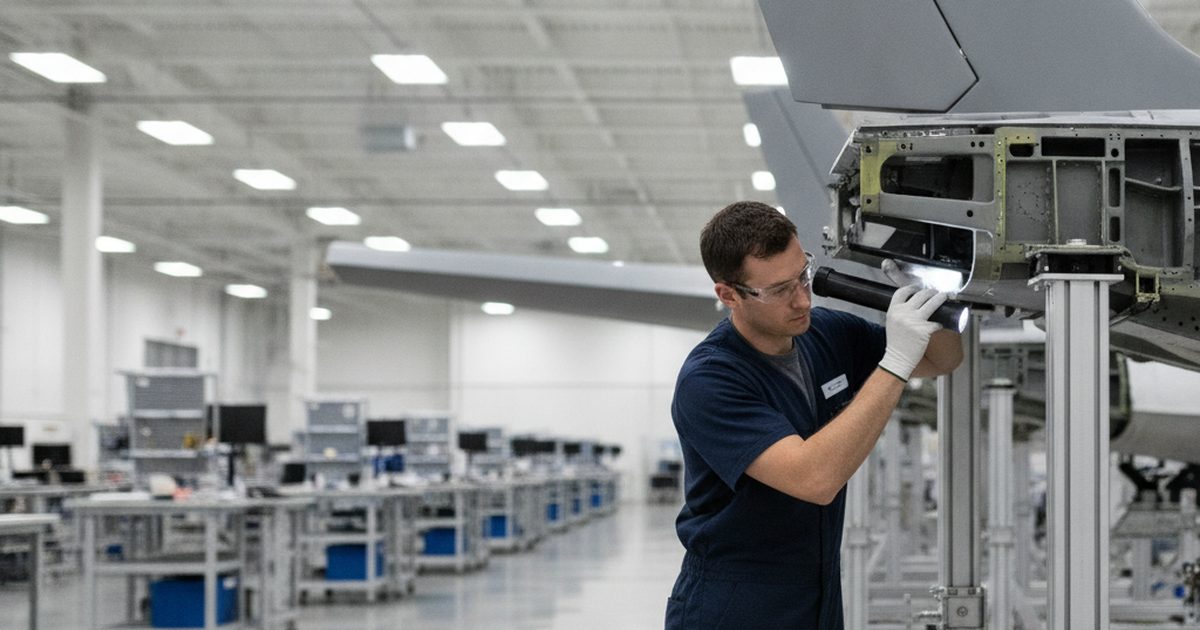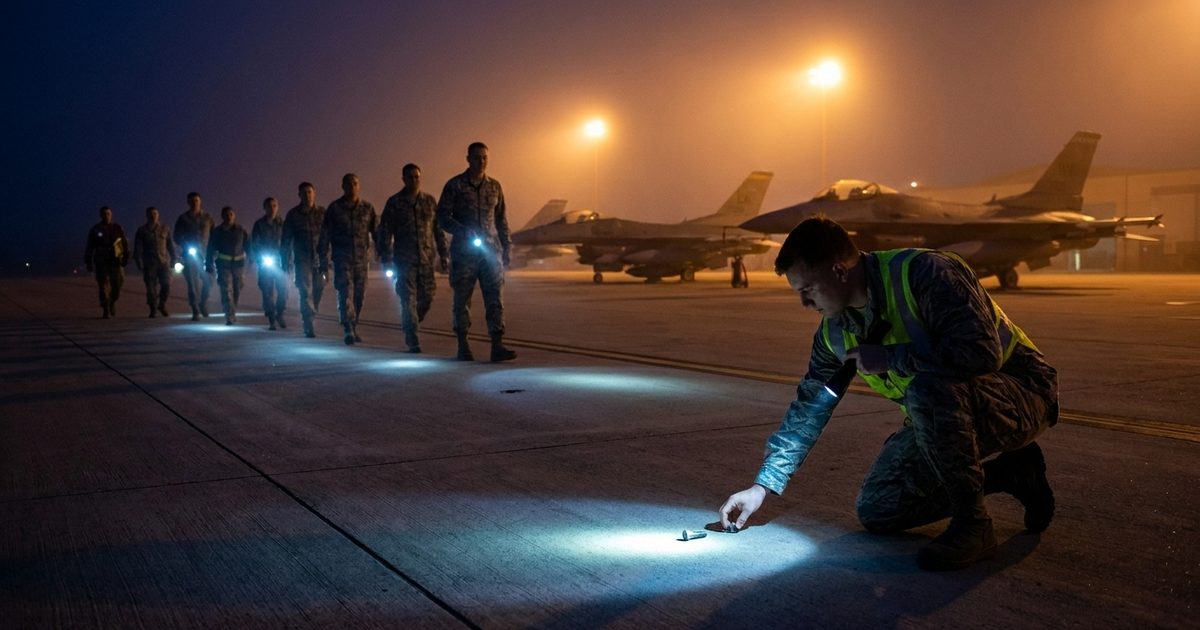
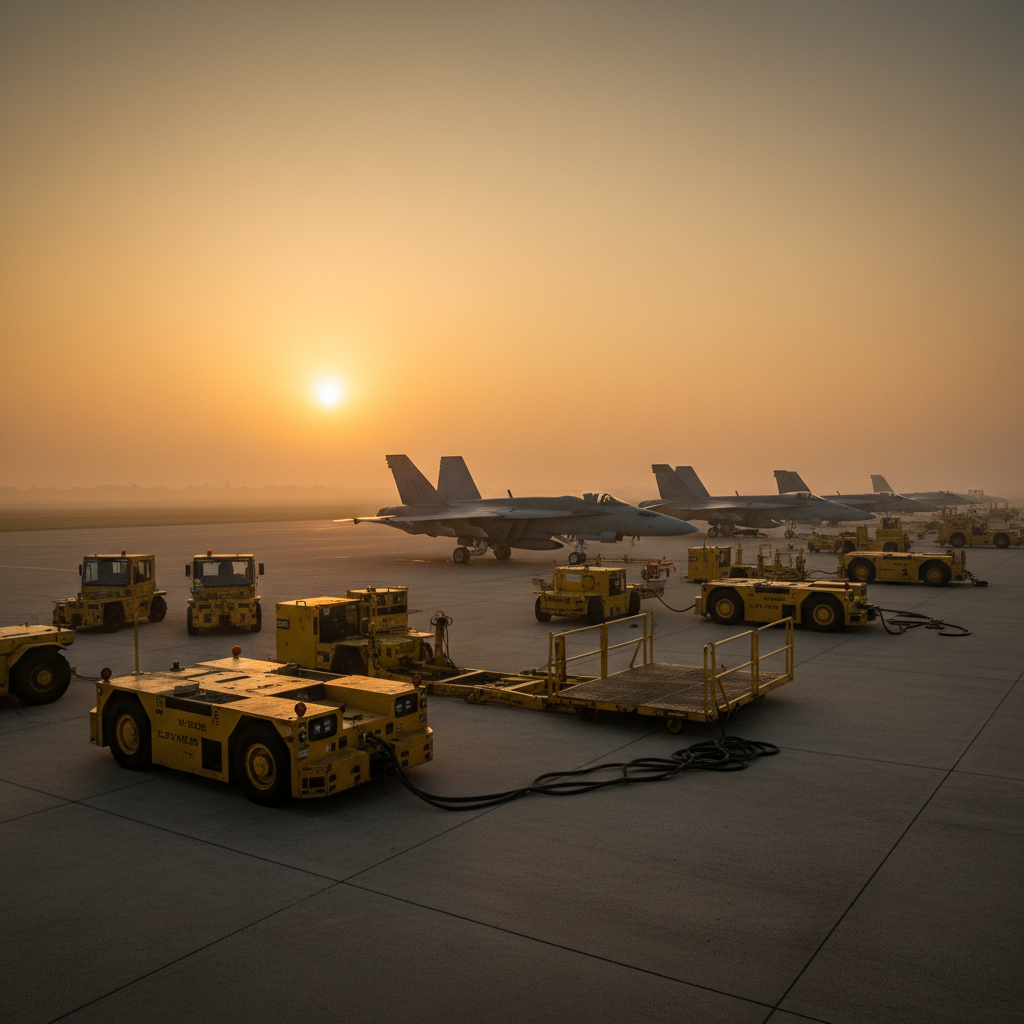
Every 12 hours, military airfield personnel conduct FOD walks across runways and taxiways, searching for debris that could damage aircraft engines worth millions of dollars. However, while these teams scan for obvious threats like loose bolts or runway litter, a constant battle unfolds behind the scenes between heavy ground support equipment and aircraft safety zones. Consequently, this conflict generates unique debris patterns most military ground support equipment FOD programs aren’t designed to handle.
The U.S. Air Force documented nearly 800 FOD incidents between 1995 and 2004, costing $240 million in damages. According to the U.S. Air Force Safety Center, the hidden culprit often isn’t foreign debris blown onto the airfield. Instead, the very equipment designed to support aircraft operations creates these costly hazards.
The Weight Problem: How Heavy GSE Creates FOD That Sweepers Can’t Handle
Military ground support equipment operates on a completely different scale than civilian airport GSE. Aircraft tugs capable of moving a loaded C-5M Super Galaxy — weighing up to 840,000 pounds at maximum takeoff weight — can themselves weigh 20-50 tons when loaded with fuel and operators. Furthermore, these massive machines exert ground pressures exceeding 200 PSI, compared to typical passenger vehicles at 30-35 PSI.
This enormous weight creates three distinct FOD problems that conventional sweeping can’t solve. First, heavy GSE compresses pavement differently than passenger vehicles, creating microscopic cracks where debris lodges deeper than surface sweepers can reach. Second, the enormous tire contact pressure literally embeds rubber fragments and pavement particles into the tarmac surface. Third, repeated loading cycles cause permanent pavement deformation that accumulates debris over time.
Most critically, when these heavy tugs and loaders operate repeatedly over the same paths, they create permanent grooves and depressions measuring 0.5-2 inches deep. These channels become collection points for smaller debris during high winds or jet blast, forming concentrated FOD hazards exactly where aircraft will taxi next. Traditional push brooms and even mechanized sweepers struggle to extract debris from these compressed channels, requiring specialized friction-based cleaning systems.
Tire Tracks and Metal Shavings: GSE’s Invisible Debris Trail
The debris trail left by military ground support equipment FOD sources extends far beyond obvious litter. Hydraulic loaders used for munitions handling — some with 18-ton lift capacities — shed metal shavings from wear points as they maneuver around aircraft. These microscopic particles, typically measuring 0.1-3mm, are nearly invisible during routine inspections but can cause catastrophic engine damage if ingested.
Similarly, aircraft tugs leave rubber tracks that degrade over time into small particles. Unlike passenger car tires, GSE tires are designed for maximum traction and durability, using compounds that fragment differently when worn. These rubber particles don’t blow away like typical debris — they adhere to pavement, especially in hot climates where asphalt becomes tacky above 95°F. Moreover, studies show that GSE tire debris contains steel belt fragments that can damage engine fan blades.
Perhaps most insidious are the hydraulic fluid drips and grease spots that GSE inevitably leaves behind. While these aren’t direct military FOD threats themselves, they create sticky surfaces that trap sand, small hardware, and organic matter. Over time, these contaminated spots become debris magnets in precisely the areas where aircraft engines are most vulnerable during ground operations. Research indicates that each hydraulic leak spot can accumulate up to 50% more debris than clean pavement areas.
High-Tempo Operations: When Mission Speed Conflicts with FOD Prevention
Military airfields face a unique challenge that civilian airports rarely encounter: mission tempo that prioritizes rapid aircraft turnaround over comprehensive debris management. During high-intensity operations, GSE must move quickly between aircraft, often following the same traffic patterns repeatedly within short time windows. Additionally, combat readiness exercises and deployment preparations can compress normal maintenance schedules into emergency timeframes.

This operational pressure creates a perfect storm for FOD generation. Maintenance crews have minutes, not hours, to position loaders and tugs around aircraft. Consequently, GSE operators often take the most direct routes rather than designated clean pathways, potentially tracking debris from maintenance areas directly into aircraft movement zones. Base safety officers report that 60% of GSE-related FOD incidents occur during high-tempo operations when normal procedures are abbreviated.
The financial stakes are enormous. Each jet engine fan blade replacement costs over $42,000, and a single FOD incident averages $300,000 in total damages. However, mission requirements often don’t allow for the 30-60 minutes needed for thorough area cleaning between aircraft movements. Base commanders must balance operational readiness against aviation FOD prevention — a trade-off that civilian airport managers rarely face. According to the FAA Advisory Circular 150/5210-24, proper FOD prevention requires integrated planning that civilian operations can more easily accommodate.
The Transition Zone: Where GSE Paths Cross Aircraft Movement Areas
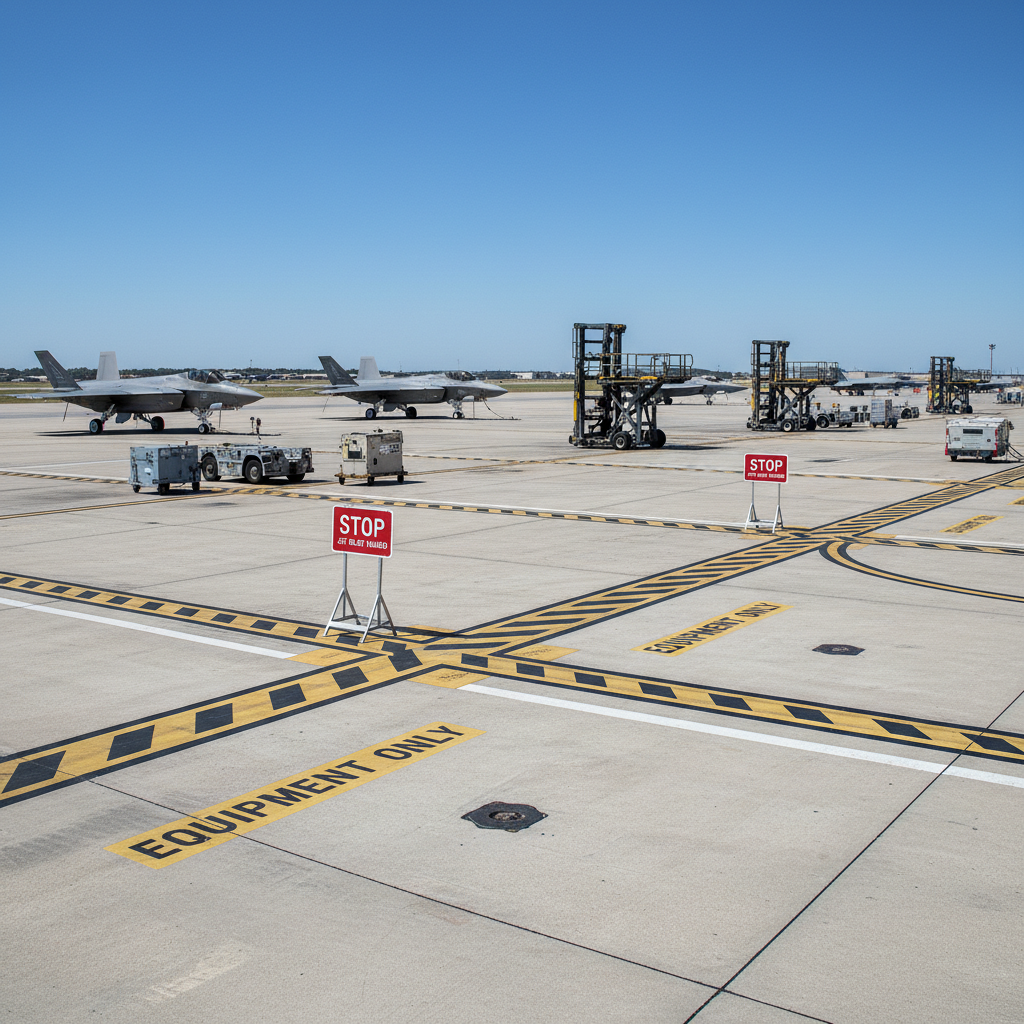
The highest-risk areas for military ground support equipment FOD aren’t the obvious places like parking aprons or maintenance hangars. Instead, the most dangerous zones are the transition areas where GSE traffic patterns intersect with aircraft taxi routes and engine run-up areas. These zones typically cover 5-15% of total airfield area but account for 40% of FOD incidents.
These transition zones present unique challenges because they experience mixed traffic from both heavy GSE and aircraft, creating layered debris patterns that change throughout each operational cycle. A cargo loader might deposit metal shavings in the morning, which then get redistributed by jet blast from afternoon aircraft movements, ultimately concentrating in areas where the next aircraft will taxi. Wind patterns further complicate debris migration, with prevailing winds moving particles in predictable patterns that many bases fail to account for.
Furthermore, these zones often fall between different maintenance responsibilities. Flight line crews focus on aircraft movement areas, while GSE maintenance teams concentrate on equipment staging areas. The transition zones between these jurisdictions can become FOD accumulation points that neither team regularly monitors comprehensively. Consequently, debris builds up in organizational blind spots where accountability is unclear.
Environmental Factors: Weather’s Role in GSE FOD Migration
Weather patterns significantly amplify military ground support equipment FOD challenges in ways that most prevention programs underestimate. Heavy rainfall creates runoff that carries GSE-generated debris from staging areas into critical aircraft zones. Winter operations present additional complications, as ice and snow hide debris while freeze-thaw cycles worsen pavement damage from heavy equipment.
Wind patterns create predictable debris migration routes that smart GSE operations can anticipate and mitigate. Prevailing winds exceeding 15 mph can move small metal fragments up to 200 yards from their GSE source points. Similarly, jet blast from engine run-ups redistributes GSE debris in specific patterns that maintenance teams can map and target for enhanced cleaning.
Desert installations face unique challenges with sand infiltration that combines with GSE lubricants to create abrasive compounds particularly damaging to aircraft engines. These environmental factors require specialized cleaning approaches that standard FOD programs don’t address.
Solutions That Work: Integrating GSE Operations into FOD Programs
Effective military ground support equipment FOD management requires moving beyond traditional “clean after the fact” approaches toward integrated prevention strategies. Leading military installations have found success by treating GSE operations as part of the FOD control system rather than simply another source to manage. This proactive approach reduces incident rates by 35-50% compared to reactive cleaning programs.
The most effective programs designate specific GSE travel corridors that route heavy equipment away from critical aircraft areas whenever possible. These designated paths receive more frequent maintenance and specialized cleaning attention, while also incorporating drainage features that prevent debris accumulation during weather events. Additionally, corridor design includes strategic placement of debris collection points that intercept particles before they reach aircraft movement areas.
Advanced installations have also implemented GSE-specific cleaning protocols. Rather than relying solely on traditional sweepers, these programs use friction-based systems like the FOD-Razor® airport sweeper that can extract debris from the compressed grooves and channels that heavy GSE creates. This tow-behind friction sweeper sits nearly flush with the pavement, dragging flat against the surface to collect debris that conventional sweepers miss. Field tests demonstrate 90% better debris extraction from GSE-damaged pavement compared to traditional sweeping methods.
Equally important is establishing clear transition zone responsibilities. The most successful programs assign specific personnel to monitor and maintain the areas where GSE paths intersect aircraft movement zones, ensuring these critical areas receive appropriate attention from both operational perspectives. These dedicated teams use specialized tracking systems to document debris patterns and optimize cleaning schedules.
Technology Integration: Modern Solutions for Ancient Problems
Cutting-edge military installations are leveraging technology to revolutionize GSE FOD management. GPS tracking systems monitor GSE movement patterns to identify high-debris areas that require enhanced cleaning attention. Additionally, predictive analytics help maintenance teams optimize cleaning schedules based on operational tempo and weather patterns.
Magnetic sweepers specifically designed for GSE debris collection can recover metal fragments that traditional brooms miss entirely. These specialized tools use powerful rare-earth magnets to extract steel particles from pavement cracks and channels created by heavy equipment operations.
Some installations have implemented real-time debris monitoring using high-resolution cameras and AI detection systems that automatically identify FOD in critical areas. These systems can alert maintenance teams within minutes of debris detection, enabling rapid response before aircraft operations are affected.
Key Takeaways
- Heavy GSE creates unique FOD patterns: Unlike typical debris, GSE-generated FOD includes compressed debris in pavement channels, embedded rubber particles, and metal shavings that require specialized removal techniques.
- Weight matters more than frequency: The enormous weight of military GSE creates permanent pavement changes that become ongoing FOD collection points, requiring different maintenance approaches than high-frequency, low-impact traffic.
- Transition zones need dedicated attention: The areas where GSE paths cross aircraft movement zones present the highest risk and often fall between traditional maintenance responsibilities.
- Mission tempo drives trade-offs: Military operations require balancing rapid aircraft turnaround against comprehensive FOD prevention, necessitating integrated solutions rather than reactive cleaning.
- Environmental factors amplify problems: Weather patterns, wind, and seasonal conditions significantly impact GSE debris migration and require specialized mitigation strategies.
- Specialized equipment addresses GSE-specific problems: Traditional sweeping methods can’t effectively manage compressed debris channels and embedded particles created by heavy GSE operations.
- Technology enhances traditional approaches: GPS tracking, predictive analytics, and automated detection systems help optimize GSE FOD management in ways manual inspection cannot achieve.
Military airfield FOD prevention must evolve beyond traditional approaches to address the unique challenges that ground support equipment creates. By understanding how heavy GSE generates different debris patterns and implementing integrated management strategies, military installations can maintain both operational tempo and aircraft safety. Success requires dedicated personnel, specialized equipment, and systematic approaches that treat GSE operations as part of the solution rather than just another problem to manage.
Ready to develop a comprehensive FOD management strategy for your military installation? Contact our team to discuss solutions tailored to your operational requirements, or download our free FOD prevention guide for military airfields.