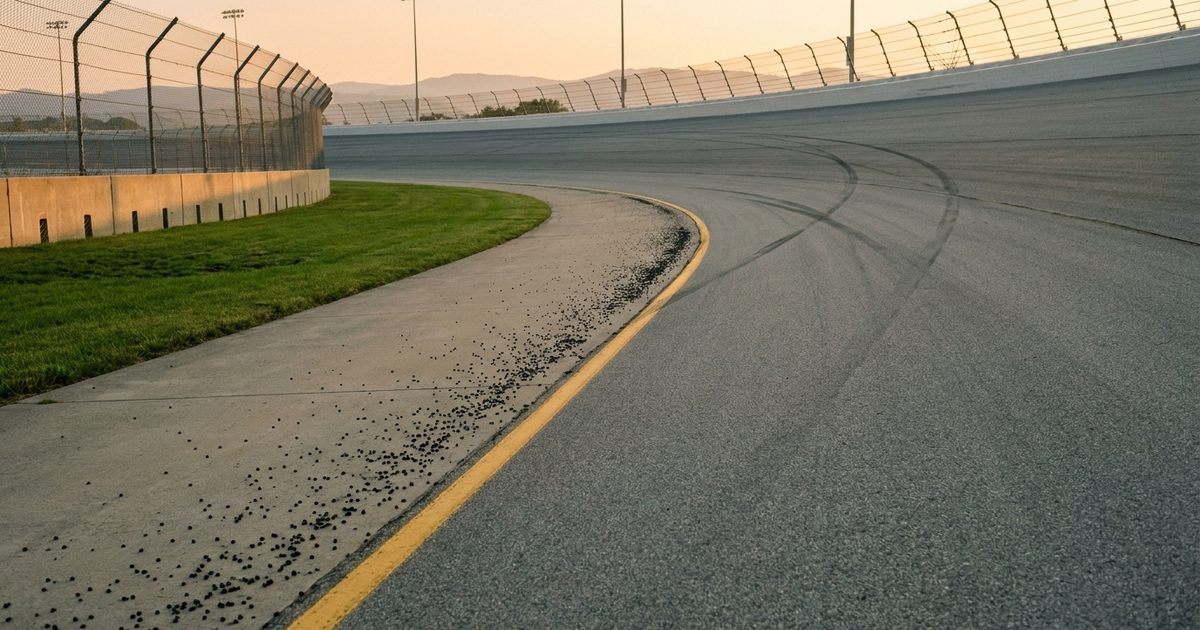
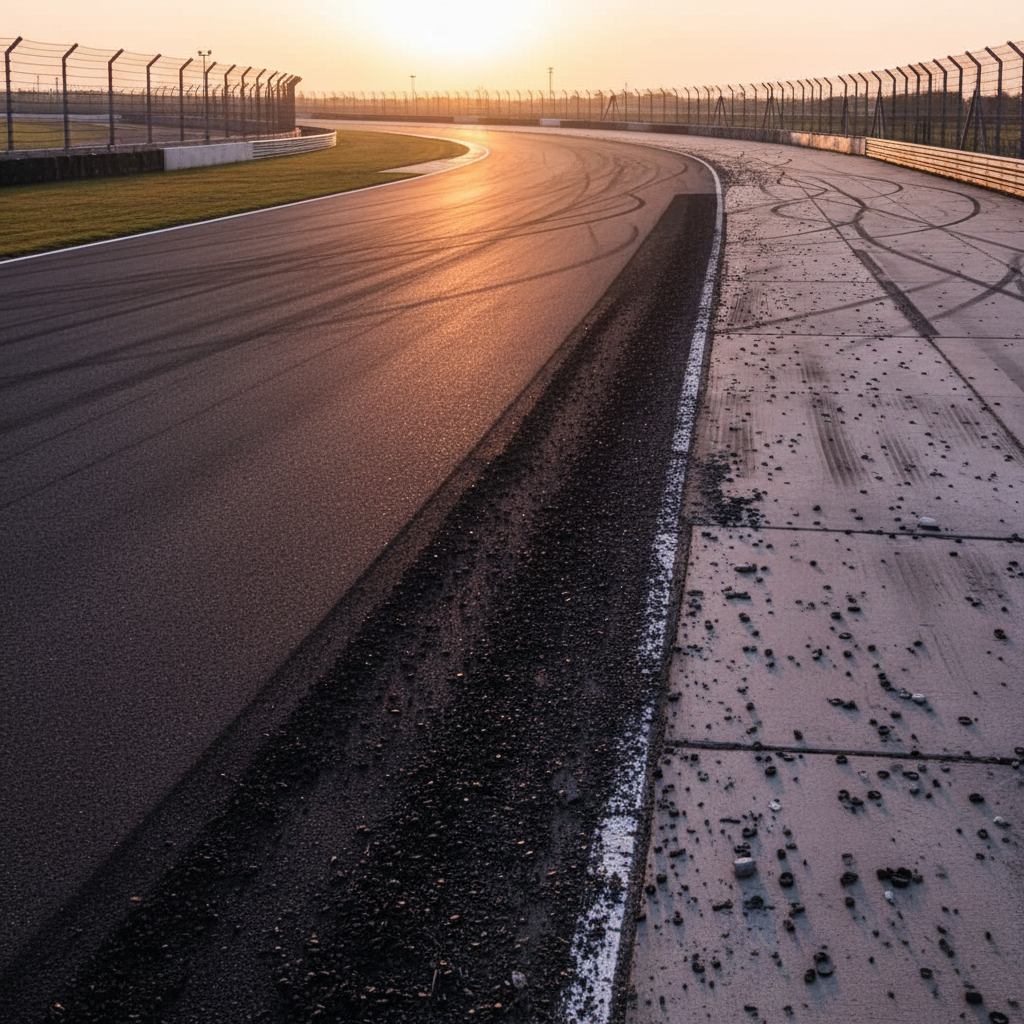
A loose bolt sits on Turn 3 after Friday practice. By Sunday’s final race, that single piece of debris has company. Rubber marbles, concrete chips, and oil spots now litter the track surface. This scenario perfectly illustrates race track surface degradation FOD — a progressive crisis that compounds with each session during multi-day race weekends.
Unlike sudden debris incidents that grab headlines, track surface degradation operates silently. However, its cumulative impact creates increasingly dangerous conditions. Both drivers and facility managers face mounting challenges as surfaces deteriorate. Understanding this progression proves crucial for motorsport safety professionals. They must maintain competitive surfaces while managing foreign object debris under intense time pressure.
The Deterioration Timeline: How Track Surfaces Break Down Session by Session
Track degradation follows a predictable pattern during race weekends. First, Friday practice sessions begin the process as tires reach operating temperatures above 200°F. This heat weakens rubber molecular bonds. Consequently, friction between hot tires and asphalt pulls rubber molecules off tires. These molecules then deposit onto the track surface.
Initially, this rubber deposition improves grip. It creates a chemical bond with the track compound. Moreover, track crews deliberately accelerate this process before events. They use tire rotators and racing cars to lay down beneficial rubber layers. These layers form the foundation for competitive lap times and driver confidence.
Next, Saturday’s qualifying sessions intensify the degradation process. Higher speeds and aggressive driving lines concentrate stress on specific track areas. Furthermore, the combination of increased temperature and repeated loading begins breaking down the beneficial rubber layers. Track surfaces can climb from 80°F to over 130°F during peak activity. This heat makes asphalt increasingly pliable and prone to damage.
Finally, by Sunday’s main event, cumulative stress reaches critical levels. The once-beneficial rubber layers start cracking and peeling “like old paint,” according to motorsport tire degradation research. Additionally, the repeated thermal cycling between sessions creates expansion and contraction. This process loosens surface aggregates. This progression explains why race track surface degradation FOD becomes most problematic during the races that matter most.

Rubber Buildup vs. Concrete Chips: Understanding Different FOD Sources
Not all track debris originates from the same source. Each type presents unique challenges for facility managers. Rubber debris comes in two primary forms: beneficial deposition that enhances grip, and problematic marbles that reduce traction. The key lies in understanding when beneficial rubber crosses the threshold into hazardous debris.
Rubber marbles form when deposited layers become too thick and begin fragmenting. These pieces collect off the racing line. There, they’re picked up by tires venturing outside optimal paths. Subsequently, marbles significantly reduce tire grip and can cause handling unpredictability. Their accumulation accelerates throughout race weekends as more sessions contribute additional rubber waste.
In contrast, concrete and asphalt degradation represents a different challenge entirely. High-temperature conditions cause pavement binders to soften. This releases surface aggregates under tire loading. Meanwhile, the repeated stress of heavy race cars creates micro-fractures. These propagate into larger chips. These hard debris pieces pose immediate puncture threats that require rapid removal.
Additionally, oil and fluid contamination adds another layer of complexity to race track surface degradation FOD. Mechanical failures during sessions leave slick spots. These become slip hazards. Furthermore, these fluids can soften asphalt binders. This creates additional debris as vehicles traverse contaminated areas. Therefore, track crews must address fluid spills immediately to prevent secondary surface damage.
The Safety Car Window: Maximizing FOD Removal During Limited Time
Safety car deployments create brief windows for debris removal. However, these opportunities come with intense pressure. Race control must balance thorough cleaning against competitive impact. Extended safety car periods alter race strategies and outcomes. Consequently, track crews work under extreme time constraints while maintaining safety protocols.
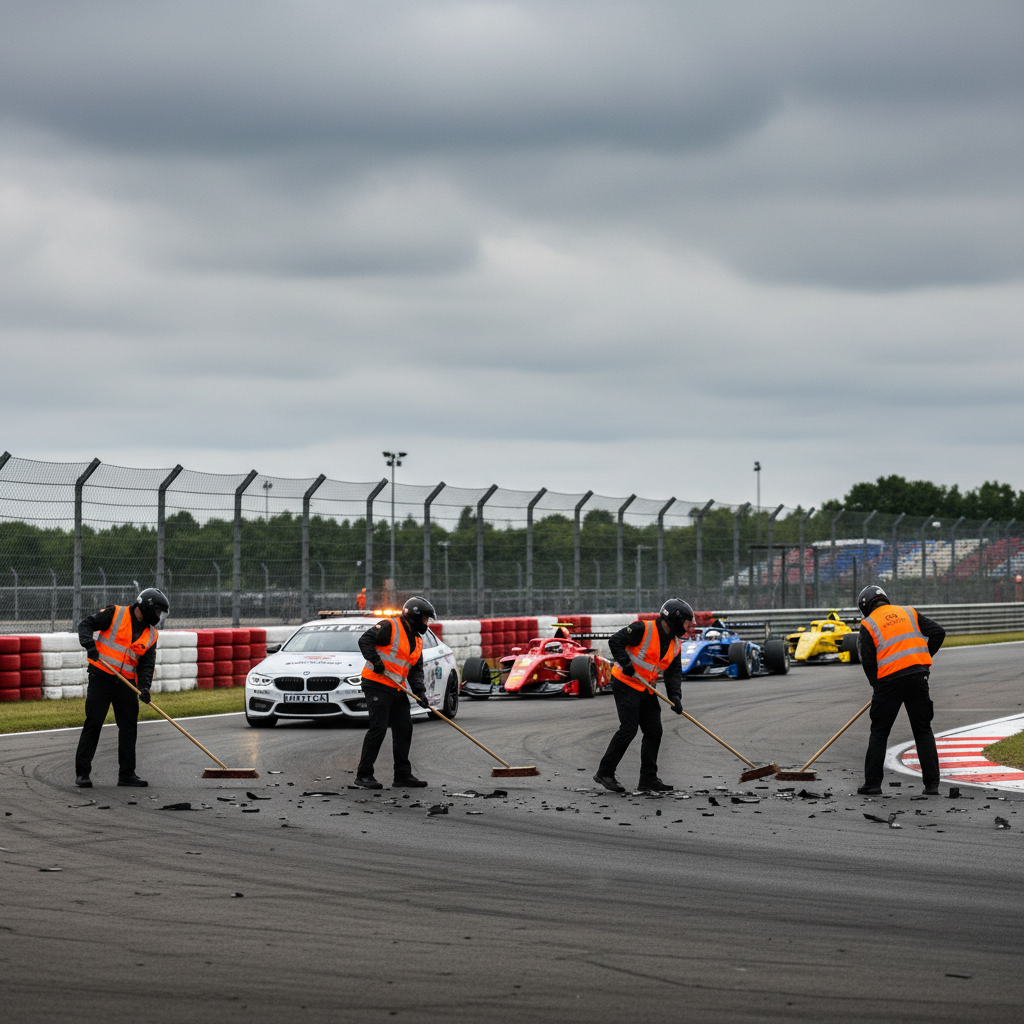
Modern safety car procedures typically allow 3-5 laps for debris removal. The time varies depending on the series and debris type. However, comprehensive motorsport FOD prevention requires more time than emergency protocols permit. Therefore, facility managers must prioritize immediate hazards. Meanwhile, they accept that some progressive degradation continues untreated.
Marshall teams use specialized equipment during these windows. This includes track sweepers towed behind utility vehicles. Additionally, CCTV networks help identify debris locations quickly. They direct crews to priority areas first. Nevertheless, the pressure to resume racing often forces incomplete cleaning. This allows residual FOD to accumulate.
The challenge intensifies when multiple debris sources require attention simultaneously. For instance, a mechanical failure might create oil contamination, rubber marbles, and loose bodywork fragments. Each requires different removal techniques and time investments. As a result, track crews must triage these situations rapidly while maintaining safety standards that protect both workers and competitors.
Weather’s Role: How Rain and Heat Accelerate Track Surface Problems
Weather conditions dramatically influence how quickly track surfaces degrade during race weekends. High temperatures accelerate all degradation processes. Air temperatures of 100°F create track surface temperatures exceeding 120°F. Under these conditions, asphalt becomes increasingly pliable and prone to surface damage from tire loading.
Meanwhile, rain introduces different complications that can undo hours of surface preparation. Water lifts oils and rubber deposits, creating slick conditions. These require specialized cleanup. Moreover, moisture causes concrete surfaces to expand differently than asphalt. This creates height variations at repair joints. These transitions become FOD sources as thermal cycling continues throughout the weekend.
Similarly, humidity creates another challenge by coating track surfaces with moisture. This narrows the grip groove to as little as 10 feet. This concentration forces all traffic into a smaller area. It intensifies wear patterns and accelerates debris formation. Additionally, humid conditions make rubber more prone to fragmenting as temperature cycles impact material properties.
Furthermore, weather transitions during race weekends compound these issues. A hot Friday followed by a cool, wet Saturday disrupts the normal degradation timeline. Track surfaces that appeared stable in practice may suddenly produce unexpected debris. Temperature changes stress previously deposited materials. Therefore, facility managers must adapt their race track surface degradation FOD strategies to account for these dynamic conditions.
Technology Solutions: Real-Time Track Monitoring During Competition
Advanced monitoring systems increasingly help facility managers track surface conditions during race weekends. GPS and GNSS tracking at rates up to 25 Hz provide precise data about vehicle positions and track limit violations. Furthermore, these systems can identify areas where vehicles consistently run wide. This indicates potential off-line debris accumulation zones.
CCTV networks offer visual coverage for incident detection and debris spotting across circuits. Integrated platforms combine camera feeds with GPS sector marshaling and automated hazard alerts. However, these systems primarily focus on vehicle telemetry rather than surface condition monitoring. This leaves gaps in debris detection capabilities.
Temperature monitoring helps predict when track surfaces will become vulnerable to degradation. Embedded sensors track pavement temperatures and weather conditions that influence rubber deposition and concrete expansion. Consequently, track crews can anticipate problem areas before visible debris appears.
Despite technological advances, specialized debris detection systems remain limited in motorsport applications. Current technologies emphasize vehicle safety over surface monitoring. However, professional series likely employ proprietary systems not covered in public documentation. This represents an opportunity for facilities to invest in dedicated FOD detection technologies similar to those used in aviation.
Post-Weekend Recovery: Preparing the Surface for the Next Event
The work doesn’t end when checkered flags fall. Post-weekend surface recovery determines whether progressive degradation carries forward to future events. Alternatively, it gets reset to baseline conditions. Immediate post-race inspection identifies areas requiring repair before deterioration spreads.
Comprehensive cleaning removes accumulated rubber marbles, oil stains, and loose aggregate. This must happen before they become embedded in the surface. Track crews use specialized equipment including friction sweepers. These can collect fine debris without damaging beneficial rubber layers. However, this cleaning must balance thoroughness against track availability for other events.
Surface repairs address concrete chips, pothole formation, and joint separations that developed during the weekend. These repairs prevent FOD sources from recurring at the same locations during future events. Additionally, crack sealing prevents moisture infiltration. This could cause freeze-thaw damage in seasonal climates.
Long-term surface management includes periodic resurfacing schedules that account for cumulative degradation patterns. Facilities using passive cleaning systems like the FOD-Razor® friction sweeper can maintain surfaces more frequently between events. This reduces the severity of weekend-to-weekend degradation. This proactive approach minimizes emergency cleaning requirements during competition windows.
Key Takeaways
- Progressive degradation — Track surfaces deteriorate systematically throughout race weekends. Each session contributes to cumulative FOD buildup that peaks during main events.
- Multiple debris sources — Rubber marbles, concrete chips, and fluid contamination each require different removal strategies. They also demand varying time investments during limited safety car windows.
- Weather acceleration — Heat and humidity dramatically accelerate surface degradation. Rain can undo surface preparation and create new hazards.
- Proactive management — Post-weekend recovery and between-event maintenance prevent progressive degradation. This stops it from carrying forward to future competitions.
- Technology gaps — Current monitoring systems focus on vehicle safety rather than surface conditions. This creates opportunities for dedicated FOD detection investments.
Managing race track surface degradation FOD requires understanding both immediate safety needs and long-term facility maintenance. Track facilities that implement comprehensive surface management programs can reduce emergency interventions. They also maintain competitive conditions throughout demanding race weekends.
Looking to implement a proactive FOD prevention strategy at your motorsport facility? Contact our experts to discuss surface management solutions tailored to your track’s specific challenges. Additionally, download our free FOD prevention guide for proven strategies that keep surfaces clean and competition flowing safely.