For any of the roughly 520 US airports certificated under 14 CFR Part 139, runway safety is a federal mandate enforced at every certification audit. The Part 139 FOD requirements in §139.327 define how often your team must inspect the airfield, who is qualified to do it, and how long those records must be kept. Understanding exactly what the regulation demands — and how AC 150/5210-24A translates it into daily operations — is the foundation of every compliant airport safety program.
What 14 CFR §139.327 Actually Requires
Section 139.327 is the self-inspection backbone of Part 139 — and the regulation FAA inspectors examine most closely during certification reviews. It imposes minimum inspection frequencies, mandates qualified personnel, and creates a closed-loop chain from inspection report to corrective action.
Inspection frequency. The regulation requires daily self-inspections of the airport’s movement areas, unless the Airport Certification Manual specifies otherwise. Two additional triggers go beyond the schedule: airports must conduct inspections whenever unusual conditions arise — construction activity, severe weather, or anything affecting safe air carrier operations — and immediately after any accident or incident on the airport.
Qualified personnel. The 139.327 self-inspection requirement isn’t satisfied by routing any available staffer through the movement area with a radio. Inspectors must complete initial training and recurrent training within every 12 consecutive calendar months. That training covers airport familiarization — signs, markings, lighting systems — plus NOTAM procedures, emergency plan basics, pedestrian and vehicle procedures in movement areas, and discrepancy reporting protocols.
Reporting and recordkeeping. Beyond identifying hazards, §139.327 requires a reporting system that ensures prompt correction of unsafe conditions. Inspection records must be retained for at least 12 calendar months; training records, for 24 months after completion. Accordingly, FAA inspectors review both at every certification audit.
Why Self-Inspection Is the First Line of Defense Against FOD
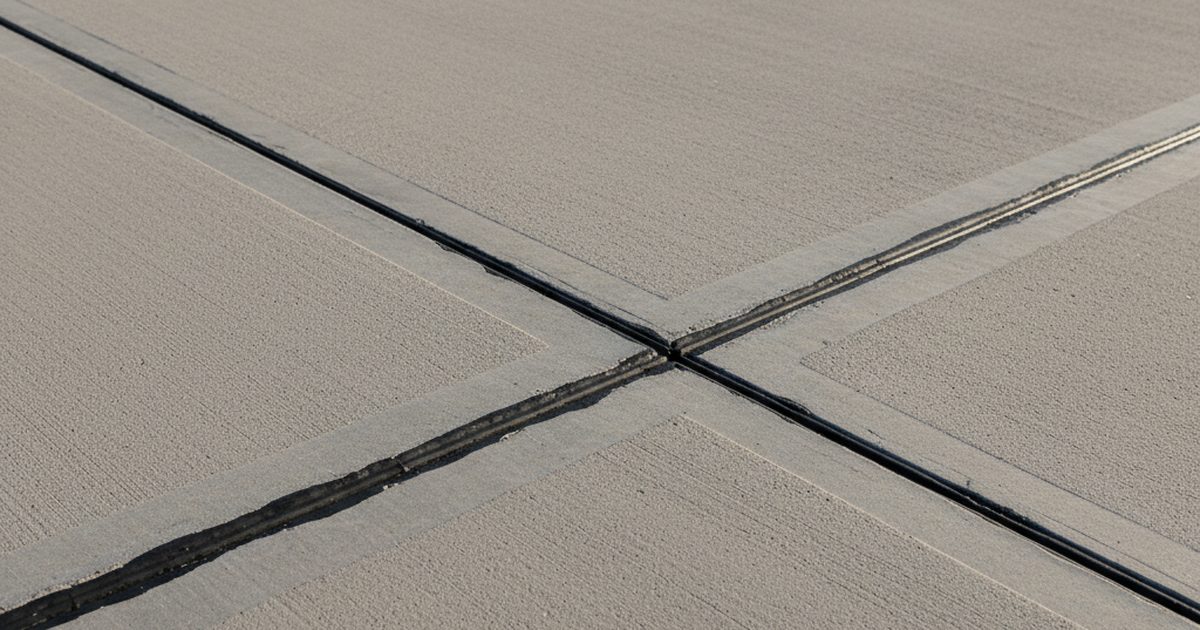
Runway surface hazards don’t announce themselves. Pavement cracks, spalled joint filler, deformed metal hardware, and migrating aggregate can all become aircraft-damaging debris long before they appear on a routine drive-by. That’s precisely what §139.327’s “unusual conditions” trigger is designed to intercept.
The financial stakes reinforce the urgency. FAA-linked cost studies estimate that FOD adds roughly $26 in direct costs and $312 in indirect costs per affected flight — a burden that compounds quickly across a busy airfield’s daily operations. A recent Tokyo Haneda incident (Japan’s airports operate under JCAB/ICAO oversight, not US Part 139) illustrated the failure mode clearly: a deteriorated runway expansion joint exposed a metal plate protruding ~8 cm above the pavement surface, blowing aircraft tires on consecutive operations. That is precisely the class of progressive pavement hazard a rigorous 139.327 self-inspection program is designed to catch at US certificated airports before any aircraft rolls over it.
AC 150/5210-24A: The FOD Management Playbook
To operationalize self-inspection requirements, Section 139.327(d) explicitly directs certificate holders to FAA Advisory Circulars as acceptable means of compliance. The operative document is AC 150/5210-24A — issued February 8, 2024, superseding the canceled 2010 version — and it is the definitive FOD management playbook for US certificated airports.
AC 150/5210-24A organizes an airport FOD management program around four operational pillars:
- Prevention — pavement maintenance, workforce awareness, contractor and tenant controls
- Detection — scheduled FOD walks, vehicle patrols, and optional automated detection technology
- Removal — mechanical sweepers, vacuum systems, magnetic bars, and manual collection procedures
- Evaluation — incident data collection, trend analysis, and continuous program improvement
That “advisory” designation doesn’t mean optional. Airports purchasing FOD removal equipment with AIP or Passenger Facility Charge (PFC) funds must comply with AC 150/5210-24A specifications. Moreover, for Part 139 airports integrating FOD guidance into their Airport Certification Manual, this document is the operating standard — not a reference suggestion.
FAA’s $523M Signal: Funding the Pavement That Creates FOD
The FAA isn’t only regulating pavement safety — it’s actively funding pavement rehabilitation. The most recent Airport Infrastructure Grants (AIG) round distributed more than $523 million across 332 grants in 43 states. This is the fifth and final installment of the $14.5 billion IIJA airport infrastructure program.
Pavement is the centerpiece. Dallas-Fort Worth International received $70 million for runway rehabilitation — the largest single grant and the most direct investment in the infrastructure category that generates FOD. Other awards targeted taxiway reconstruction and apron improvement across all 43 states represented.
Consequently, the mandate and the money remove any remaining excuse for deferred runway maintenance at US certificated airports.

What a Compliant FOD Self-Inspection Program Looks Like
Meeting Part 139 FOD requirements isn’t a binder on a shelf — it’s a functioning daily system. In short, here’s what that system looks like at an operationally mature certificated airport:
- Structured inspection checklist. Each inspection covers movement area surfaces (pavement condition, joint integrity, drainage), airfield lighting and markings, and active construction zones. Every form is standardized, dated, and signed.
- Defined frequency calendar. Airports schedule and track daily inspections. Weather events, construction milestones, bird strikes, or any runway incident trigger an immediate additional inspection per §139.327(a)(2) and (a)(3).
- Trained and certified inspectors. Every inspector holds documented initial training and a current 12-month recurrent certification. The airport archives training records for the full 24-month retention period.
- Corrective action log. Every discrepancy generates a logged corrective action with a resolution date and responsible party. The regulation requires prompt correction — not just notification. The loop must close.
From Mandate to Machine: Running Your FOD Removal Program
In practice, self-inspection identifies the hazard. A systematic FOD management program removes it — and the two are operationally inseparable.
Once your 139.327 self-inspection surfaces debris or pavement deterioration, you need removal capacity in place before the next aircraft rolls over that surface. For airport environments, that means mechanical sweeping equipment capable of covering runways, taxiways, and aprons efficiently — on short notice and without disrupting operations.
Accordingly, FOD Control purpose-built the FOD-Razor® airport sweeper for exactly this mission. It collects debris from runways, taxiways, and aprons at active airfields without disrupting operations — fitting directly into the removal pillar of any AC 150/5210-24A-compliant FOD management program. Furthermore, for airports building or upgrading to meet Part 139 FOD requirements, mechanical sweeping capacity is what separates a program that documents hazards from one that eliminates them.
For a comprehensive look at building an airport FOD program from the ground up, start with our FOD prevention in aviation guide. Additionally, if your team is new to the subject, understanding what FOD is and how it’s managed is the right foundation for staff training and program development.
Key Takeaways
- 14 CFR §139.327 requires daily self-inspections — plus triggered inspections for unusual conditions and immediately after any incident — at all ~520 Part 139 certificated US airports.
- Inspectors must complete recurrent training within every 12 consecutive calendar months; inspection records must be retained for 12 months and training records for 24 months.
- AC 150/5210-24A (issued February 8, 2024, superseding the 2010 version) is the FAA’s current FOD management program standard and is mandatory for AIP/PFC-funded equipment purchases.
- The $523M AIG round — including $70 million to DFW for runway rehabilitation — signals that federal funding is actively addressing the pavement conditions that generate FOD, giving airports no grounds for deferring maintenance.
- A complete Part 139 compliance posture combines rigorous 139.327 self-inspection with systematic mechanical removal capability — the FOD-Razor® provides the removal side of that equation.
Ready to build or strengthen your airport’s FOD removal capability? Contact our team to learn how the FOD-Razor® fits your operation — or download the free FOD prevention booklet to share with your airport safety staff.