
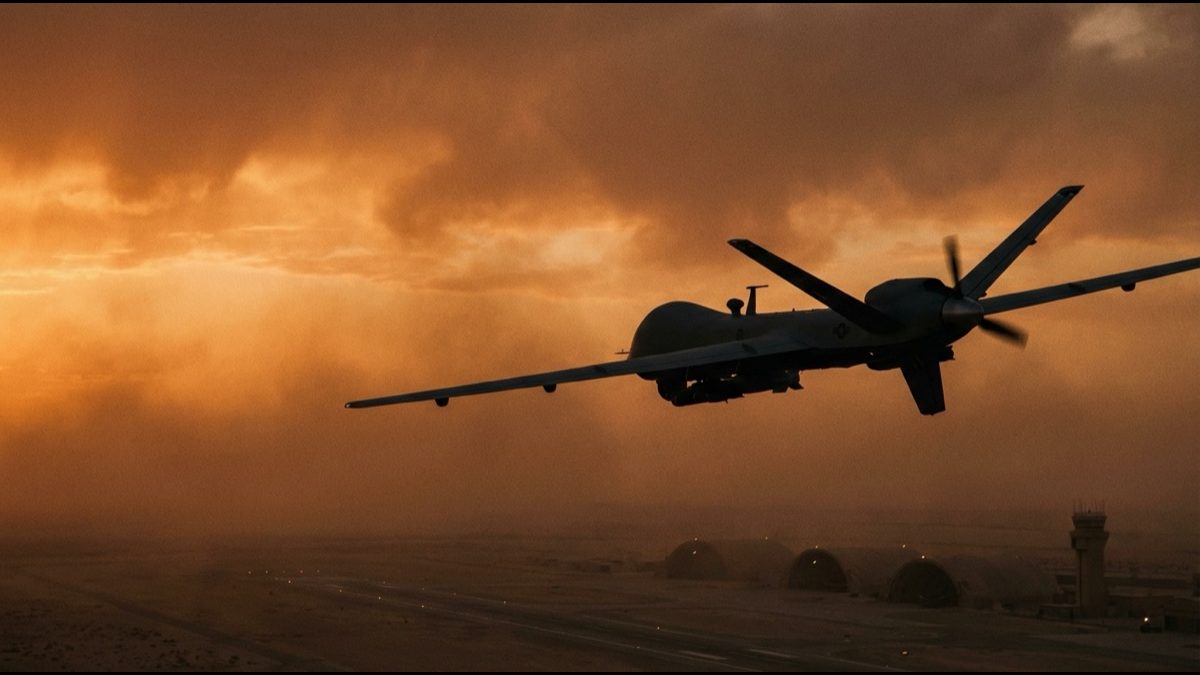
On March 28, 2026, UAE air defenses intercepted an Iranian ballistic missile near Abu Dhabi. Six civilians were injured, three fires ignited, and interceptor debris scattered across an industrial zone. It was a sharp reminder that defensive success creates its own hazard on the ground — particularly when flight lines sit nearby.
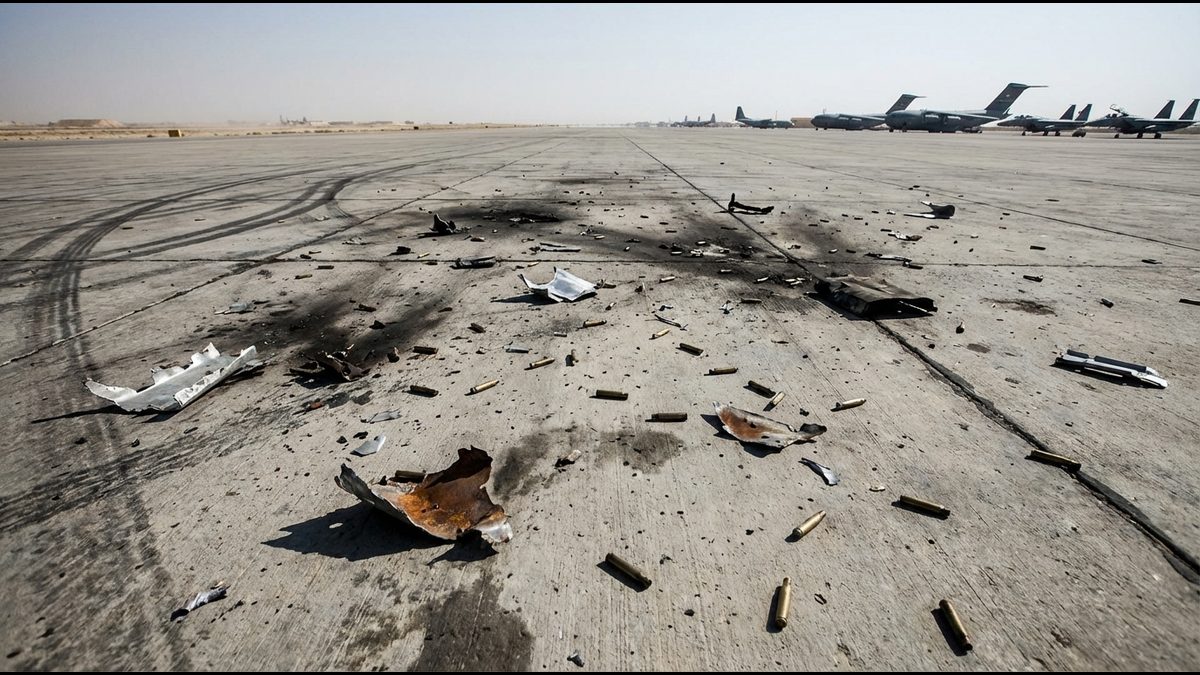
Standard foreign object debris programs target the usual suspects: dropped tools, loose fasteners, runway grit. Military airfields in active threat environments contend with a far more complex debris catalog — interceptor fragments, spent gun casings, blast-scattered ordnance components, drone debris, and countermeasure material. Effective military airfield FOD management must account for all of it, often under extreme time pressure.
When the Threat Is Overhead — And the Debris Lands on the Flight Line
Modern air defense systems are extraordinarily effective — and increasingly busy. The UAE intercepted 398 ballistic missiles and 1,872 drones in a single month of 2026. As drone technology proliferates and adversaries field larger missile arsenals, these numbers will only climb. Each successful intercept creates a secondary hazard: interceptor fragments, missile body debris, and warhead remnants falling onto the ground below — sometimes directly onto flight lines, ramps, and taxiways.
Unlike a dropped wrench, this material arrives fast, in unpredictable patterns, and without warning. It can include hardened steel fragments, aluminum skin panels, propellant residue, and pyrotechnic components from decoy flares. Some pieces are immediately visible; others are small, sharp, and easily missed during a standard walk-down.
A U.S. Air Force review covering 1995–2004 documented nearly 800 FOD incidents totaling approximately $240 million in damage. More recent data from a 2017–2019 survey, found $4.7 million in preventable military FOD damages in just two years. On an active combat airfield, the cost extends beyond dollars — it’s sortie generation and mission readiness.
Categories of Combat-Environment FOD Civilian Airports Never See
Commercial FOD programs are thorough, but they’re calibrated for peacetime environments. Military airfield FOD management in contested zones must extend its scope considerably. Four debris categories distinguish combat airfields from civilian ones.
Interceptor and warhead fragments. Hit-to-kill interceptors and proximity-fuzed warheads generate high-velocity metallic fragments on detonation that can travel hundreds of meters — embedding in pavement, lodging in drainage grates, or hiding in low grass at runway edges.
Spent casings and gun debris. Close-in weapons systems and ground security patrols generate spent brass and steel casings that accumulate rapidly during high-tempo operations. A single CIWS burst can scatter hundreds of casings across a wide arc.
Countermeasure and decoy material. Aircraft dispensing chaff and flares shed material during departures and recoveries. Chaff — bundles of metallic fibers — drifts onto pavement and accumulates in drain inlets. Expended flare cartridges fall within the airfield boundary during defensive egress maneuvers.
Blast-scattered secondary debris. Explosions near the perimeter lift and redistribute material that was otherwise stable — gravel, signage hardware, fence components, lighting fixtures.
How Military FOD Protocols Differ from Commercial Standards
The U.S. Air Force governs FOD programs through DAFI 21-101 and wing-level supplements, using a three-tier zone system: Critical Zones (engine work areas, hangars), Sensitive Zones (flight line, parking ramps), and Awareness Zones (general base areas). Each tier carries escalating inspection requirements.
In deployed settings, additional layers apply. Unit quartering parties conduct hasty FOD inspections before aircraft arrive at forward operating locations. Every vehicle entering the flight line must carry a FOD kit. Suspected FOD triggers an immediate work stoppage and quality-control investigation before operations resume.
These protocols are robust for conventional debris. However, none of the current published doctrine explicitly names interceptor debris, spent countermeasure housings, or blast-redistributed material as a distinct FOD category. Airfields operating under military airfield FOD management frameworks in contested environments should develop supplemental plans covering post-engagement timelines and debris-pattern mapping. For a deeper look, see our Essential Guide to Military FOD Prevention.
Sweep Priorities When the Airfield Must Return to Operations Immediately
After a defensive engagement, airfield commanders face competing pressures: restore sortie generation quickly while ensuring the flight line is genuinely clear. A disciplined sweep sequence resolves that tension.
Runways and primary taxiways come first — a single fragment can abort a launch or destroy an engine on takeoff roll. Ramp areas adjacent to hardened shelters follow. EOR (end-of-runway) arm/de-arm areas rank as high priority because aircraft transit them at low speed with systems hot.
In high-tempo environments, mechanized sweeping becomes essential. The FOD-Razor® Military Sweeper covers up to one million square feet per hour at speeds up to 25 mph, with a duplex configuration providing a 16-foot sweeping path. Friction-mat technology captures both metallic and non-metallic debris in a single pass — critical when the debris mix is unknown. Teams should document post-engagement sweeps with GPS-tagged debris logs, building institutional knowledge that improves response with each cycle. The Military Aviation Safety Center offers additional guidance on documentation standards.

Lessons Military FOD Programs Offer the Civilian Sector
Combat-tested military airfield FOD management practices push ahead of civilian norms — and as drone warfare and missile proliferation accelerate, these lessons are becoming urgent rather than academic.
First, expand the debris taxonomy. Most civilian programs define debris based on historical findings. Military experience teaches that the debris landscape changes with the operational environment, and programs must adapt accordingly.
Second, invest in mechanized capability before you need it. An airfield that must clear and reopen within 30 minutes after an incident needs high-capacity sweeping equipment already deployed — not requisitioned after the fact.
Third, build post-event protocols now. Military programs use immediate work-stoppage rules and QC investigations as standard procedure. Civilian airports should have equivalent post-incident playbooks defining who sweeps, in what sequence, and what documentation is required before resuming operations.
Key Takeaways
- Missile intercept events create complex debris fields — interceptor fragments, drone components, warhead debris, and blast-scattered material — that land directly on or near flight lines.
- Current DoD FOD doctrine (DAFI 21-101) does not explicitly address combat-generated debris from defensive systems, a gap that forward-deployed airfields must close with supplemental protocols.
- Combat-environment FOD spans four categories civilian airports rarely encounter: interceptor fragments, spent gun casings, countermeasure material, and blast-redistributed secondary debris.
- Post-engagement sweep sequences should prioritize runways first, then ramps and EOR areas — with mechanized sweeping essential to compress recovery time.
- Mechanized friction-mat sweepers like the FOD-Razor® cover up to one million square feet per hour, making them critical for rapid return-to-operations in high-tempo environments.
Ready to upgrade your airfield’s FOD response capability? Contact our team to discuss military-grade sweeping solutions, or download the free FOD Prevention Booklet to build a stronger program from the ground up.