
Establishing a FOD prevention culture within your Airline

Managers often assume that by simply establishing a new “corporate safety culture” that they will impel workers to a greater safety focus with an overall reduction in FOD event generation.
However, in practice, management and line staff don’t always respond the same way to new information.
Simply declaring safety as a corporate goal does not guarantee a cultural shift. New training and policies alone will not create change that all workers embrace and support.
In the real world, operational pressures and ingrained attitudes weaken new safety initiatives. Indeed, as they filter through layers of management, front-line workers receive mixed signals and confusing messages. Workers then perceive the current corporate safety culture effort as another “flavor of the month” program that will soon fade into oblivion.
Safety Is A Team Effort
So let’s use the analogy of organized football. Here, the league sets rules of the game similar to the “goals” and expectations laid out by corporate headquarters when defining their “new and improved” corporate culture. However, declaring a set of rules does not guarantee the game will be played as expected.
The real action is up to the coaches and players. The local workers —the team— develop their own perception of certain rules. Similarly, they form an overall view of sportsmanship and ethical values. Much of the actual performance depends on shared beliefs, expectations, and team play.
Just as coaches inspire their teams, local line managers and workplace champions determine the direction of work culture. To build a winning safety team, these local influences must properly interpret new operating procedures. Furthermore, they must actively pursue designated safety initiatives — effecting real change and creating a cultural shift.
Localized influences make or break any corporate safety initiative; any real success is a direct result of the investment of front-line managers and workplace champions.
Management Tools
The following tools have proven helpful in creating a FOD Prevention Program within the airline operations environment. An organization seeking to reduce FOD and FOD-related damages should implement as many of these as possible and remember that the operational target in any FOD Prevention Program should always be “zero”.
These FOD analyses increase recognition of problem areas and trends.
Additionally, they facilitate inspection results, incident data, mishap reports and feedback of progress.
Track performance and report your progress
1. Visibility Charts – Statistical graphs derived from audit or incident data.
2. FOD Report Card – A checklist of areas routinely inspected outlining areas of concern.
3. Performance Review – Review of worker conformance to policies and procedures.
4. Trend Analysis – Where have you been? Where are you going?
Employees need specific information about what isn’t working before they can be expected to improve the process. So tell them how they’re doing, good or bad. Honest, continual feedback is vital to any process improvement.
Plan for the long term
Too much FOD comes from poor housekeeping, ineffective practices, or poorly maintained equipment. Consequently, everyone who works around the aircraft must help control these problems. And that means foreign object debris training.
FOD Programs are works in progress that require constant attention. As a result, every FOD plan needs to be regularly reviewed and updated.
Your FOD Program will reduce employee injuries from flying debris and save money. A clean, organized work environment also enhances your professional image — as perceived by customers and fellow employees. When front-line workers have an active role in the process it shows.
Workers must acknowledge that FOD Prevention is part of their job. Specifically, incorporate this during new hire training and reinforce it continually. Following are several key factors in setting up a FOD Program that have proved to be successful.
Safety Representatives
Designate local “safety representatives” to facilitate safety initiatives and monitor conditions, including the FOD Prevention Program. In most cases companies who attempt to create this type of system fail to provide enough manpower to support the development of the program.
For example, dayshift employees may feel they are doing a great job. However, afternoon and overnight workers may feel their concerns go unaddressed. They rarely see the station safety representative.
To establish a safe work culture, ensure there is representation across the board on every shift and on every day. This demonstrates that management’s commitment to creating a safe and FOD free work environment is real.
Individual’s Safety Role
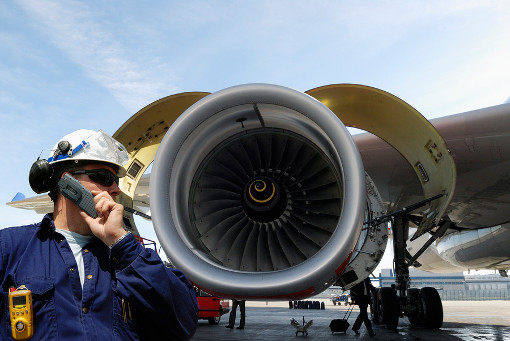
The majority of FOD in an airline’s operating environment is generated by individuals performing their job functions within aircraft servicing and movement areas.
Increasing personal alertness to FOD and continually supporting the “Clean-As-You-Go” mentality will lower your costs and create a safer workplace. Ultimately, every worker must promote an environment that actively defends against FOD.
FOD Awareness
This is the keystone of your Ramp FOD Prevention efforts. Specifically, management should ensure that FOD removal and prevention appear on every daily briefing and meeting agenda. In addition, to maximize FOD awareness, FOD campaigns and FOD fairs should occur on a semi-annual basis.
Training

Condition new employees to recognize potential FOD hazards right from the start by learning the “Clean-As-You-Go” mentality. Furthermore, all airport and airline personnel — including tenants — need annual training in FOD identification and elimination.
This training is easily reinforced through the use of FOD posters and signs. Effective sessions cover safety for personnel and passengers, equipment hazards, direct FOD damage costs, and indirect costs from flight delays and rescheduling. Moreover, include procedures for removing and eliminating FOD at its source. A review of recent FOD Report Cards will provide specific criteria to focus on.
Proper Containment
Keep FOD disposal bins or FOD Cans readily available, clearly marked, and handy at every gate. Notably, the EPA requires a separate collection process for empty oil cans. Never place used oil containers in a FOD receptacle.
Disposal bins need lids. Specifically, lids prevent wind from redistributing FOD onto the ramp and keep water from fouling the container. It helps to have small FOD receptacles bolted to belt loaders. This way, workers can clean while working flights — no walking to the gate to dispose of debris. Line FOD containers with plastic bags for easy removal and replacement.
Develop a specific policy and follow it rigorously. Empty FOD containers on a scheduled basis or at the end of each shift.
Proper Equipment and Tools
Encourage fast cleanup by making push brooms and shovels available at every gate. Magnetic sweepers mounted on equipment help pick up ferrous material. However, ferrous material is only part of the ground FOD threat. Most airport FOD comes from non-ferrous items: rocks, concrete, plastic, paper, baggage parts, and cargo wrappings.
Airport sweeping equipment come in many shapes and sizes, but two effective tools for clearing both gates and large open areas of debris quickly and thoroughly are our TracSweep® and FOD-Razor® Sweepers. Importantly, both are non-motorized, all-weather, and easy to use, clean, and maintain. They cost a fraction of larger truck-mounted vacuum sweepers.
Sweeping Schedule
Each individual must take responsibility for their assigned areas and adhere to a posted schedule. Similarly, address general work areas on each shift to ensure they are clean and FOD-free. In addition, schedule FOD container disposal at least three times per week.
Each aircraft gate area must receive a FOD Walk before every arrival and again before each departure. Additionally, transitional duty personnel coming off injuries can supplement FOD prevention efforts. Ensure they do not exceed medical restrictions.
Coordinate regular sweeping of ramp and taxiways with the local Airport Authority for all non-leased airport property.
Tool Inventory
Use a tools audit checklist to inventory and account for every tool after each use in or around the aircraft. In addition, dispose of oily and dirty rags properly. They pose a serious flammability risk.
In the late 1980s an aircraft caught fire due to a misplaced oily rag; the aircraft was a total loss. This illustrates how seemingly inconsequential items can have devastating effects. Take no Foreign Object for granted!
FOD Committee

Communicate airside and landside construction activities — and scheduled maintenance — to airport users as early as possible. Consequently, preconstruction planning must include a means for controlling and containing construction-generated FOD.
Contractors must fully understand the FOD control and removal requirements — and penalties — written into their contracts. This is especially critical in windy environments where debris is more likely to become airborne. Therefore, route construction site access away from areas of aircraft operation whenever possible.
Convene FOD meetings at least monthly with all departments that contact the aircraft — including vendors and contractors. Each vendor should recognize the FOD hazards their department creates. Notify affected departments of any unique FOD Prevention requirements.
Bird/Animal Feeding
Yes, birds and other animals are considered FOD and are an enormous hazard to aircraft. They cause millions of dollars in damage each year. You may have noticed the stripe of paint on the engine intake cone. Part of its function is to deter birds from flying into the engine area when at idle.
Accordingly, bird feeding must never be allowed on airport property.
Do not leave unattended food out in ramp areas where birds can get at it. Don’t assume employees should know this — emphasize the hazards and the reasons to stay alert.
Debris Removed from Ground Support Equipment
Remove all unattended items from ground support equipment when not in use. Stow them securely. This may include paper products from carts or tugs. Otherwise, these items end up blowing around the ramp.
Flashlights and wands also become a problem if not stowed correctly. Specifically, never stow them on the floor of a tug. They can roll beneath a pedal and impede driver operation. Therefore, keep all tug cabins clear of debris. In addition, minimize loose debris in pickup truck beds. Remove it after every shift.
Ramp FOD Inspections
Schedule and perform ramp inspections with the local airport authority regularly. Loose and eroding concrete or asphalt pavements pose serious FOD risks. In particular, pavement joints and cracks harbor FOD. Check engine paths around these areas carefully.
In addition, perform a runway inspection at the start of each day. (This can double as an agenda item at each FOD meeting. Get all committee members on the ramp to identify real or potential problems and agree on corrective actions.)
Cargo Bin Cleaning
Cargo bins seem to collect a lot of garbage — which can cause FOD mishaps. Periodically inspect bins and remove the trash. Aircraft that remain overnight in your station should have the bins inspected for debris and cleaned when necessary.
Aircraft Support Equipment
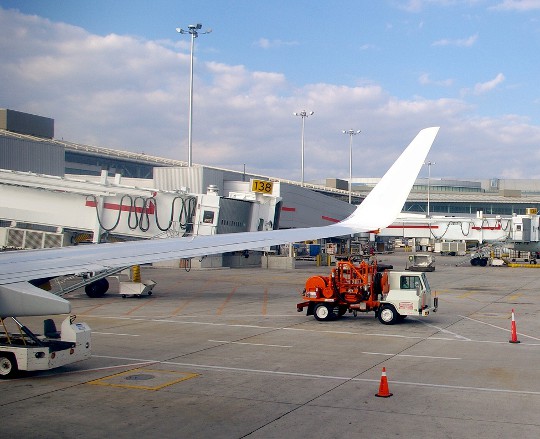
Loose equipment — cones, air conditioner hoses, ground power cords — are all hazards if not stowed correctly.
Above all, know the blast and suction danger zones for your aircraft type. If the aircraft is not properly spooled down, items like air conditioner hoses can be ingested. Keeping a clear pathway for parking aircraft is essential to maintain a safe environment.
All equipment should be outside of the wingtips until the plane has come to a complete stop and the engines idle down.
Personal Items
People often overlook individual property as a FOD threat. Instruct ramp personnel: never leave personal items near aircraft. These items include hearing protection, vests and kneepads.
Stow all raincoats, jackets, gloves, caps, and food items when not being worn or used. Keep them away from the aircraft. None of these items should ever be left unattended near an aircraft.
Self-Audits
Frontline workers need specific information about discrepancies before they can improve. Perform self-audits at least once a month — and informally as part of the daily routine. Accordingly, record the results. Use them in the FOD Report Card. At minimum, share them at monthly FOD meetings.
Specifically, evaluate how much FOD was found, what type, and where. This pinpoints problem areas. Subsequently, once a problem is defined, meetings should focus on corrective actions and evaluate results. Then you can update and make adjustments to your written FOD Program if necessary.
Let’s face it — no one enjoys picking up FOD. Appropriate motivational techniques keep the front line involved in work area cleanliness. Instead, use different methods to motivate. Take the time to recognize and reward good work. FOD Prevention is a never-ending battle.
Awareness Is Key
While your imagination can certainly yield other good ideas for your organization, a few successful methods are listed below:
- FOD Walk “Piece of the Day” – During off-peak periods, get the team to walk the work area and pick up debris. To make this a bit more fun and interesting, select a FOD “Piece of the Day.” Whoever collects the most of that item wins a lunch voucher or movie tickets.
- FOD Holiday Tree – During the holiday season, contest other stations to create the most interesting FOD tree. Gate agents collect FOD and use interesting pieces as tree ornaments. Each station sends a photo to the corporate FOD committee for judging. The winning team is awarded a holiday dinner.
- Caught in the Act – This program rewards positive behavior on the spot. For example, if a worker were “caught” with a broom in his hand cleaning an area without being asked, he would be awarded a lunch voucher on the spot.
- Cleanest Gate Award – The workers who have the cleanest gate during the day may get recognition from the Supervisor with the Cleanest Gate of the Day Award.
Need help setting up your FOD prevention program? Contact us today.
Conclusion

Whatever path your organization takes, first establish a collective safety focus. This applies to the airline industry as a whole. Each airline must encourage an effective event-reporting system that recognizes human factors and other causes leading to FOD events. Industry bodies like the ICAO Runway Safety Programme provide frameworks for this type of cross-organizational reporting. The reporting system should serve as an industry-wide database. Even the smallest company can benefit from the combined knowledge.
A fair system of adjudication and discipline is also critical. It provides consistent assessments of causation. Above all, it emphasizes open communication over blame and punishment.
We Are All In It Together
The aviation sector must actively seek to learn from our mistakes. This requires increased dedication, learning, and consistent commitment of resources, energy, and time.
If we are successful at this endeavor, we will one day eliminate most threats from airport operating environments.
FOD knows no boundaries. Likewise, FOD control should have no company boundaries. Ensure your own FOD Programs are up to par. Additionally, verify that competitors who share your airfields maintain good programs. Rigorous aircraft maintenance tool control practices further enhance safety. Specifically, account for every tool after maintenance tasks. This reduces the risk of tools being left behind. Every ramp we fly into must be clear of FOD — to protect our aircraft, our assets, and our people.