

Suggested Resources
Check out our articles on FOD Prevention in Aviation: Getting Started, Revolutionizing FOD Management: The Future of Autonomous Airfield Operations, and FOD Control on Airline Ramps for more great ideas.
The Formula 1 Safety Car races down Silverstone at 100 mph, its roof-mounted LiDAR scanner mapping every piece of carbon fiber debris ahead. At a Nevada military airbase, an airman walks the flightline at dawn, eyes scanning for loose bolts that could destroy a $90 million fighter jet. Meanwhile, at LaGuardia Airport, a radar system monitors runway 4-22 around the clock, automatically alerting operations to wayward debris.
Three industries. Three approaches to the same challenge: Foreign Object Debris prevention.
Aviation embraces automated detection. Military operations remain skeptical of AI solutions. Motorsport demands real-time capabilities that push technology to its limits. The question isn’t whether AI FOD detection systems work — it’s when they deliver value, and when human expertise still wins.
The Technology Race: Where Each Industry Stands
AI FOD detection systems comparison reveals dramatic differences in adoption across industries. Aviation leads with comprehensive automated monitoring. Military bases prioritize proven reliability and rapid deployment. Motorsport venues need split-second detection that won’t disrupt high-speed racing.
Aviation leads the automation charge with comprehensive AI systems. Radar-based solutions dominate the market, scanning runways continuously regardless of weather conditions. Modern systems integrate millimeter-wave radar, high-resolution cameras, and thermal sensors with machine learning algorithms that identify small objects like screws, bags, and tape rolls with increasing accuracy.
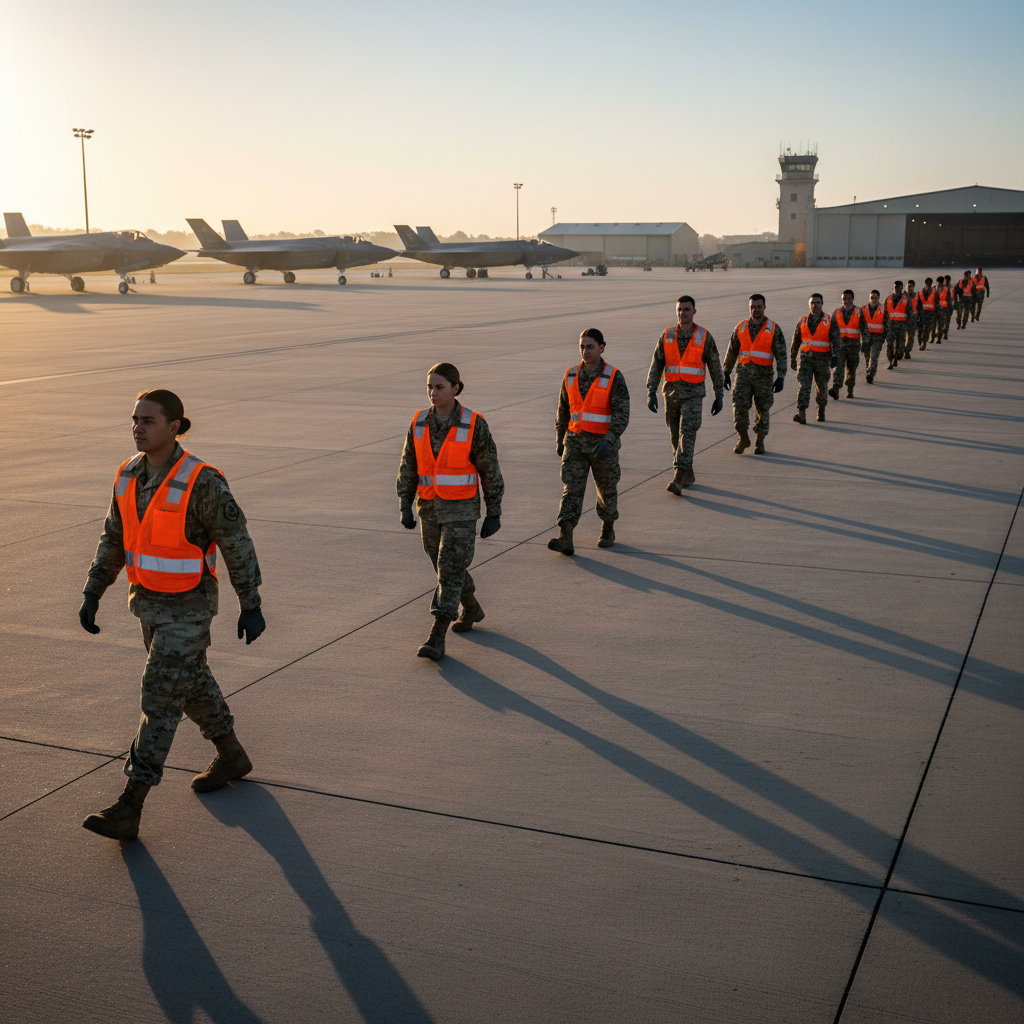
Military installations take a measured approach. While civilian airports rush toward automation, defense operations rely heavily on proven human inspection protocols. FOD walks remain standard practice: personnel forming lines across runways, visually scanning for debris. The reason? High-performance military aircraft operate where missed detection could mean mission failure or aircraft loss.
Motorsport represents the bleeding edge of real-time detection. Formula 1’s recent LiDAR implementation on the Safety Car demonstrates the industry’s commitment to millisecond-response capabilities. The Mercedes-AMG Safety Car’s roof-mounted scanner detects objects up to 500 meters away, creating 3D maps while traveling at race speeds.
These varying approaches reflect each industry’s unique operational constraints, risk tolerance, and budget realities.
Airport Success Stories: When Automated Systems Deliver Results
Commercial aviation provides compelling case studies for effective AI FOD detection systems. Airports worldwide demonstrate measurable returns on automated systems, with analysis showing break-even periods typically occurring within several years.
Case Study: Major Hub Transformation
A recent hybrid radar and electro-optical system deployment at a major international hub resulted in significant accuracy improvements compared to visual inspection alone. The system identified debris that human inspectors missed, including small metallic fragments and transparent materials invisible to the naked eye. More importantly, it eliminated routine runway closures for FOD sweeps, reducing operational delays and associated costs.
Technical Performance Metrics
Modern airport systems achieve high detection rates while minimizing false alarms. These systems integrate with airport operations centers, providing GPS coordinates of detected objects and automated alerts to ground crews. This precision eliminates guesswork — crews know exactly where to look and what they’re removing.
ROI Reality Check
Cost-benefit analyses consistently show substantial benefits over multi-year periods for comprehensive systems. The calculation includes avoided aircraft damage, reduced insurance claims, eliminated delay costs, and improved operational efficiency. Given that a single FOD incident can cost millions in direct damages, the business case becomes compelling for high-traffic airports.
The key differentiator? Airports that succeed with AI systems invest in proper integration with existing operations rather than treating detection as an isolated technology solution.
Military Skepticism: Why Defense Operations Still Trust Human Eyes
Military reluctance toward automated FOD detection isn’t technological conservatism — it’s operational pragmatism. Defense installations operate under constraints that civilian airports rarely face, making human oversight irreplaceable in many scenarios.
Mission-Critical Reliability Requirements
Military aircraft operations demand absolute certainty. A commercial airliner might tolerate a slight delay for debris removal, but a fighter jet scrambling for national defense cannot. Traditional FOD walks, while labor-intensive and time-consuming, provide the visual confirmation that base commanders trust. Human inspectors differentiate between harmless organic debris and potentially dangerous objects, make real-time risk assessments, and adapt to unusual circumstances.
Environmental and Security Constraints
Military bases often operate in austere environments where sophisticated detection systems face challenges. Dust storms, extreme temperatures, and electromagnetic interference compromise automated systems. Additionally, many bases restrict external communications and cloud connectivity required by modern AI systems, limiting implementation options.
Cost-Effectiveness at Scale
While individual military bases may have substantial budgets, the total number of installations requiring FOD detection makes cost a significant factor. Human inspection scales predictably — additional personnel cost linearly. Automated systems require major upfront investments plus ongoing maintenance and technical support.
Emerging Hybrid Approaches
Progressive military installations aren’t abandoning automation entirely. Small unmanned aircraft systems with AI capabilities achieve excellent detection rates and complete runway scans in minutes — dramatically faster than traditional walks. LiDAR-based vehicle-mounted systems provide rapid deployment capabilities that appeal to military planners. These mobile solutions offer automation benefits while maintaining operational flexibility.
Military measured adoption reflects a fundamental truth: in high-stakes operations, redundancy and human oversight remain essential components of any detection strategy.
Motorsport Real-Time Needs: AI That Can’t Wait for Analysis

Motorsport venues represent the ultimate test case for AI FOD detection systems. When cars travel at 100+ mph and races generate millions in television revenue, debris detection cannot wait for human analysis or lengthy processing cycles.
Formula 1: Leading Innovation
F1’s LiDAR implementation on the Safety Car showcases real-time capabilities previously thought impossible. The scanner creates instant 3D maps while the car travels at racing speeds, detecting debris up to 500 meters ahead for large objects and shorter distances for small items. This technology addresses persistent complaints about incomplete debris recovery during Safety Car periods, where missed fragments create dangerous conditions when racing resumes.
NASCAR: Infrastructure Integration
NASCAR‘s approach focuses on embedded infrastructure. Recent race implementations featured infrared sensors embedded in track surfaces that monitor tire temperatures while simultaneously detecting potential debris in real-time. These sensors integrate with high-definition cameras and drones to provide comprehensive track monitoring without disrupting racing operations.
IndyCar: Autonomous Racing Lessons
The Indy Autonomous Challenge provides unique insights into high-speed detection requirements. Autonomous race cars deploy LiDAR-based point cloud segmentation systems capable of detecting and tracking multiple objects at extreme speeds. These systems demonstrate the technical feasibility of real-time detection under challenging conditions.
Real-Time Processing Challenges
Motorsport applications demand processing speeds measured in milliseconds. Traditional AI analysis that might take seconds becomes useless when objects and vehicles move at racing speeds. Success requires edge computing, dedicated processing hardware, and algorithms optimized for speed over perfect accuracy.
The motorsport industry’s willingness to invest in cutting-edge detection technology often drives innovations that eventually benefit aviation and military applications.
The Cost Reality: ROI Analysis Across Different Operational Scales
Understanding when AI FOD detection systems deliver positive returns requires analyzing costs, benefits, and operational scale across industries. The financial equation varies dramatically based on facility size, traffic volume, and incident consequences.
Airport Economics: Volume Justifies Investment
Large commercial airports process thousands of flights monthly, making the ROI calculation straightforward. A comprehensive radar-based system might cost several million dollars installed but prevents FOD incidents that individually cost millions. Analysis shows break-even typically occurring within several years, with ongoing operational savings from eliminated runway closures and reduced inspection labor.
For smaller General Aviation airports, the equation becomes more challenging. Expensive systems protecting limited flight operations require different justification than the same technology at major hubs handling continuous traffic.
Military Base Calculations: Mission vs. Dollars
Military cost analysis includes factors civilian airports rarely consider. Mission readiness, security implications, and combat effectiveness complicate traditional ROI calculations. A delayed fighter jet sortie might cost more than replacing damaged engines, making prevention economics complex.
However, military installations increasingly focus on total lifecycle costs. Automated systems reduce personnel requirements for routine inspections, freeing trained personnel for other critical tasks. Vehicle-mounted AI systems can replace multiple personnel conducting daily FOD walks, generating savings over multi-year periods.
Motorsport: Event-Driven Returns
Race tracks face unique financial pressures. A debris-related caution flag during a televised race can cost millions in broadcast disruption and sponsor dissatisfaction. Conversely, most tracks host limited events annually, making continuous monitoring systems harder to justify economically.
Successful motorsport installations focus on portable or multi-purpose systems. Equipment that provides race-day debris detection while supporting routine track maintenance activities throughout the year offers better ROI than single-purpose racing systems.
Hidden Costs and Benefits
Every industry faces implementation costs beyond equipment purchase. Integration with existing operations, staff training, and ongoing maintenance add significantly to initial investments. However, modern systems also provide unexpected benefits: detailed FOD pattern analysis, predictive maintenance insights, and improved audit trail documentation that supports insurance claims and regulatory compliance.
The economic sweet spot occurs when operational scale justifies automation while existing personnel can integrate new technology without extensive restructuring.
Hybrid Approaches: Finding the Sweet Spot Between AI and Human Oversight
The most successful FOD detection implementations combine automated systems with human oversight, creating hybrid approaches that leverage technology’s consistency with human judgment and flexibility.
Airport Hybrid Models
Leading airports use automated systems for continuous monitoring while maintaining human oversight for threat assessment and response. Radar and camera systems identify potential FOD, but experienced personnel make final determinations about runway closures and debris removal priorities. This approach maximizes detection coverage while preserving human decision-making for complex scenarios.
Military Flexible Deployment
Military installations increasingly deploy mobile AI systems that complement rather than replace traditional FOD walks. Vehicle-mounted LiDAR units conduct rapid pre-flight inspections while human teams perform detailed post-maintenance checks. This hybrid approach provides automation benefits without abandoning proven inspection protocols.
Motorsport Event-Focused Systems
Race tracks often implement temporary AI systems during major events while relying on manual inspection during routine operations. Portable detection equipment provides race-day capabilities without the ongoing costs of permanent installation.
Technology Integration Best Practices
Successful hybrid implementations share common characteristics:
- Clear role definition between automated detection and human response
- Integrated training programs that teach personnel to work with AI systems effectively
- Redundant verification protocols that use technology to enhance rather than replace human judgment
- Scalable deployment that allows gradual adoption as budgets and capabilities permit
The future of FOD detection lies not in choosing between AI and human inspection, but in combining both approaches to create more effective, reliable, and cost-efficient operations.
The Future of FOD Detection: Beyond the Human vs. AI Debate
As industries mature their approaches to Foreign Object Debris prevention, the conversation shifts from whether to adopt AI to how to implement it effectively. Each sector’s unique requirements will continue driving specialized solutions, but convergence toward hybrid approaches offers the greatest promise.
Technology Evolution Continues
Next-generation systems promise improved accuracy, reduced false alarms, and lower implementation costs. Machine learning algorithms trained on larger datasets will better distinguish between genuine threats and harmless debris. Edge computing will enable real-time processing without cloud connectivity requirements. Improved sensor fusion will provide detection capabilities that surpass human vision in all conditions.
Implementation Lessons Learned
Successful AI FOD detection systems require more than technology — they demand thoughtful integration with existing operations, comprehensive staff training, and realistic expectations about capabilities and limitations. Organizations that treat AI as an enhancement to human judgment rather than a replacement achieve better results and stronger ROI.
The Bottom Line for Safety Professionals
Whether your operation manages airport runways, military flightlines, or racing circuits, the question isn’t whether AI FOD detection systems comparison favors automation. The question is whether these systems fit your operational requirements, budget constraints, and risk tolerance. The most effective approach combines automated detection capabilities with proven sweeping solutions and human oversight.
Ready to evaluate FOD detection and prevention solutions for your facility? Contact our team to discuss how proven sweeping systems can complement your existing or planned detection technology. Our experts understand the unique requirements of aviation, military, and motorsport operations and can help you build a comprehensive FOD prevention program that protects both aircraft and operations.
Download our free “Complete Guide to FOD Prevention” to learn more about building effective debris management programs across all operational environments.