In June 2026, a Politico investigation confirmed what safety analysts had long expected: the FAA is deploying Palantir‘s Foundry AI platform across its runway safety operations. The system ingests radar feeds, ADS-B position data, NTSB filings, and weather records. It then surfaces recurring risk patterns before they escalate. In at least one case, Foundry’s analysis directly triggered a major operational change at a U.S. hub airport. That is a real milestone for FAA runway safety technology. What the system cannot do, however, matters just as much.
What the FAA-Palantir Partnership Actually Does
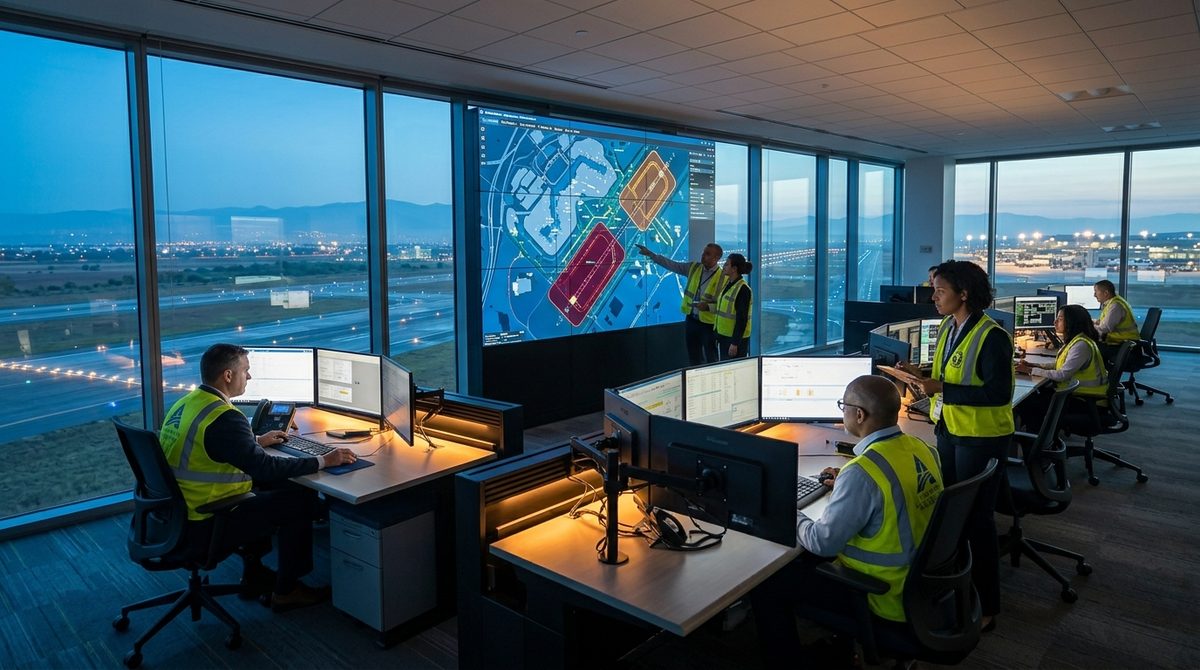
Foundry does not replace existing FAA data systems — it sits on top of them. The platform cross-analyzes sources the agency already generates: incident records, radar tracks, ADS-B feeds, and weather logs. Human analysts then review flagged locations and validate findings against operational context. From there, they decide whether to adjust procedures, modify arrival rates, or escalate for equipment mandates.
FAA Deputy Administrator Chris Rocheleau has been direct: “Palantir has been a great partner for us.” The agency expanded Foundry’s role following a 2025 authorization. It has also allocated nearly $4 million in fiscal 2027 funds to accelerate the initiative. The urgency behind that investment is not abstract.
On March 22, 2026, a CRJ-900 struck a Port Authority fire truck on Runway 4 at LaGuardia Airport. The collision killed both pilots and injured dozens of passengers and firefighters. The crash happened partly because the fire trucks lacked vehicle movement area transponders. This left them invisible to LaGuardia’s surface detection system. The FAA is now using Foundry to identify airports with the same transponder gap. LaGuardia, O’Hare, and Reagan National are among the first flagged for priority upgrades.
What a Runway Safety “Hot Spot” Means Operationally
The FAA’s runway safety hot spots program predates the Palantir partnership by years. A hot spot is a documented risk location on an airport’s movement area. It may be a confusing runway intersection, a taxiway junction, or a geometry problem. In each case, documented incidents or design flaws have created elevated collision risk. These designations appear on official airport diagrams as open circles labeled HS 1, HS 2, and so on.
The FAA’s March 2026 update is the largest nationwide accounting to date: 453 individual hot spots across more than 150 U.S. airports. Critically, a hot spot stays on the chart until the underlying hazard is corrected. It is a standing record of documented risk that has not yet been engineered or procedurally resolved. Foundry adds what the static program never had. It can surface emerging risk patterns before they become formal chart entries. That distinction matters for your ground operations team.
The SFO Case Study: When AI Triggered a Real Operational Change
The clearest example of FAA runway safety technology moving from analysis to action is San Francisco International Airport. Effective April 1, 2026, the FAA permanently banned simultaneous side-by-side landings on SFO’s parallel runways — 28L and 28R — which sit approximately 750 feet apart.
Foundry flagged a cluster of Traffic Collision Avoidance System alerts tied to incorrect landing procedures on those approaches. Analysts validated the pattern. Consequently, the FAA moved to staggered approaches rather than wait for an incident to force the issue. SFO’s arrival capacity dropped from roughly 54 to 36 aircraft per hour. That is a significant operational cost. The agency accepted it as the correct safety tradeoff.
This is the first publicly confirmed instance of AI pattern analysis directly producing an operational restriction at a major U.S. hub. For airport operations managers, that precedent matters. FAA runway safety technology now has a documented track record of changing procedures — not just recommending them.
The Gap No Algorithm Can Close
Here is what Foundry cannot do: it cannot remove a bolt from a taxiway. It cannot pick up shredded rubber, a lost catering cart component, or a chunk of tire tread. AI hot-spot mapping tells you where risk concentrates. It does not, however, physically reduce the hazard that created that risk.
Furthermore, AI safety tools are only as current as the incident data feeding them. Unlogged debris strikes, unreported FOD finds, undocumented runway inspections — none of that improves the model. The algorithms learn from data that human operations generate. As one industry summary notes, Foundry “surfaces the signal — people make the call.” That call still depends on your sweep program running consistently.
Your FOD Program Is the Ground Truth This System Needs
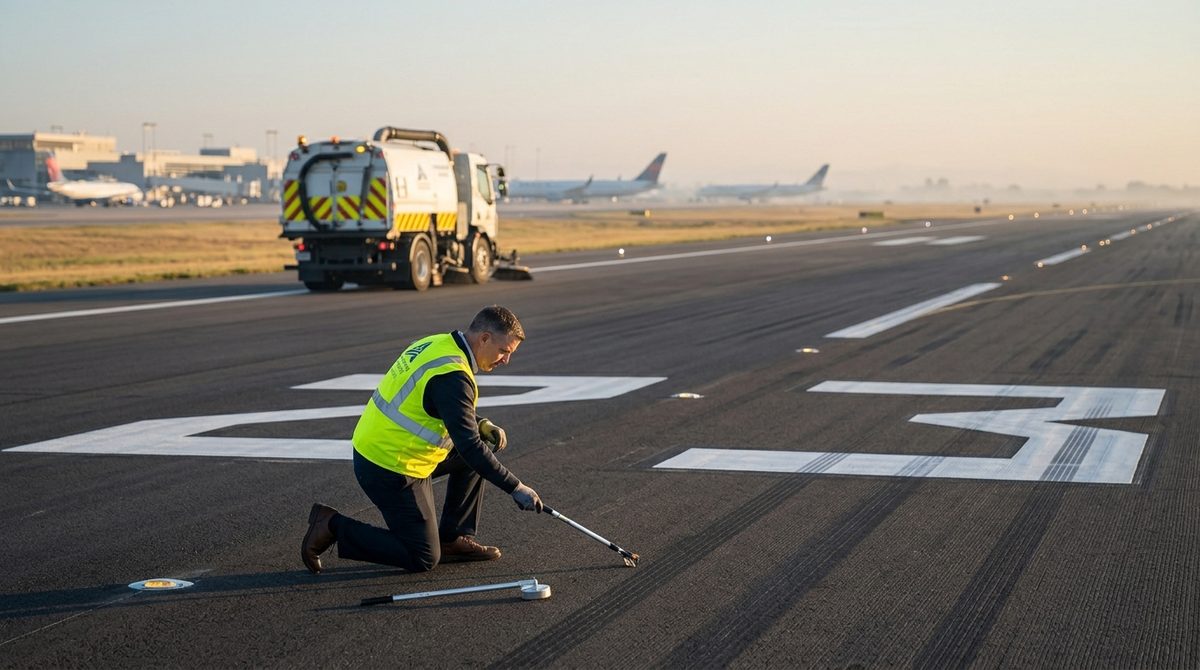
Airports running disciplined FOD prevention programs generate exactly the kind of data that makes AI risk-mapping smarter over time. Every documented FOD find is a data point. Hardware type, location, sweep frequency, time of day, weather conditions — each one feeds the model. Collectively, those data points reveal the same patterns Foundry is designed to surface at scale.
In practical terms, FOD Control customers using the FOD-Razor® airport sweeper on regular sweep cycles are building that operational record. The FOD-Razor’s tow-behind design lets any ground vehicle run systematic surface sweeps without specialized operators. That simplicity translates directly to sweep frequency. A consistent program simultaneously reduces physical debris risk and builds the incident documentation that strengthens the broader safety ecosystem. Our dedicated guide covers the key structural elements of a complete company FOD program — from management buy-in to equipment selection.
Practical Steps for Airport Operations Managers
The FAA’s AI partnership changes the national safety picture. It does not, however, change what your team needs to do this week. Here is where to focus:
- Know your airport’s hot spots. Pull your airport diagram and locate every designated HS location. Brief ground vehicle operators on those positions specifically — not just general movement area awareness.
- Document every FOD find. Location, type, probable source, time of discovery — five fields is enough. Unlogged debris is data the safety system never sees.
- Maintain sweep frequency, not just coverage. One full-runway sweep per week is not equivalent to three sweeps at the same coverage. Frequency determines how quickly debris is removed after introduction.
- Don’t wait for an algorithm. AI systems identify patterns after they emerge. A proactive sweep program prevents the pattern from forming in the first place.
- Connect FOD finds to your safety reporting system. If discoveries go into a notebook and not a structured log, you are doing the work without capturing the value.
Key Takeaways
- The FAA is using Palantir’s Foundry platform to surface runway safety risk patterns. The initiative is confirmed, funded, and producing documented results — including the April 2026 SFO parallel-landing ban.
- In March 2026, the FAA identified 453 individual hot-spot risk locations at more than 150 U.S. airports. These are documented hazards, not risk estimates.
- FAA runway safety technology identifies where risk concentrates. It does not physically remove debris or fix the conditions that created it.
- Airports running consistent sweep programs generate the ground-truth data that improves predictive safety tools over time. Your FOD program is a contribution to national safety infrastructure — not just local compliance.
- The most effective posture is not to wait for an AI flag. A disciplined sweep schedule both reduces physical risk and builds the operational record that AI systems learn from.
Ready to build the ground-level program that complements FAA runway safety technology? Contact our team to discuss sweep schedules, equipment fit, and documentation practices for your operation — or download the free FOD Prevention Booklet to get a field-ready framework your ground crew can implement this week.