Construction Season Never Ends — Why Active Work Zones Are a Permanent FOD Source
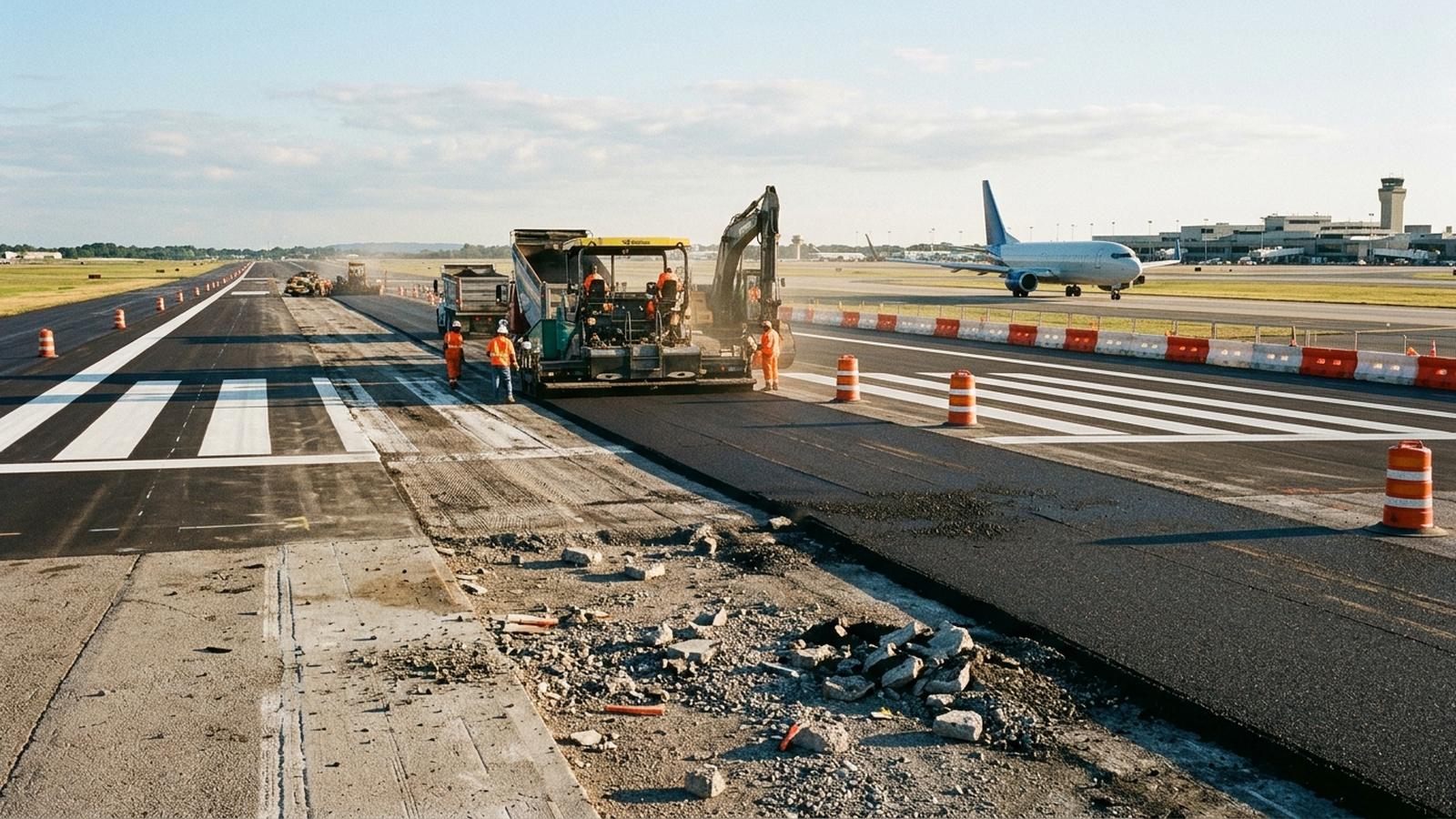
Every operator eventually says the same hopeful thing: “once this project wraps up, things will get back to normal.” They rarely do. Between resurfacing cycles, facility expansions, and structural repairs, an active work zone almost always borders a live operating surface.
That reality makes construction FOD prevention a permanent operational discipline, not a seasonal checklist item. Airfields repave taxiways. Military bases patch ramps and rebuild flight line infrastructure. Racetracks resurface corners, pour barrier foundations, and expand grandstands between race weekends. In each case, the same debris-generating process runs feet from where safety depends on a clean surface. Treating construction as occasional disruption, rather than a standing FOD source, is where most prevention programs quietly fail.
The Common Thread: Airfields, Racetracks, and Military Bases Face the Same Challenge
Commercial airfields, military airbases, and motorsport circuits look nothing alike on the surface. Yet they share one structural weakness: construction crews are frequently managed under different rules and accountability than operations staff.
The FAA’s Advisory Circular 150/5370-2G, Operational Safety on Airports During Construction exists because contractors don’t automatically think like airfield operators. It’s blunt: “construction contractors must not leave or place FOD on or near active aircraft movement areas,” and materials capable of creating FOD “must be continuously removed during the construction project.”
Military flight lines apply an equivalent standard, naming “aircraft taxiway or ramp deterioration” alongside poor housekeeping as a root cause of FOD incidents — tying pavement condition into the prevention program itself.
Racetracks face the same gap under a different name. State regulations, such as Georgia’s motor vehicle racetrack rule, require documented pre-event inspection because barrier work, resurfacing, and construction routinely leave obstructions standard operations wouldn’t catch.
Where Construction FOD Actually Comes From
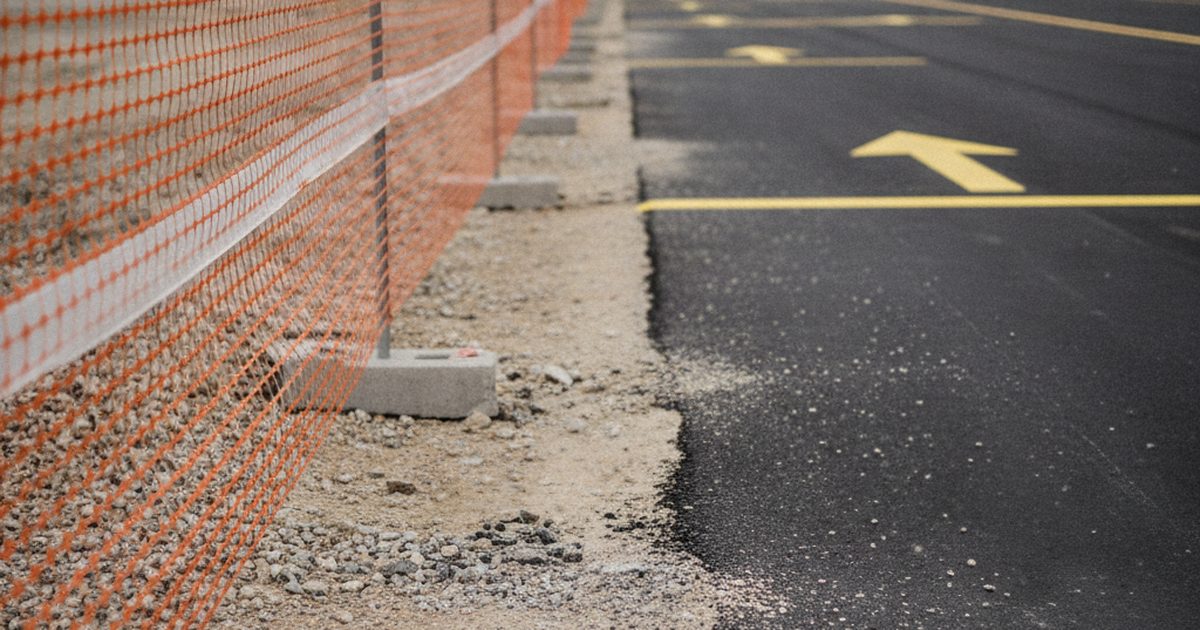
Construction FOD has a predictable signature, similar whether the crew works a taxiway, a flight line ramp, or a racing surface. Common culprits include:
- Gravel and loose aggregate tracked from unpaved staging areas onto paved surfaces
- Fasteners — bolts, screws, nails, and hardware dropped during barrier or facility work
- Cut rebar and wire fragments from structural and electrical work
- Sealant and joint material left over from crack sealing or expansion joint repair
- Displaced pavement — saw-cut concrete and asphalt chunks, plus fresh seal-coat aggregate before chip embedment completes
Pavement-distress data shows routine asphalt raveling sheds particles in the 2-15mm range, while concrete corner breaks throw angular chunks up to 300mm across, rated a very high hazard. Construction accelerates every one of these failure modes.
The Transition Zone Problem — Where Work Areas Meet Live Operating Surfaces
The single riskiest location in any construction project isn’t the work zone itself — it’s the edge, the transition zone where a staging area, trench, or barrier project meets an active runway, taxiway, ramp, or racing surface.
Wind carries loose aggregate off an uncovered stockpile. Tires track gravel from an unpaved lot onto pavement. A dropped fastener rolls past the barricade line. None of this happens inside the fenced work area; it happens at the boundary, which is why boundary control gets so much regulatory attention.
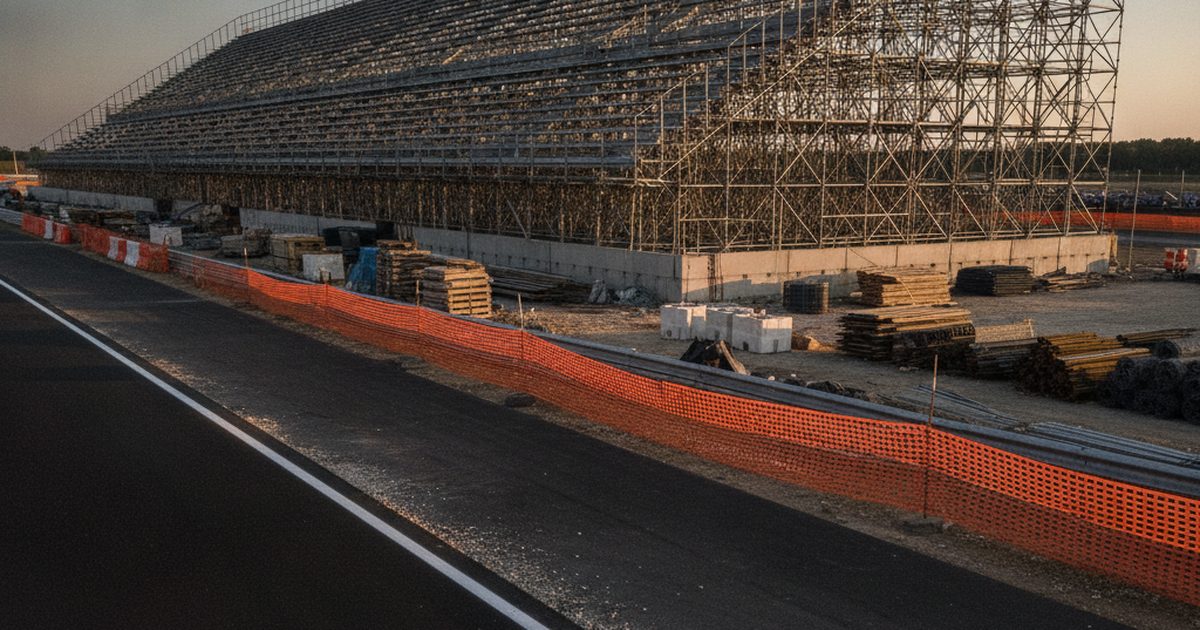
Military flight line procedures require FOD checks on vehicle tires and tread grooves at entry points, acknowledging the transition zone — not the ramp interior — is where contamination crosses over. Commercial airfield guidance mirrors this with fencing “to contain material that can be carried by wind into areas where aircraft operate.” Motorsport facilities manage a parallel risk with debris fencing and catch netting near barrier and grandstand construction.
Containment and Staging Discipline: Stopping FOD Before It Migrates
Every domain that manages construction FOD successfully relies on the same principle: stop debris at the source, before it can migrate. Effective discipline typically includes:
- Physical barriers, temporary fencing, or flagging around construction and staging zones
- Track-out control mats at vehicle egress points to knock gravel off tires before it reaches paved surfaces
- Covering exposed aggregate stockpiles during windy conditions
- Restricting construction vehicle and personnel movement to permitted areas
- Designated on-site personnel monitoring compliance during active work
None of this is exotic — it’s disciplined logistics applied consistently. Facilities that struggle with construction FOD prevention are rarely missing the concept; they’re missing the enforcement.
Verification Sweeping — Why “The Crew Cleaned Up” Is Not Enough
Contractor self-reporting is not a verification system. It’s a courtesy. Every framework governing construction safety builds in an independent check because “the crew said they cleaned up” has never been sufficient on its own.
The FAA’s construction FOD prevention guidance requires a documented Construction Safety and Phasing Plan with scheduled inspections before an area reopens to traffic, and its companion Advisory Circular 150/5210-24A on Airport FOD Management frames removal and evaluation as ongoing stages, not one-time events. Military units run FOD walks before first flight and call in dedicated sweeper support when debris exceeds what a walking inspection catches. Racetrack regulations require pre-event inspection, with the facility barred from operating until repairs are approved.
This is where a purpose-built friction sweeper like the FOD-Razor® earns its place. It isn’t a substitute for contractor cleanup — it’s the independent pass that catches what visual inspection misses: fine aggregate, small fasteners, and debris embedded in surface texture. The same principle applies whether closing out a taxiway project, a flight line repair, or a track resurfacing job, which is why FOD-Razor configurations exist for airfield, military, and motorsport use alike.
Building a Construction-FOD Protocol That Works Across Every Domain
A durable construction FOD prevention protocol doesn’t need reinventing for each vertical — it needs four consistent stages, whether the surface underneath is a runway, a flight line, or a racing circuit.
First, identify every affected area and transition zone before work begins. Second, enforce containment and staging discipline throughout the project, not just at kickoff. Third, run independent verification sweeps before reopening any surface — never rely on contractor sign-off alone. Finally, feed incidents back into the program so recurring problem areas get fixed structurally instead of swept around indefinitely.
This protocol is why a broader company-wide FOD program needs a specific construction-phase component, not a generic one. Whether your foundation reading is aviation FOD prevention fundamentals, motor speedway FOD prevention, or military FOD prevention, the construction chapter is the same: contain it, stage it, verify it before you reopen.
See our foundational guide to what FOD is for the full framework this protocol builds on.
Key Takeaways
- Construction and facility work is a permanent FOD source across airfields, military bases, and racetracks — not a temporary disruption.
- The transition zone, where work areas meet live operating surfaces, is the single highest-risk point for debris migration.
- Construction FOD has a predictable signature: gravel, fasteners, cut rebar, sealant residue, and displaced pavement.
- Containment and staging discipline — fencing, track-out mats, restricted movement — stops debris before it migrates, but only with consistent enforcement.
- Contractor self-reported cleanup is not verification. Independent sweeping, like the FOD-Razor®, is the step that closes the loop before reopening a surface.
Ready to build a construction-phase FOD protocol for your facility? Contact our team to talk through your specific work zones, or download our free FOD prevention booklet for a practical starting framework.